
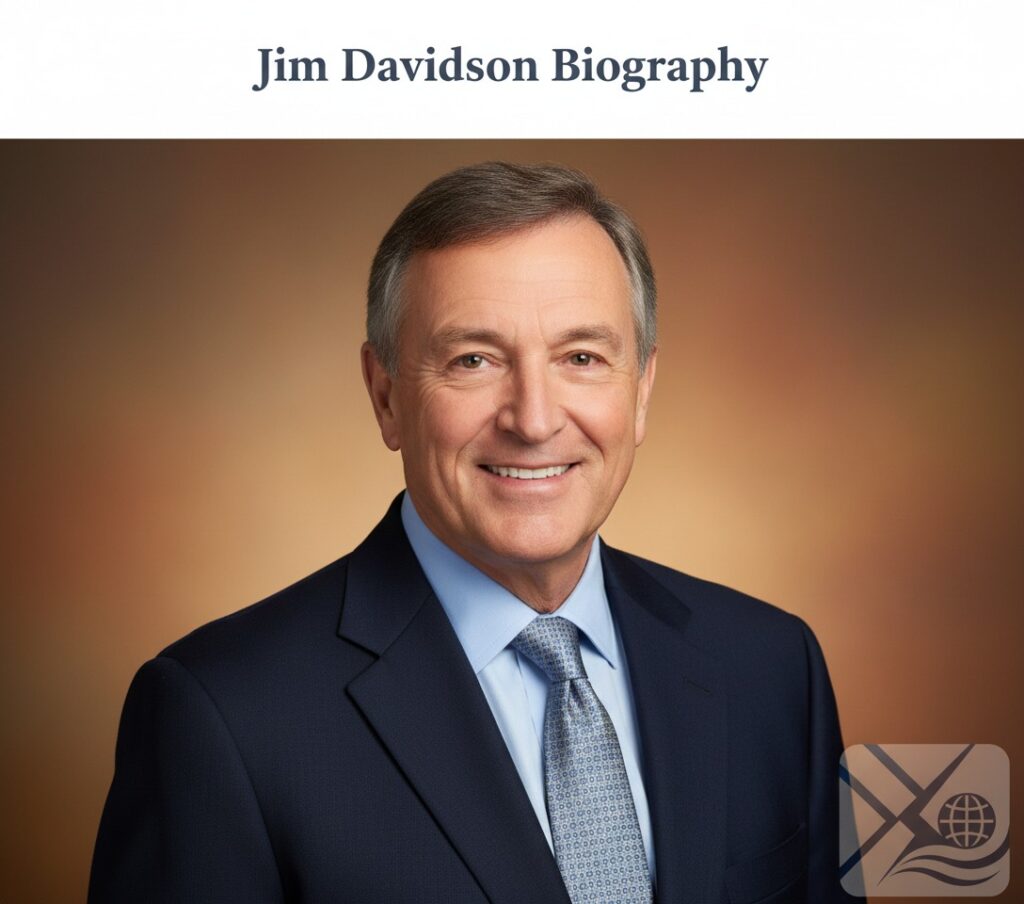
Jim Davidson Biography keeps resurfacing because it sits right on the fault line between nostalgia TV and the arguments that now shape British entertainment. He’s one of those performers whose name instantly triggers a split-screen reaction: for some, a reminder of prime-time comfort; for others, a case study in comedy’s shifting boundaries. That tension isn’t incidental—it is the story. Davidson’s rise came through the circuit and into huge broadcast platforms, then the culture moved, and his reputation moved with it. If you want a clean arc, you won’t get one. You get a public life with applause, backlash, reinvention, and unfinished debates.
Personal Info, Age and Family Profile
Jim Davidson Biography begins in southeast London, where James Cameron Davidson was born on 13 December 1953.
He grew up close enough to the old variety ecosystem to feel its gravitational pull—clubs, working men’s circuits, and that slightly combustible mix of bravado and hunger that produced so many late-20th-century British comics. The details of his childhood are mostly told through his own accounts and media interviews rather than a neat archive of public documents. That matters, because Davidson’s personal narrative has always been part performance, part confession, part defence brief.
Age is the easy part. Family is messier, and Davidson’s is especially so because his relationships have been written about almost as a running subplot to his professional life. Publicly established records show five marriages ending in divorce, with five children across those relationships. He has also spoken about family pressures that come with fame—money, schedules, the constant undertow of public attention—without presenting himself as a saint or a villain. He tends to speak like someone who believes the public misunderstood him first, and only later judged him.
There’s also a parallel strand: service-related charity work and an affinity with military audiences that became part of his identity, not just an add-on. The British Forces Foundation, launched in 1999, is frequently referenced in profiles of his later career and honours. Even if you disagree with his comedy, that association explains why some audiences stay loyal: they don’t see him as merely a TV throwback. They see a person who “showed up” for certain communities.
Spouse or Long-Term Partner
Publicly documented marital history lists Sue Walpole, Julie Gullick, Alison Holloway, Tracy Hilton, and Michelle Cotton as former wives, with divorces concluding that sequence. Reporting in 2024–2025 also describes a later relationship with a partner named Natasha, described in some coverage as a fiancée; that status is presented as current in some public biographies, though details remain limited and inconsistent across outlets.
In Davidson’s case, “partner” is not just a personal label—it becomes a public referendum. His marriages were treated by tabloids as material; by broadsheets, as texture for the wider story of a performer who both chased fame and then resented what fame did to his private life.
Children and Family Life
He is publicly listed as having five children. Beyond the number, he has generally kept day-to-day details about his children tighter than his professional controversies. That restraint feels deliberate. When a public figure becomes shorthand for a cultural argument, family members can end up as collateral, and Davidson—whatever else you think of him—appears to understand that boundary.
Family life in his narrative often circles back to consequence: the cost of divorce, the cost of public scrutiny, and the way the “Jim Davidson” brand can swallow the private person. It’s less “celebrity dad” and more “man dealing with the bill for the life he built.”
Friends and Professional Circle
Davidson’s professional friendships have been visible in flashes rather than a stable “crew.” He’s known for strong alliances with certain entertainers and for conflicts with others, sometimes played out publicly. His Celebrity Big Brother win in 2014, for instance, was framed around bonds formed inside that format, which briefly repositioned him as more personable than his headline reputation.
Outside reality TV, his orbit overlaps with older-school circuits—club comics, theatre producers, variety bookers—people for whom the rules of engagement were written decades earlier. That doesn’t excuse anything. It does explain why his instincts often sound like they come from a different era.
Parents and Early Family Background
What’s publicly available points mainly to Davidson’s own retellings and interview material rather than a widely documented family history. One consistent theme: he presents himself as shaped by working-class London pragmatism, the kind that prizes resilience over sensitivity. That self-portrait becomes important later, when he positions criticism as an attempt to erase that world rather than an argument about responsibility.
Relationship History
If you want a neat timeline, it exists on paper: multiple marriages, multiple divorces, and a later relationship presented in the press as long-term or engaged. But the more revealing point is what those relationships symbolised publicly. For years, Davidson’s romantic life was treated as a proxy for judgement about his character—sometimes fairly, sometimes lazily, often noisily.
He has also been very open about money problems tied to tax disputes and bankruptcy, and that context often sits behind relationship headlines even when it isn’t foregrounded. Personal instability and financial pressure are rarely separate in real life. Celebrity doesn’t change that; it only makes it searchable.
What is Jim Davidson’s age today?
He was born 13 December 1953, so his age depends on the current date, but he is in his early seventies.
How many times has Jim Davidson been married?
Public biographies list five marriages ending in divorce, with later reporting describing a subsequent long-term relationship.
Does Jim Davidson have children?
Yes. Public records commonly state he has five children across his marriages.
Is Jim Davidson currently in a relationship?
Some public profiles and recent reporting describe a partner named Natasha and refer to an engagement, though details aren’t uniformly documented.
What shaped Jim Davidson’s early outlook?
Most accounts rely on his interviews and autobiographical framing: working-class London, club culture, and a belief in tough-minded humour.
Career Overview
Jim Davidson Biography, in career terms, is a study in access. He didn’t just become a stand-up with a following; he got the keys to mainstream television at a time when that still made you a household fixture. By the 1990s, he was fronting big, familiar formats: Big Break and The Generation Game are the titles that still anchor his TV reputation.
That period matters because it framed him as “family TV,” even when his live act leaned bluer. The split—broadcaster-friendly presenter versus more combative club performer—created a long-term vulnerability. Once a culture decides it no longer wants that split, it tends to choose one version and discard the other. Davidson often argues he was reduced to a caricature. Critics argue the caricature was self-authored.
If you trace the mechanics of his success, it’s not mysterious. He had timing, presence, and a knack for stage control. He could hold a room, tease an audience, escalate, then pull back. Those skills translate well to game shows: you need warmth, quickness, and the ability to make the contestant feel like the star while you remain the engine.
Then the public part of the career becomes inseparable from controversy. In 2002, reporting described his departure from The Generation Game amid concerns about an image seen as at odds with the BBC’s direction. Later incidents and criticism around remarks and on-screen conduct continued to shape how broadcasters and audiences positioned him.
He also maintained a parallel performance life: theatre tours, stand-up runs, and adult pantomime productions that were never aiming for Sunday-night respectability. Public biographies list those shows explicitly, which tells you something about brand strategy: when mainstream doors narrow, you either retreat or double down on the audience that still buys tickets.
Early Career and First Breakthrough
Like many British comics of his generation, he cut through via the club circuit and television talent exposure. Some accounts credit New Faces as a turning point, a classic gateway for that era, where a few minutes could re-route your entire life. After that, the work looks relentless: gigs, TV slots, regional theatres, all the places where a reputation becomes bankable.
How the Career Started
The origin story is typical, but the personality isn’t. Davidson often frames his beginning as half accident, half inevitability—being pushed on stage, discovering he could command attention, then pursuing that feeling with discipline. That framing is convenient, sure. It’s also recognisably human. Many performers describe the first laugh like a switch flipping in the brain.
Major Achievements and Milestones
If you list the milestones that still register publicly, three dominate:
He became a familiar game-show face through Big Break and The Generation Game.
He was awarded an OBE in the 2001 New Year Honours for services to charity.
He won Celebrity Big Brother in 2014, which briefly reintroduced him to viewers who knew him more as a headline than a performer.
Those are not small achievements. They’re also not the whole story. The real milestone is endurance: he kept working through reputational collapse, the loss of certain platforms, and a media environment that became less forgiving.
Career Challenges and Growth
The obvious challenge is cultural permission. Comedy that once played as “edgy” can later be heard as cruelty. Davidson has been criticised for material about women, minorities, and gay people, and he has been involved in public controversies connected to that style.
Another challenge is structural: mainstream TV has fewer “variety” gates than it used to, and fewer slots for performers with polarising reputations. Once you’re no longer a safe booking, the phone stops ringing. The growth, such as it is, comes from learning how to operate outside that ecosystem—direct-to-audience touring, niche platforms, and performance circuits where the audience arrives already aligned.
Current Work and Professional Direction
Recent interviews and profiles suggest he continues performing live and remains publicly involved in veterans-focused charitable work, including leadership roles connected to the British Forces Foundation. His public persona in the 2020s often leans into the idea of being “unfashionable” or “unfiltered,” which is both brand positioning and provocation.
That approach can work commercially, even when it narrows your audience. It’s a trade: less mainstream approval, more intensity from the people who stay.
What made Jim Davidson famous on television?
Hosting Big Break and The Generation Game made him a familiar prime-time figure, especially during the years those formats dominated family viewing.
Did Jim Davidson win Celebrity Big Brother?
Yes. He won the 13th series in 2014, a result that drew heavy commentary because of his existing reputation.
Why did Jim Davidson leave mainstream presenting roles?
Reporting in 2002 linked his departure from The Generation Game to concerns about image and inclusivity expectations at the time.
What honour did Jim Davidson receive?
He was awarded an OBE in the 2001 New Year Honours for services to charity, frequently tied to forces entertainment work.
Is Jim Davidson still performing?
Public profiles and interviews indicate ongoing live work and media appearances, alongside continued involvement with military-related charitable activity.
Public Image and Social Impact
Jim Davidson Biography can’t be written as a simple entertainment profile because his public image became the headline. For a long time, he occupied the mainstream lane where a comic could be cheeky, occasionally crude, and still broadly embraced. Then Britain’s cultural weather changed, and his “cheeky” reputation hardened into something more accusatory.
The key is that his public image is not one fixed thing. It’s at least three competing portraits.
One: the prime-time host with the easy grin, a familiar face beside contestants and family audiences.
Two: the club comic whose act includes material that critics argue targets minorities and normalises prejudice.
Three: the public contrarian who treats backlash as proof of a wider cultural overcorrection, a narrative visible in later interviews and commentary about “woke” culture and cancellation.
Those portraits collide because different audiences encountered different versions first. If you met him through Big Break, you may read later criticism as unfair. If you met him through controversy, you may read his TV era as a strange national lapse. That’s why his name still sparks arguments: people aren’t debating a single artefact; they’re debating their own memory of the culture.
Media Representation and Press Coverage
Coverage has often followed a predictable rhythm: resurfacing clips, controversy recaps, then a counter-profile framing him as a casualty of changing norms. Older reporting described a decisive BBC break in the early 2000s, presented as an image problem rather than a one-off. Later coverage around reality TV, arrests he denied, and public disputes kept him in the news even when he wasn’t on prime-time schedules.
The press often uses Davidson as a shorthand. He becomes a symbol for “unacceptable comedy,” or for “working-class comic under attack,” depending on the outlet’s angle. Neither frame is neutral.
Public Persona and Audience Perception
Davidson’s public persona is built on bluntness. That can read as authenticity or as aggression, depending on where you sit. The audience perception has also changed across generations. A viewer who grew up with 1980s–1990s television has a different baseline than a viewer raised on contemporary standards around representation and harm.
What’s striking is how he sometimes appears to welcome polarisation. Some performers chase universal likeability. Davidson, at least in later years, seems to accept that the room is divided and plays to the side that laughs.
Influence on Social and Cultural Conversations
His influence isn’t only about jokes; it’s about the dispute over who gets to set the limits of public speech in entertainment. He’s often invoked in debates about whether “offence” is an overused veto or a legitimate signal of harm. The fact that those debates keep returning suggests Davidson’s cultural role has shifted from comedian to reference point.
That’s not a compliment. It’s a description of how public narratives work: when a person becomes a case study, their output is no longer judged solely as craft.
Advocacy, Awareness, and Social Causes
Davidson’s most consistently documented advocacy relates to forces entertainment and veterans-related charitable work, including British Forces Foundation leadership and related initiatives. That association has been repeatedly cited in connection with his OBE.
This is where the public story complicates itself. Many people who dislike his humour still acknowledge the scale of that charity connection. Many supporters cite it as proof he should be treated with more generosity. Both positions can exist at once without resolving the underlying argument about comedy content.
Reputation Management and Public Response
His typical response strategy is defiance rather than apology. He has disputed certain allegations, rejected some characterisations, and argued that critics judge him by reputation more than by current work.
Reputation management, in his case, looks less like PR polish and more like doubling down on identity: “This is who I am, take it or leave it.” That posture keeps loyal audiences close. It also keeps the controversies warm, never fully cooling into the past.
Why is Jim Davidson considered controversial?
Criticism has focused on material and remarks about minorities and sexuality, plus public incidents that reinforced perceptions of prejudice and combative behaviour.
Did the BBC distance itself from Jim Davidson?
Reporting in 2002 described his departure from The Generation Game amid concerns his image clashed with the BBC’s inclusivity direction.
How did Celebrity Big Brother affect his image?
Winning in 2014 reintroduced him to mainstream viewers, but the coverage also revived debate about whether he had been unfairly “banned.”
Is Jim Davidson associated with charity work?
Yes. He has been linked publicly to forces entertainment and British Forces Foundation leadership, repeatedly cited alongside his 2001 OBE.
Does Jim Davidson respond to criticism directly?
Often. He tends to challenge the framing of accusations and presents himself as judged by past narratives rather than current context.
Lifestyle and Personal Interests
Jim Davidson Biography, when it gets to lifestyle, is less about luxury and more about habits built by decades of touring, performing, and defending a public identity. He’s not primarily sold as an aspirational celebrity. He’s sold—by himself and by the culture around him—as a working comic who survived the industry’s shifts.
That matters because his “lifestyle” is tied to where he performs and who shows up. If you play theatres and clubs rather than curated influencer spaces, your daily routine revolves around travel windows, soundchecks, late nights, and the kind of fatigue that makes normal wellness clichés feel irrelevant.
At the same time, Davidson’s public life includes a strong association with service audiences and veterans-related work. That tends to impose a different rhythm: events, fundraising, organisational duties, and the expectation of being visible in those circles.
Daily Routine and Personal Habits
He has often been portrayed as someone who prefers directness and predictability: show days structured around performance readiness, off days used for recovery, admin, and long-distance planning. The routine of a touring comedian can look glamorous from outside and repetitive from inside. You eat when you can, sleep when you can, and learn how to function in the gaps.
His persona suggests he values independence. Not isolation—independence. The ability to choose the room, choose the tone, choose the audience. That preference makes sense for someone whose mainstream opportunities became conditional.
Hobbies and Recreational Activities
Publicly detailed hobby lists are thin, which is common for entertainers whose private lives have been mined for decades. What’s clearer is the social sphere he signals comfort in: showbusiness circles from an earlier era, plus forces-related networks. It’s less “celebrity hobby culture,” more “community alignment.”
You also see signs of nostalgia as recreation: returning to familiar venues, revisiting stories, framing the past as a place where things were simpler and audiences were less fragmented.
Health, Fitness, and Well-Being
Well-being, for performers of Davidson’s generation, is often discussed in practical terms: stamina, voice, timing, stage energy. The work itself becomes the fitness test. If you can walk out under lights and hold attention, you’re still in the game.
That said, age changes the calculation. The road is less forgiving in your seventies than in your thirties. Davidson’s continued live work implies a baseline resilience, even if he doesn’t package it as “health content.”
Travel, Leisure, and Personal Preferences
Touring is travel, but not leisure. It’s train times, motorways, and hotels that blur together. When performers talk about “liking travel,” they often mean liking the feeling of movement more than the destination. Davidson’s work history—TV, theatre, forces entertainment—has long involved travel as function.
Leisure, when it appears in coverage, is usually social: gatherings, industry events, shared worlds where he feels understood. The details aren’t always publicly established, and they don’t need to be. Lifestyle here is about pace, not possessions.
Interests Outside Professional Work
His strongest outside interest, as repeatedly documented, is charitable work tied to the armed forces community and veterans-related initiatives. In later profiles, political commentary sometimes overlaps with his public persona, but it’s usually presented as attitude rather than structured activism.
If there’s a unifying thread, it’s allegiance: to certain audiences, to certain cultural instincts, to the idea that he shouldn’t have to remodel himself to be allowed into the room.
What is Jim Davidson’s day-to-day life like now?
Publicly, it appears centred on live performance scheduling and commitments connected to forces-related charitable work rather than influencer-style visibility.
Does Jim Davidson have interests beyond comedy?
Yes. He has long been linked to armed forces entertainment and veterans-focused charity activity, including leadership roles and public advocacy.
Is Jim Davidson known for fitness or wellness routines?
He isn’t chiefly framed that way. His continued touring suggests functional stamina, but he doesn’t present himself as a lifestyle-wellness figure.
Does Jim Davidson travel frequently?
His career has historically involved travel through touring and forces entertainment work; travel functions as part of the job more than leisure.
What personal preferences does Jim Davidson share publicly?
He shares attitudes more than details—directness, resistance to rebranding, and loyalty to audiences that stayed with him through controversy.
Conclusion
Jim Davidson Biography remains hard to file neatly because it’s not only about what he did, but about what the culture did with him. He reached the most mainstream platforms British entertainment could offer, then became a symbol in the argument about what mainstream should tolerate. The charity and forces work complicates the verdict, and the controversies harden it. He still performs, still provokes, still draws a crowd that sees defiance as honesty. The final shape of his public legacy isn’t settled, and that uncertainty—admiration in one room, rejection in another—is the most accurate ending available.