
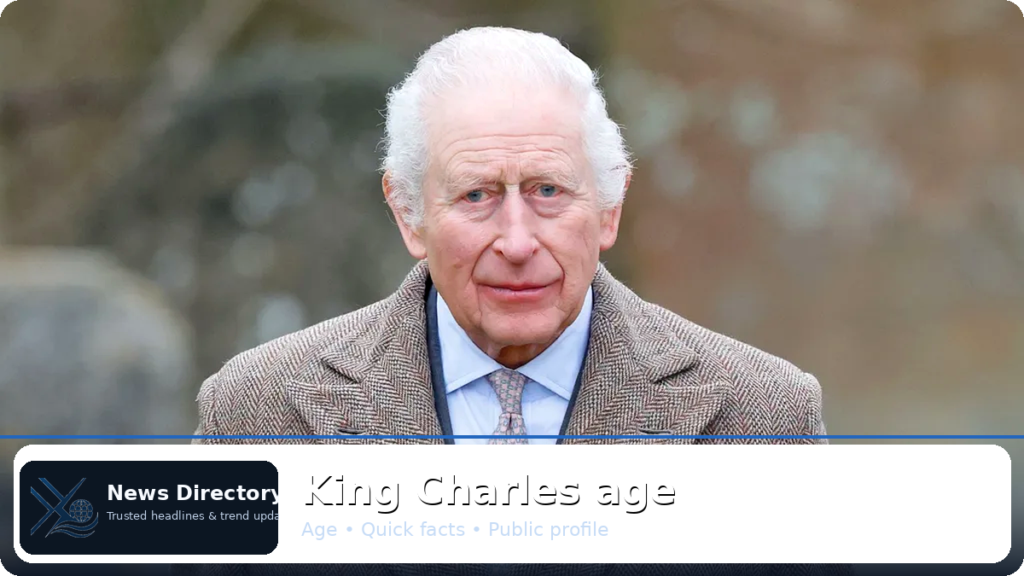
King Charles age is one of the most searched royal details because it connects directly to a much bigger story: a monarch who spent decades preparing for the throne, then stepped into the role later in life under intense public scrutiny. Born on 14 November 1948, King Charles is 77 years old as of 24 February 2026, and that age matters when people look at his schedule, health updates, and the scale of his constitutional duties.
This topic also matters because age, in his case, is tied to timing. He became king on 8 September 2022 after Queen Elizabeth II died, and he was crowned on 6 May 2023, which made his transition both historic and unusually compressed for a modern reign. That timeline shapes how people read every public appearance, policy speech, and Commonwealth visit.
When people search King Charles, they usually want more than a number. They want context: family, relationships, career path, public image, and how he actually lives while carrying one of the most demanding symbolic roles in the world. That’s where the timeline becomes useful, because it turns headlines into a clearer, more practical picture of the man and the monarchy.
Personal Info, Age and Family Profile
Spouse or Long-Term Partner
King Charles has one of the most discussed relationship histories in modern royal life, but his long-term partner and wife is Queen Camilla. Their marriage took place on 9 April 2005 in Windsor, after years of public attention and shifting public opinion. Over time, their partnership became central to how many people understand the current monarchy: less fairy tale, more endurance.
What stands out now is how steady their working relationship appears in public. Queen Camilla regularly carries out her own engagements and also supports the King during major national and Commonwealth events. In practice, that matters because royal work is relentless, and a durable partnership helps keep the institution functioning smoothly during busy ceremonial periods and difficult personal moments.
Children and Family Life
King Charles has two sons from his first marriage to Diana, Princess of Wales: Prince William and Prince Harry. William, born in 1982, is the elder son and heir apparent, while Harry, born in 1984, remains a prominent public figure even after stepping back from working royal duties. These family relationships shape both succession planning and public interest in the royal household.
Family life around King Charles is also viewed through generations. He is a father, grandfather, and monarch all at once, and each role is watched differently by the public. Some readers look for constitutional meaning, while others track family dynamics. That mix is exactly why searches about King Charles age often expand quickly into questions about succession, family continuity, and the future image of the Crown.
Friends and Professional Circle
For someone in his position, the line between friends, advisers, and professional contacts is rarely simple. King Charles operates within a structured royal network that includes private secretaries, constitutional officials, diplomats, charity leaders, and representatives from the Commonwealth. His daily and weekly interactions are shaped by duty, but long-standing relationships still matter in how he works and whom he champions.
A practical way to understand King Charles is to look at the kind of circles he moves in: heads of state, ambassadors, charity founders, faith leaders, and cultural figures. That’s not just ceremony. It reflects the monarchy’s role as a convening institution. The result is a public life where relationships are built less around celebrity and more around continuity, diplomacy, and patronage.
Parents and Early Family Background
King Charles was born at Buckingham Palace on 14 November 1948, the eldest son of Princess Elizabeth (later Queen Elizabeth II) and Prince Philip, Duke of Edinburgh. His early life was shaped by a reality few people experience: he was born into a family role that would become constitutional destiny almost immediately.
Everything changed in 1952 when his grandfather, King George VI, died and his mother became queen. Charles became heir apparent at a very young age, and that created a childhood under public attention and institutional expectations. It also explains a lot about his later life. Before he was King Charles, he had already spent decades learning the pressures, rituals, and compromises of royal duty from the inside.
Relationship History
No modern British monarch reached the throne with a relationship history as publicly examined as King Charles. His marriage to Diana in 1981, their separation in 1992, divorce in 1996, and Diana’s death in 1997 were defining events in both royal and media history. Those years shaped how the public viewed him for a long time.
His later marriage to Camilla in 2005 marked a major turning point. Public opinion gradually softened as the years passed and as both carried out sustained royal work. That long arc matters when people discuss King Charles today, because it shows how public trust can shift slowly. In royal life, reputation is rarely rebuilt by one speech; it’s rebuilt by years of consistency.
How old is King Charles right now?
King Charles is 77 years old as of 24 February 2026. He was born on 14 November 1948, so he will turn 78 in November 2026. That age is frequently searched because it connects to his health, schedule, and long royal timeline.
Who is King Charles married to?
King Charles is married to Queen Camilla. They married on 9 April 2005 in Windsor, and their partnership has become a central part of the current royal working structure, especially during major public engagements and Commonwealth-related duties carried out by King Charles.
How many children does King Charles have?
King Charles has two sons, Prince William and Prince Harry. William is the heir apparent, while Harry remains a member of the royal family but no longer serves as a working royal in the same way as King Charles and senior palace figures.
Who were King Charles’s parents?
King Charles was the eldest child of Queen Elizabeth II and Prince Philip, Duke of Edinburgh. His early position in the family became historically important in 1952 when his mother became monarch and King Charles became heir apparent as a child.
Was King Charles married before Camilla?
Yes, King Charles was previously married to Diana, Princess of Wales. Their marriage, separation, and divorce were major public events, and that history still shapes how many people interpret King Charles’s personal life and the evolution of the modern monarchy.
Why is King Charles’s family profile so widely searched?
People search King Charles because his family story is tied to the future of the monarchy. Questions about age, children, and succession are not just personal curiosity; they also affect how readers understand stability, continuity, and royal public roles.
Does Queen Camilla work alongside King Charles officially?
Yes, Queen Camilla undertakes official engagements and often appears alongside King Charles at major royal events. Their public work is part of the wider Royal Family’s representational role, which supports national, charitable, and diplomatic functions across the UK and abroad.
Did King Charles become heir very young?
He did. King Charles became heir apparent in 1952 when Queen Elizabeth II acceded to the throne. That early transition shaped his upbringing and helps explain why he spent decades preparing for the monarchy before becoming king in 2022.
Career Overview
Early Career and First Breakthrough
The unusual thing about King Charles is that his “career” began long before his reign. His earliest breakthrough was not a single event but a constitutional status: becoming heir apparent in childhood. Still, in practical terms, his adult royal career gained sharper definition when he started taking on public duties, military training, and formal representation as Prince of Wales.
That period matters because it established his long working identity before the crown. By the time he became King Charles in 2022, he had already spent decades building patronages, travelling widely, and developing policy interests around architecture, rural communities, and sustainability. In other words, he didn’t arrive as a ceremonial novice; he arrived as one of the most experienced heirs in British history.
How the Career Started
King Charles’s career started inside the royal system, but it broadened through service and institution-building. He did not only perform traditional appearances. Over time, he shaped a distinctive role through charities and foundations, including The Prince’s Trust and later work tied to sustainability, heritage, and community-focused initiatives. That combination of duty and long-term projects became his signature style.
This is why many people describe his pre-reign years as a parallel career rather than simple waiting time. He used the Prince of Wales role to build networks across education, conservation, farming, and design. Those efforts now feed directly into how King Charles approaches the crown, especially when he speaks about continuity, public service, and intergenerational responsibility.
Major Achievements and Milestones
The biggest milestone is obvious: King Charles became monarch on 8 September 2022 and was crowned on 6 May 2023. But the deeper career milestones stretch across decades. He was the longest-serving heir apparent, built a large portfolio of charities, and developed a public identity around environmental and social issues long before those topics became mainstream in elite institutions.
Another important milestone is the way he carried existing experience into the throne quickly. Official royal records show a full schedule of engagements, and royal platforms continue to frame his role around constitutional, ceremonial, and representational work. For a late-life accession, that continuity has been one of the defining features of the King Charles era so far.
Career Challenges and Growth
King Charles has faced career challenges that go far beyond ordinary public criticism. His personal life was scrutinized for decades, his policy views sometimes attracted controversy, and he inherited the crown in a period of high media pressure, family strain, and institutional debate. Add health concerns to that, and the pressure becomes even more visible.
In February 2024, Buckingham Palace announced that he had begun regular cancer treatment and would postpone public-facing duties while continuing state business and official paperwork. He later returned to public duties, and subsequent reporting in 2025 noted another brief interruption linked to treatment side effects. That pattern shows the central challenge of his reign so far: balancing personal health with constitutional continuity.
Current Work and Professional Direction
Current work for King Charles is best understood through the monarchy’s formal role: head of state, national symbol, and diplomatic host. The official royal description emphasizes constitutional and representational duties, and the Court Circular and Royal Diary show how those duties translate into daily audiences, ceremonies, visits, and state-related events. It is highly structured work, even when it looks ceremonial from the outside.
His professional direction also reflects long-standing interests. Royal and charity sources continue to connect King Charles to sustainability, rural communities, heritage, and traditional skills. That gives his reign a consistent theme: he is not trying to reinvent himself as monarch, but to bring decades of advocacy into a more constrained constitutional office.
When did King Charles become king?
King Charles became king on 8 September 2022, immediately after the death of Queen Elizabeth II. That date is central to any King Charles timeline because it marks the shift from decades as heir to full constitutional leadership.
When was King Charles crowned?
King Charles was crowned on 6 May 2023 at Westminster Abbey. The coronation was a major milestone because it formally marked the start of his reign in ceremonial terms after he had already acceded to the throne in 2022.
What kind of work did King Charles do before becoming king?
Before becoming monarch, King Charles spent decades carrying out royal duties and building long-term charitable and social initiatives. His work included patronages, public representation, and projects linked to youth opportunity, sustainability, architecture, and rural communities.
Did King Charles stop working during cancer treatment?
No, not completely. Buckingham Palace said King Charles postponed public-facing duties during treatment, but he continued state business and official paperwork. That distinction is important because it shows the monarchy’s constitutional work continued even during reduced public appearances.
When did King Charles return to public duties after treatment started?
Reuters reported that King Charles returned to public duties at the end of April 2024 after a period of treatment and recuperation. The return was presented as a measured step rather than a full reset, with scheduling still managed carefully.
What are King Charles’s main official duties now?
King Charles’s main duties are constitutional and representational. As monarch, he serves as head of state, performs ceremonial functions, receives officials and diplomats, and supports national life through public recognition, continuity, and royal engagements across the UK and overseas.
Why do people call King Charles one of the most experienced heirs?
People say that because King Charles spent an unusually long time as heir apparent before taking the throne. By the time he became king, he had decades of experience with diplomacy, patronage work, and public duty across multiple sectors.
What themes define King Charles’s professional direction?
The strongest themes in King Charles’s public work are continuity, service, sustainability, and support for communities and heritage. Those themes appeared long before his accession and continue to shape the tone and priorities associated with his reign.
Public Image and Social Impact
Media Representation and Press Coverage
Media coverage of King Charles has always been intense, but the tone has changed across different phases of his life. Early coverage often focused on royal tradition, then shifted heavily toward personal relationships and controversy, and now tends to blend constitutional reporting with health updates, diplomacy, and public appearances. That shift tells you a lot about how his image matured.
Today, King Charles is covered as both a person and an institution. News reports may discuss his schedule, treatment, or family context, while official channels frame his work through engagements, state business, and national representation. The contrast matters. It shows how royal image is built from two streams at once: press interpretation and palace documentation.
Public Persona and Audience Perception
Public perception of King Charles is complex because it carries decades of memory. Some people see a serious, duty-driven monarch with long experience and clear interests in sustainability and heritage. Others still read him through older royal drama. Both views exist, and that’s normal for a figure whose public life spans more than half a century.
What has changed is the level of visible steadiness. King Charles often appears in a disciplined pattern: audiences, speeches, ceremonial events, charity work, and Commonwealth engagement. That consistency tends to matter more than any one headline. Over time, regular public conduct is what shapes audience perception most strongly, especially for a monarch who is judged on reliability as much as personality.
Influence on Social and Cultural Conversations
King Charles has influenced public conversation for years, especially on topics that once seemed niche in establishment circles. Environmental stewardship, organic farming, sustainable development, and traditional building practices were all areas where he spoke early and often. Whether people agreed with him or not, he helped move those issues into mainstream debate long before they became standard institutional language.
That long record matters now because it gives his reign a distinct social texture. He is not a monarch trying to discover causes after accession. He already has a documented set of concerns and networks. For the public, that creates a clearer profile: King Charles is seen less as a blank constitutional figure and more as a monarch with a long, recognizable policy and social interest footprint.
Advocacy, Awareness, and Social Causes
A major part of King Charles’s social impact comes through patronage and institution-building. The royal website highlights his involvement in establishing more than 20 charities over several decades, including The Prince’s Trust and other long-running initiatives. That kind of infrastructure creates durable influence because it outlasts any single speech or media moment.
His advocacy has also been tied to practical sectors: farming, rural communities, sustainability, heritage skills, and community regeneration. These are not abstract talking points. They connect to real livelihoods, local economies, and training pathways. That’s one reason King Charles remains relevant in public conversation beyond royal watchers. His interests often intersect with everyday issues people actually live with.
Reputation Management and Public Response
Reputation management around King Charles has never been simple, and it still isn’t. His public image was shaped by years of tabloid culture, shifting attitudes toward the monarchy, and recurring family stories. The response from the palace has generally relied on continuity rather than dramatic messaging: keep the schedule, keep the institution visible, and let official work speak.
That approach has been especially visible during difficult periods, including health-related updates. Palace statements drew a clear line between reduced public appearances and ongoing state responsibilities, while later reporting documented his return to duties. For a monarchy, that kind of messaging is deliberate. It reassures the public that King Charles, even under strain, remains tied to constitutional function rather than purely personal narrative.
How has media coverage of King Charles changed over time?
Media coverage of King Charles has shifted from royal tradition and family drama toward a mix of constitutional reporting, health updates, and public duty. That change reflects his move from heir to monarch and the growing focus on institutional continuity.
Why is King Charles seen as a complex public figure?
King Charles is seen as complex because his public life spans many eras, from tabloid-heavy decades to his current reign. People judge him through personal history, royal duty, and long-standing advocacy, which creates a layered and often divided public perception.
What social issues is King Charles most associated with?
King Charles is strongly associated with sustainability, rural communities, organic agriculture, heritage, and community-focused development. These themes have appeared repeatedly in his public work and are documented across royal and foundation-related sources connected to his long-term interests.
Did King Charles influence public debate before becoming king?
Yes, King Charles influenced public debate long before accession, especially on environmental and built-environment issues. He often spoke on subjects that later became mainstream, which helped define his public identity as more than a ceremonial royal figure.
How does the palace manage King Charles’s public image during health updates?
The palace usually communicates in formal, controlled statements that separate health limitations from constitutional work. In King Charles’s case, official messages emphasized continued state business and paperwork, which helped reinforce stability while public-facing duties were reduced.
Why do official records matter for understanding King Charles’s public role?
Official records such as the Court Circular matter because they document what King Charles actually does, not just what headlines highlight. They provide a more reliable picture of his ongoing engagements, audiences, and ceremonial responsibilities across the monarchy.
Is King Charles’s reputation mostly based on personal life or public duty now?
Both still matter, but public duty carries more weight now than in earlier decades. As monarch, King Charles is increasingly judged by consistency, constitutional behavior, and visible service rather than only by older stories from his personal life.
What makes King Charles’s social impact different from a typical celebrity figure?
King Charles’s impact is institutional as much as personal. His influence comes through patronages, foundations, and constitutional visibility, not only media appearances. That gives his social role more durability and broader reach than a standard public personality.
Lifestyle and Personal Interests
Daily Routine and Personal Habits
The public never sees the full private routine of a monarch, but the structure around King Charles is clear. His days are built around official paperwork, briefings, audiences, and scheduled engagements, with public events layered on top depending on the calendar. Even during treatment periods, palace statements stressed that King Charles continued state business, which tells you how central the desk work is.
A useful way to picture it is this: the visible part is the handshake line, but the hidden part is preparation. Speeches, constitutional documents, meetings with prime ministers, and diplomatic audiences all require routine and discipline. For King Charles, daily habit is less about lifestyle branding and more about sustaining a demanding institutional rhythm.
Hobbies and Recreational Activities
King Charles has long been associated with interests that sit between hobby and public philosophy: gardening, rural life, architecture, and the natural environment. These are not side notes. They have shaped how he spends time, what projects he supports, and how the public identifies his personal style. The result is a monarch whose interests feel unusually specific compared with many ceremonial figures.
Gardens and country estates also matter symbolically in his image. They connect King Charles to a slower, traditional model of stewardship that appeals to some audiences and invites criticism from others. Either way, the interests are genuine and longstanding, and that consistency has helped distinguish him from a purely formal royal persona.
Health, Fitness, and Well-Being
Health is now an unavoidable part of any discussion about King Charles age. In February 2024, Buckingham Palace announced that he had started regular treatment for a form of cancer and would pause public-facing duties while continuing state work. He later resumed public appearances, and reporting in 2025 noted a brief hospital visit linked to treatment side effects before another return to duties.
That sequence gives a practical picture of well-being in his role: active, but managed. For many readers, the important point is not medical detail, because much of that remains private. It’s the visible balance. King Charles has maintained constitutional continuity while adjusting the public-facing side of his schedule, which is exactly what most modern institutions try to do under strain.
Travel, Leisure, and Personal Preferences
Travel is both duty and lifestyle for King Charles. Officially, royal travel serves diplomacy, Commonwealth ties, and representation. The royal site’s Commonwealth section highlights the scale of this work and notes his visits across many nations over decades, including Australia and Samoa in late 2024. That tells you his travel profile is not occasional; it is a central feature of royal life.
Leisure, by contrast, is less visible and more inferred from longstanding interests: countryside settings, heritage spaces, gardens, and quiet routines away from ceremonial intensity. That contrast is part of the King Charles image. Public life is formal and crowded. Personal preference appears rooted in continuity, landscape, and slower environments.
Interests Outside Professional Work
Outside formal royal duties, King Charles is still closely linked to sustainability, farming, traditional crafts, and built-environment heritage. The King’s Foundation and related initiatives reflect this broad interest in how communities are designed, taught, and maintained. These interests feel practical, not decorative, because they connect education, environment, and local economic life.
That’s why discussions about King Charles often move beyond palace events. People are trying to understand what he values, not just what he attends. His interests suggest a worldview centered on stewardship, continuity, and craft. In a media culture that rewards instant reactions, that slower, systems-focused style is one of the clearest things that sets him apart.
What does a typical working day look like for King Charles?
A typical day for King Charles includes official papers, briefings, audiences, and scheduled engagements. Even when public appearances are reduced, palace statements indicate he continues state business, showing that much of his role happens behind the scenes.
What personal interests is King Charles most known for?
King Charles is widely known for interests in sustainability, gardening, rural life, and architecture. These are long-running interests tied to his public identity and charitable work, not just occasional hobbies mentioned in passing.
Has King Charles stayed active while dealing with health treatment?
Yes, King Charles has remained active in constitutional and official work while receiving treatment. Public-facing duties were adjusted, but official statements and later reports show he continued state responsibilities and returned to engagements in measured stages.
Why is travel such a big part of King Charles’s life?
Travel is central because King Charles represents the UK and the monarchy at home and abroad. Commonwealth visits, state-related events, and official tours are core parts of royal duty, so travel is built into his working life.
Does King Charles have interests beyond ceremonies and speeches?
Absolutely. King Charles has long-standing interests in farming, sustainability, heritage, and traditional skills. Those interests appear through charities, foundations, and support for community-focused projects, which gives his public life a stronger personal signature.
How does King Charles balance health and royal duties?
King Charles appears to balance both by adjusting public appearances while maintaining state responsibilities. Palace communication has consistently emphasized continuity, which helps explain how the monarchy manages workload during treatment periods without halting core functions.
Are King Charles’s hobbies connected to his public causes?
Yes, many are connected. King Charles’s interests in the countryside, environment, and traditional design overlap directly with causes he has supported for decades, which makes his advocacy feel more consistent and less like a short-term campaign.
Why do people search for King Charles lifestyle details?
People search King Charles lifestyle details because they want to understand the person behind the institution. Age, routine, health, travel, and hobbies help readers interpret how he manages modern royal life and what kind of monarch he is in practice.
Final Thoughts on King Charles Age and the Bigger Timeline
King Charles age is the headline, but the real story is timing, preparation, and continuity. At 77, he is a monarch whose public life spans childhood, heirship, controversy, institution-building, and now the pressures of reigning in a fast-moving media era. That long arc is exactly why a simple search about age quickly turns into questions about family, duty, health, and legacy.
The key takeaway is that King Charles did not arrive at the throne as a blank figure. He brought decades of charitable work, established interests in sustainability and community life, and a deeply rehearsed understanding of constitutional role. Even during health treatment, the public record has shown a consistent effort to keep state responsibilities moving while managing appearances carefully.
For readers, that makes this topic useful beyond royal curiosity. If you’re tracking the monarchy, succession, public duty, or the way institutions adapt under pressure, King Charles offers a rare case study in leadership late in life. The number matters, but the timeline matters more—and it explains why he remains one of the most closely watched figures in public life.