
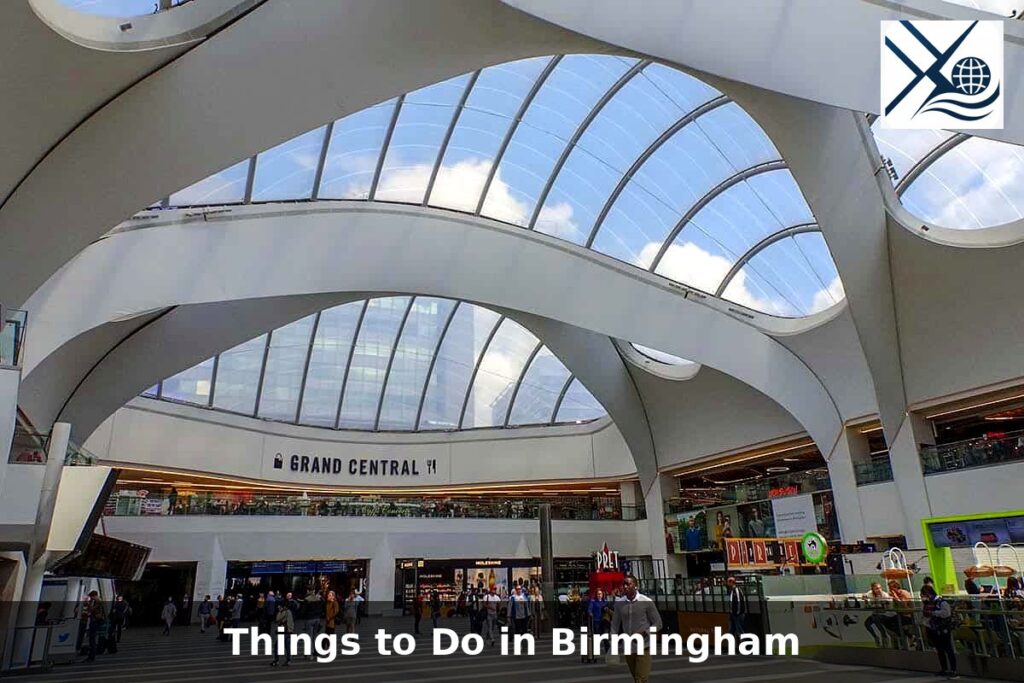
Birmingham rarely flatters itself. Parts of it are rough at the edges, the centre can feel overbuilt in one direction and oddly intimate in another, and yet the place keeps rewarding anyone who pays attention. A short walk might take you from a Victorian arcade to a stern concrete frontage, then into a canal-side stretch where the city finally loosens its shoulders.
That contrast is why Things to Do in Birmingham works better as a real question than a search phrase. The answer depends on what kind of day you want. You can spend the morning inside the Pre-Raphaelite hush of a major collection, drift into the Jewellery Quarter for workshops and old brick lanes, then end up near Brindleyplace watching office workers, students, and theatre crowds fold into the same evening.
It is a city of layers rather than spectacles. Birmingham does not always announce its best qualities on first contact. Some of them sit behind heavy facades, some survive in side streets, and some are best found by following water instead of traffic. That makes it better, frankly, than places that explain themselves too eagerly.
Where Birmingham Still Shows Its Character
The city centre has been rebuilt, re-routed, polished, and occasionally overcorrected, but Birmingham still gives away its older character in fragments. You notice it in the way Victorian and Edwardian details keep surfacing between newer retail blocks, and in the fact that some districts still feel tied to work rather than display. The place was shaped by manufacture, trade, dissent, migration, and music. That never quite disappears.
For a visitor, or even for someone who knows the city only in pieces, the trick is not to chase landmarks in a rigid order. Birmingham makes more sense through clusters. Spend time in streets where buildings, shops, pubs, and public spaces still seem to belong to one another. The city becomes clearer then. Its appeal is not grandeur in the obvious sense. It is accumulation, texture, and the occasional sharp turn from commerce to culture in the space of a few minutes.
Victoria Square, Chamberlain Square, and the Civic Core
Start in the civic centre, where Birmingham still presents itself with some authority. Victoria Square, with the Council House and the Town Hall close by, has enough stone, column, and public scale to remind you that the city once took municipal confidence very seriously. Chamberlain Square, reshaped in recent years, feels newer and more contested, but it remains a useful point of orientation because so much sits within easy reach.
The area can be slightly awkward on a crowded day, and parts of it feel designed by committee, which is probably because they were. Still, the civic buildings matter. Birmingham Museum and Art Gallery has long been one of the city’s anchors, especially for the Pre-Raphaelite collection, and the surrounding streets carry that sense of inherited seriousness.
Walk slowly here. Look up. The square itself is only part of the experience. Cornices, facades, carved stonework, and old institutional confidence do more of the work than the paving below. Birmingham often hides its best visual argument above shopfront level.
The Jewellery Quarter and Its Working Memory
The Jewellery Quarter is one of the few parts of central Birmingham that still feels joined up in a deep way. It is not merely old; it carries the memory of making things. Workshops, assay offices, narrow plots, red-brick buildings, and streets that never fully surrendered to generic redevelopment give the district a shape many cities would kill for and then ruin.
There is retail here, of course, but the area works best when you do not treat it as a shopping errand. The Museum of the Jewellery Quarter helps because it shows the trade as labour rather than ornament. That matters. Birmingham has often been reduced to products and output, when the better story sits with the people, skills, and routines that built them.
And then the mood shifts after dark. Good pubs, quieter corners, and a less frantic pace than the retail core make the district easy to stay in. Some parts feel preserved, others simply survived. The difference is important.
Museums, Galleries, and Rooms with Patience
Birmingham’s cultural life is stronger indoors than casual visitors sometimes expect. The city is not always graceful in its street-level presentation, but behind a formal entrance or an unassuming facade you can find collections and performance spaces with real depth. A few institutions are well known. Others are less loudly advertised and better for it.
What stands out is range. Fine art, industrial history, design, back-to-back domestic life, and contemporary performance all sit within a fairly manageable area if you pace the day properly. Birmingham does not ask for museum marathon behaviour. It rewards slower looking. A gallery can hold you for an hour, then the city pushes you back outside into noise, buses, glass, brick, and water. That change of atmosphere keeps the cultural side from feeling sealed off.
It also helps that Birmingham’s cultural spaces are rarely pristine in the bland sense. They feel tied to the place that produced them, which gives them more weight than polished interpretation panels ever could.
Birmingham Museum and Art Gallery, with a Detour into Taste
Few local institutions have shaped Birmingham’s cultural reputation more quietly than Birmingham Museum and Art Gallery. The Pre-Raphaelite works draw obvious attention, and rightly so, but the place is more useful when taken as a reflection of civic ambition. It tells you what the city once thought public culture should do: educate, steady taste, and prove that industry need not flatten the mind.
That sounds severe, but the building itself softens the point. Rooms open out gradually. The atmosphere encourages looking without fuss. You are not pushed through at speed, and that makes a difference. Some museums feel desperate to hold attention every thirty seconds. This one can afford a longer gaze.
Not every gallery lands with equal force, and some displays will matter more to locals than to first-time visitors. That is fine. A museum does not need to perform for everyone in the same way. The best part is that it still feels like a public institution rather than a branded experience.
Ikon Gallery and the City’s Quieter Side of Experiment
The Ikon, set near the canal at Brindleyplace, is among the places that prevent Birmingham’s cultural life from becoming heritage-only. Contemporary art can turn pompous very quickly, and some exhibitions anywhere in the country feel written before they are seen. Yet the Ikon often avoids that trap because its building, a former school, keeps the mood grounded.
The approach is part of the pleasure. Reaching it through the canal-side paths and adjacent squares gives the visit a shift in tempo. Then inside, the rooms are spare without becoming cold. You can spend twenty minutes there and feel reset, or stay much longer if the work is genuinely doing something rather than simply declaring that it is.
Birmingham needs spaces like this because the city’s identity has too often been narrated through production alone. Art here can push back against that, or complicate it. Sometimes the exhibitions are uneven. Better that than safe. A city this layered should leave room for a little friction.
Shopping Without the Gloss Taking Over
Birmingham has long been a commercial city, so shopping here is not an add-on to the urban story. It sits at the centre of it. The problem is that large retail zones can flatten any city into the same sequence of chain names, polished flooring, and controlled temperature. Birmingham is not immune. Parts of the centre do feel anonymous in precisely that way.
Still, there is a more interesting retail geography if you step sideways from the obvious routes. Arcades, markets, food halls, independent counters, and older shopping streets complicate the picture. The city can move from high-end display to practical buying within a few blocks. That shift feels honest. Not every place needs to look curated.
Good shopping here depends on appetite rather than category. Some people want design labels and immaculate storefronts. Others want fabric, records, spices, jewellery, books, or something they were not planning to buy at all. Birmingham is better when it serves those impulses together instead of pretending one is superior.
The Bullring, Grand Central, and the Retail Engine
The Bullring remains the city’s retail engine, even for people who claim they dislike shopping centres. Its pull is obvious: location, scale, and the fact that it connects to other parts of central Birmingham without much effort. The Selfridges building still catches the eye, although it has been photographed into near-exhaustion. Seen in person, it is stranger and less slick than the postcards suggest.
Inside and around the complex, Birmingham becomes fast-moving, transactional, and a little impersonal. That is not always a flaw. Sometimes a city centre should feel like a machine doing its job. Grand Central, attached to New Street Station, adds another layer of movement, with rail passengers, office commuters, and weekend shoppers crossing paths in a way that feels distinctly urban rather than leisurely.
Yet the best use of this area may be as a starting point, not a destination in itself. Let it show you the city’s commercial muscle, then move outward. Retail concentration explains Birmingham. It does not entirely define it.
Great Western Arcade, the Markets, and the Better Kind of Wandering
For a different register, Birmingham’s smaller shopping spaces make a stronger impression. Great Western Arcade, with its covered passage and older proportions, has a kind of composure that newer developments cannot fake. It encourages browsing rather than throughput. The architecture slows people down almost against their will.
Then there are the markets. The Bull Ring Indoor Market and the surrounding trading culture bring back the city’s practical instincts: produce, hardware, clothes, household goods, and food that speaks to Birmingham’s many communities more clearly than official branding ever will. It is one of the places where the city sounds most like itself.
And midway through all that movement, you realise Birmingham is often at its best when the buying is incidental. A coffee, a bag of spices, a record, a repaired watch, a shirt altered by someone who actually knows the craft. Commerce here is not merely display. At its best, it still carries skill and need.
Following the Water Instead of the Traffic
Birmingham’s canals are one of the city’s corrective forces. Roads can make the centre feel jagged, noisy, and over-managed. Water changes the reading completely. The pace drops. Brick walls begin to matter. Warehouses, towpaths, bridges, and repurposed industrial buildings form a version of Birmingham that feels less concerned with proving itself.
People love repeating the line about the city having more canals than Venice. Fine. It is memorable, though it tends to flatten what is actually interesting: not quantity, but atmosphere. Birmingham’s canal network exposes the city’s industrial past without embalming it. You can see where goods moved, where labour clustered, and how later regeneration tried, with mixed success, to soften the edges.
It is also one of the easiest ways to understand spatial relationships in the centre. Follow the water and districts connect in a clearer way than they do by road. Birmingham stops feeling fragmented. It starts to read as a sequence.
Brindleyplace, Gas Street Basin, and the Canal Performance
Gas Street Basin is where Birmingham’s canal story becomes most legible to casual walkers. Narrowboats, old infrastructure, bars, offices, repurposed brick buildings, and the steady passing flow of people give the area a theatrical quality, though not in a bad way. You can stand still there and the city performs its own layering.
Brindleyplace nearby is tidier and more managed, sometimes too tidy, but useful as a contrast. Corporate redevelopment tends to sand off roughness, and this area has had more sanding than most. Even so, the canal still resists complete sterilisation. Water, stone, ironwork, and the geometry of the basin keep pulling the eye away from the shinier interventions.
It is a good place to spend an evening, especially when light starts to thin and reflections take over from architecture. Birmingham rarely looks soft in daylight. Around the basin, it occasionally does. Then again, a little bluntness returns as soon as the office blocks remind you where you are.
Towpaths, Longer Walks, and the City Beyond the Postcard Angle
The better canal experience often begins after the busiest stretch ends. Walk beyond the most photographed basin and Birmingham settles into a different mood. Towpaths carry you past quieter edges, older industrial remains, apartments, workshops, graffiti, sudden greenery, and stretches that seem unfinished in an oddly honest way.
This is where the canals feel less decorative and more structural. You understand that they were built to move goods, not flatter visitors. That purpose still shows in the gradients, materials, and straightness of certain sections. Beauty arrives as a by-product. Birmingham is good at that sort of thing.
A longer walk can lead toward areas such as the Black Country route or, closer in, quieter lengths where the city sounds muted for a while. You do not need to complete an epic ramble. Even forty minutes on foot changes the tone of a day. Midway through, the road network and shopping zones feel oddly distant.
Food, Music, and the Parts of the City That Wake Late
Birmingham after dark can divide opinion. Some central stretches feel too given over to chains, drinks deals, and the kind of engineered leisure that ages badly. Yet that is only one version of the evening city. Move with a bit more intention and the picture improves. Birmingham has live music history, serious food culture, and neighbourhood pockets where the night feels grounded rather than staged.
The city’s culinary range is tied to migration, trade, and working patterns more than image-making. That is why some of the best meals do not arrive with much ceremony. You are as likely to remember a curry house, bakery, or small counter-service spot as a room with polished branding and expensive lighting. Fair enough.
Music follows a similar logic. Birmingham has produced and hosted far more than lazy stereotypes allow. Its sound runs from metal to reggae to contemporary club culture, with plenty between. Some of the city’s most durable pleasures still happen in rooms that care more about acoustics, food, or atmosphere than presentation.
Digbeth, Street Life, and the Better Kind of Noise
Digbeth remains one of Birmingham’s most recognisable zones for independent nightlife, murals, warehouse spaces, and events. It has been discussed for years as though it exists permanently on the edge of transformation, which is partly true and partly lazy shorthand. What matters is that the area still contains energy that has not been fully sanded flat.
Music venues, bars, creative workspaces, and converted industrial buildings give Digbeth a rougher social texture than the polished city core. Some people overstate its authenticity, but the area does earn its reputation more than most branded quarters do. The streets can be messy, loud, and occasionally overhyped. They can also be genuinely fun.
And there is useful continuity here. The district’s industrial shell, Irish links, market history, and later cultural use create a setting that feels earned rather than invented. A night in Digbeth works best when you accept that not every venue will be brilliant. The district as a whole carries the point.
Balti Triangle, Concert Halls, and Birmingham’s Evening Appetite
Few parts of Birmingham’s reputation travel as well as the Balti Triangle, and unlike many exported city stories, this one still has substance. The restaurants in and around Sparkbrook and nearby areas are tied to a specific local dining tradition rather than a generic curry-house label. That matters because Birmingham’s food identity deserves precision.
The best meal may not come in the flashiest room. Steel bowls, quick service, fresh naan, and the low hum of families and groups talking over one another do more than décor ever could. There is a directness to eating in this part of the city that feels very Birmingham: unfussy, sociable, and entirely confident in its own standards.
Later, the evening can tilt in another direction through Symphony Hall, the Town Hall, or smaller live rooms scattered across the centre. Birmingham listens well. That might be the simplest way to put it. The city has long made space for sound, and when a room is right, the audience usually knows how to meet it.
Conclusion
Birmingham makes more sense once you stop asking it to charm on command. It is better read through districts, buildings, routes, and habits: a canal turn near Gas Street Basin, a quiet room in a gallery, a market counter, a lane in the Jewellery Quarter, a meal that arrives without theatrical explanation. The city does not line up its best qualities for inspection. You have to notice them as they accumulate.
That is what gives Things to Do in Birmingham a slightly different answer from the usual city-break script. The point is not to race between attractions as if checking proof of value. It is to understand how commerce, culture, industry, migration, and architecture keep rubbing against one another here, sometimes awkwardly, sometimes brilliantly.
Some cities feel immediately legible and then go flat. Birmingham does the reverse. It can seem difficult at first, even a bit stern, then opens gradually through texture and use. By the end of a day spent properly, not hurried, the place feels less like a list of stops and more like an argument you have started to understand.