
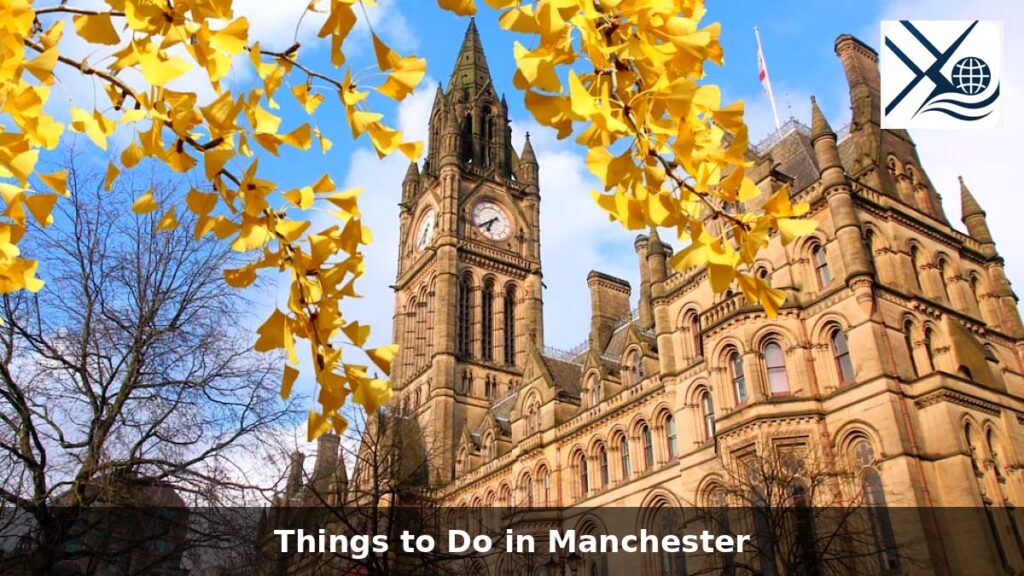
Rain sharpens this city rather than softening it. Brick looks better under a grey sky, old warehouses seem less decorative and more honest, and the streets around Deansgate, the Northern Quarter, and Ancoats keep their edge even when the sun finally appears. Manchester does not depend on postcard beauty. Its grip comes from mood, memory, and the sense that industry never fully left, it just changed clothes.
That is why Things to Do in Manchester cannot be reduced to a checklist of stadiums, bars, and museum stops. The place works through layers. Football here is civic mythology, but so is music. So are canals that once moved goods and now carry reflections of apartment blocks, mills, and old towpaths. Some corners feel polished, others still look slightly unfinished, which helps.
A first visit can go wrong if you treat the city like a neat weekend product. It is better approached as a place with arguments inside it: old wealth and new money, swagger and self-mockery, heritage and reinvention. Spend time in those tensions and Manchester starts to make sense.
Football Memory Lives Beyond Match Day
You do not need a ticket, a scarf, or even much interest in tactics to notice how football shapes the city’s language. Street names, pub talk, tram chatter, mural culture, and family loyalties all carry traces of it. The game is not confined to ninety minutes. It sits in local identity the way dock history sits in Liverpool or government ritual sits in Westminster. Manchester’s version is louder, more tribal, and occasionally a little theatrical.
Still, the strongest parts are not always the obvious ones. Stadium tours can be worthwhile, but the deeper experience comes from seeing how football spills into ordinary spaces: old pubs with framed photos fading near the bar, murals in backstreets, corner shops stocking blue or red memorabilia, taxi drivers who can tell you exactly where a season turned. The city keeps score in memory as much as in silverware.
Old Trafford and the Theatre Built on Memory
Old Trafford can feel oversized even before you step inside it. The scale matters, but what stays with most visitors is the weight of accumulated story: Busby, Best, Charlton, Ferguson, Munich, trebles, collapse, recovery, repetition. Stadium tours cover the expected ground, yet the real interest lies in how the site holds decades of triumph and grievance without smoothing either one out.
Inside, the place is part museum, part working arena. Tunnels and dressing-room corridors are staged for visitors, though the better moments arrive when the script thins and the club’s longer narrative cuts through. Memorial elements around the Munich air disaster still stop people short, and rightly so. They carry more force than the glossy displays.
Outside, the surrounding area lacks charm in the conventional sense. That almost helps. Old Trafford is not framed like a heritage estate; it rises from roads, transport links, crowds, and hard surfaces. The setting reminds you this was never meant to be dainty. On non-match days, the quieter atmosphere makes the stadium easier to read. You notice how much of the club’s myth depends on endurance, not just spectacle.
The City Side of the Story at the Etihad and Beyond
Manchester City’s recent era has changed the city’s football map, and pretending otherwise is silly. The Etihad Campus speaks the language of modern power: infrastructure, training systems, regeneration talk, expansion, precision. Yet the club’s story is not only about current dominance. Maine Road still hovers in older conversations, and long-time supporters tend to recall years of chaos, false starts, and stubborn loyalty before they mention trophies.
The stadium itself is cleaner in tone than Old Trafford, less haunted by nostalgia, more aligned with contemporary scale. Some visitors prefer that clarity. Others find it slightly cold. Both reactions are fair. What matters is the broader setting in East Manchester, where football is tied to urban redevelopment, transport links, housing shifts, and the reworking of former industrial land.
Away from the formal tour route, local pubs and side streets often reveal more character than official displays do. You hear the city’s football split in ordinary conversation, not rehearsed branding. Manchester has room for both clubs because rivalry is built into how the place speaks about itself. It never entirely settles. Better that way.
Music Here Still Feels Like Civic Evidence
Manchester’s music reputation is often reduced to a short roll call of famous names, then flattened into nostalgia. That misses the point. The city matters because it turned economic decline, cheap space, art-school experimentation, club culture, and local restlessness into sound. You can trace that through post-punk, indie, acid house, dance floors, pirate energy, and the stubborn survival of small venues. The legacy is not decorative. It still affects how nights out are built and how neighbourhoods imagine themselves.
This is also a city where music history is tied to architecture. Former mills became rehearsal rooms, basements became venues, and record shops acted as unofficial meeting points long before algorithms told people what to hear. Some legendary sites are gone or altered beyond recognition, which can be disappointing if you expect a preserved shrine. Manchester rarely behaves like that. It lets places disappear, then keeps their charge in memory.
Northern Quarter Record Shops, Murals, and After-Hours Energy
The Northern Quarter still carries a residue of the period when Manchester’s cultural authority felt scrappier and more improvised. Independent record shops, narrow streets, painted shutters, gig posters, bars that look accidental until midnight, all of it gives the area its shape. Yes, parts have been polished. Rents have done what rents do. Yet enough texture remains to make wandering worthwhile.
Piccadilly Records is an obvious stop, but obvious is not the same as bad. Shops like that anchor the district because they still treat music as a social habit rather than a background product. You browse, overhear opinions, get a sense of what the city values. Vinyl alone is not the point; the atmosphere around it is.
By evening, the quarter changes pace without turning theatrical. Some streets feel crowded and self-aware, others still seem half-hidden. Street art helps define the visual field, though not every mural deserves reverence. A few are better as urban punctuation than as destinations. What matters more is the density of small decisions: where to drink, where to hear a set, where to keep walking. The area rewards drifting more than scheduling.
From Factory Echoes to Small Rooms with Better Sound
Any account of Manchester music eventually runs into Factory Records and the old Hacienda mythology. Fair enough. Those names still matter because they reshaped British club culture and linked the city to a wider story about nightlife, risk, and reinvention. Yet visitors can waste time chasing ghosts too literally. The original sites matter less than the habits they helped establish.
Better to connect that history to the venues still doing the work. Smaller rooms often tell the truth more clearly than famous plaques do. Band on the Wall, for instance, keeps one foot in heritage and another in the present, and that balance suits Manchester. It acknowledges a past without embalming it. Other intimate venues across the city continue that pattern: not pristine, not always comfortable, but usually alive.
And small rooms matter because Manchester music was never only about celebrity acts. It depended on cheap entry points, stubborn local scenes, and audiences prepared to hear something unproven. That ecosystem is harder to maintain now. Rising costs and redevelopment squeeze it from all sides. Even so, when a crowd gathers in a compact venue and the sound lands properly, the city still makes its argument.
The Canal Network Shows the City Thinking in Layers
Manchester’s canals are not scenic in a soft-focus way. They are better than that. Towpaths cut past converted mills, under viaducts, beside apartment blocks, and behind glass offices that look faintly temporary against all that brick. The water carries trade history, property speculation, and evening light at the same time. If you want to see the city thinking in layers, start here.
Canals also solve a practical problem. They let you move between districts without staying trapped in road traffic or retail corridors. A walk along the water shifts your sense of scale. You begin in a dense commercial core and, within minutes, find older industrial surfaces, quiet bends, or stretches where the city sounds slightly muffled. The contrast is sharp enough to be useful.
Castlefield and the Industrial Frame Still Standing
Castlefield has become one of Manchester’s more readable areas because so much of its structure remains visible. Viaduct arches, canal basins, ironwork, warehouses, Roman traces, and broad brick surfaces create a setting that feels assembled by labour rather than by urban branding consultants. Cafés and bars now occupy parts of it, naturally, but the area still resists becoming cute.
Walking through Castlefield gives you a clean lesson in how Manchester was built. The canals are not ornamental leftovers; they are the logic of an earlier economy still etched into the ground. Stand near the basin and the relationship between transport, storage, engineering, and expansion becomes obvious. You do not need a formal tour to read that.
At the same time, the district has its limits. Some sections feel too carefully managed, especially on mild weekends when the waterfront crowd leans toward predictable. Go in the morning or later in the day and the place is better. It grows quieter, more legible. Then the hard lines of the old infrastructure do most of the talking, which is exactly what should happen.
Towpaths from Ancoats to New Islington
Eastward, the canal routes through Ancoats and New Islington show Manchester in mid-conversion. Former mills stand beside expensive flats, old cobbles meet polished landscaping, and the water reflects cranes as often as chimneys. Some people read this as progress, others as sanitising. Usually it is both.
Ancoats, in particular, has become one of the city’s most discussed districts because the industrial shell survived long enough to be repurposed. That shell gives the neighbourhood credibility even when the newer developments feel slightly overconfident. Walking the canal edge there is useful because you can see the old and new arguing in real time. Restaurants spill into former workspaces; warehouse facades remain while interiors switch function entirely.
Towpaths around New Islington are calmer and a touch more open. The pace slows. You get room to notice reflections, bridges, odd corners of planting, the geometry of reused buildings. It is not a romantic walk in the postcard sense. The pleasure comes from contrast, from how much history remains visible even after the city has tried to package it. Manchester is rarely more itself than in those half-settled transitions.
Museums and Galleries Work Best When They Stay Specific
The city’s cultural institutions are strongest when they avoid grand claims and stick to what they know. Manchester is not short on heritage, but its museums rarely need to inflate it. The better ones understand that local history, labour politics, design, migration, conflict, and urban change become more persuasive when handled with precision rather than reverence.
That makes these spaces useful even for visitors who normally resist museums. You are not walking into a neutral civic display. You are entering arguments about class, industry, protest, craft, and how a northern city narrates itself. Some institutions feel rough at the edges, which is often preferable to polished emptiness. A little friction keeps the material alive.
Science, Industry, and the Machinery Beneath the Myth
Manchester likes to call itself a place of firsts, and that can become tiresome fast. The Science and Industry Museum gets farther by grounding those claims in machinery, engineering, textiles, transport, and working systems. Instead of asking visitors to admire slogans, it shows them engines, tools, production lines, and the built reality of industrial change.
The site’s old station buildings help enormously. They place the exhibits inside the physical history they describe, so the experience feels rooted rather than abstract. You come away with a stronger sense of Manchester as a workshop city, not just a brand attached to innovation. Textile machinery in particular lands hard because it links local growth to labour, empire, and extraction without pretending the story was clean.
Some displays are more effective than others. That is normal. What stays with people tends to be the scale of the infrastructure and the reminder that industrial power is never only about invention; it is about systems, money, and workers’ bodies. Manchester’s self-image depends on that history, and the museum is one of the few places where the machinery still gets the final word.
Manchester Art Gallery and the Whitworth
For visual art, the city gives you two distinct moods. Manchester Art Gallery sits closer to the civic centre and carries the feel of a public institution meant to be revisited rather than conquered in one pass. Its collections move across fine art, decorative pieces, and social history in ways that mirror the city’s mixed identity: municipal ambition, commercial wealth, private taste, public access.
The Whitworth, by contrast, often feels more open in spirit and setting. Positioned near Whitworth Park and linked to the university context, it allows for a different pace. Textile collections there matter especially in Manchester, where fabric is never just fabric. It is industry, design, labour, trade, and status all at once. The gallery understands that better than many larger institutions understand their own headline material.
Neither place needs to overwhelm you with scale. That is part of their appeal. They give room for slower looking, and Manchester benefits from that. Fast judgments suit football and nightlife; galleries ask for another tempo. Sometimes the best hour in the city is spent in one quiet room with a few works that do not explain themselves immediately.
Streets, Markets, and High Points Complete the Picture
Large civic narratives only tell part of the story. A city is finally judged by how it behaves at street level: what you can eat without too much fuss, where you can sit, where the crowd thickens, where the pace eases, what view is worth earning rather than buying. Manchester’s everyday attractions fill that role. They are not secondary. They complete the place.
Retail districts, food halls, public squares, libraries, and observation points may sound less glamorous than stadiums or legendary venues, but they often shape a visit more decisively. One badly timed wander through an overhyped area can flatten a day. One good market lunch or a climb to a solid city view can rescue it. Manchester, being Manchester, does both quite easily.
Afflecks, Market Stalls, and the Northern Appetite for Texture
Afflecks remains one of the better indoor reminders that Manchester still values eccentricity when it is tied to actual trade rather than curated novelty. Independent stalls, old subcultural residue, handmade items, strange gifts, clothing rails, niche prints, and a mildly chaotic layout make the building feel usefully stubborn. It is not elegant. Good.
Nearby food options deepen that sense of urban texture. The Northern Quarter and surrounding districts give plenty of chances to eat well without sliding into corporate sameness. Street-food setups, bakeries, ramen counters, Middle Eastern kitchens, and long-running cafés sit close together, which helps the city feel lived in rather than zoned into separate consumption categories.
Not every heavily photographed spot deserves the queue it gets. That is true in any city. Manchester is better when you stay alert and sidestep the places trying too hard to become landmarks. Small market choices and less rehearsed lunch stops usually reveal more about local habits than the headline names do. Taste here tends to reward curiosity over hype.
John Rylands, Central Library, and a View from Above
John Rylands Library can look almost unreal from the outside, a dark neo-Gothic statement dropped into the commercial centre. Inside, the atmosphere changes. Stone, stained glass, and long reading spaces create a hush that feels improbable given the traffic outside. It is one of the few central sites in Manchester that justifies a certain amount of awe without becoming sentimental.
Central Library works differently. Circular, civic, and more outward-facing, it reflects Manchester’s municipal self-respect at its best. It is a place to pause, reset, and remember that public buildings still matter when they are run with intent. Visitors often underrate it because libraries sound dutiful on paper. In practice, it gives the city backbone.
Then there is the question of height. Manchester’s skyline has changed fast, and some rooftop views flatten the city into anonymous glass. Choose carefully and a higher vantage point can still help. From above, the pattern becomes clearer: canals, warehouses, towers, rail lines, old brick stitched into new development. The city looks unfinished because it is. That unfinished quality is part of the appeal.
Conclusion
Manchester does not charm by trying to charm. It convinces through pressure, through evidence, through the way football memory, music history, industrial remnants, civic institutions, and ordinary street life keep colliding without fully blending. Some districts feel newly polished, others still look like they were left to sort themselves out, and the tension between those states gives the city much of its charge.
That is why Things to Do in Manchester makes more sense as a way of reading the place than as a neat itinerary. A stadium visit matters, but so does a canal walk that shows where trade once moved. A record shop matters, but so does a library reading room that cuts the city’s noise in half. Museums help, though they only land properly once you have seen the brick, the arches, the terraces, and the streets that made their subjects necessary.
Manchester can be brash, overpraised, cold, funny, and unexpectedly moving, sometimes in the same afternoon. It rarely asks for affection directly. It earns it sideways. Stand near the water in Castlefield at dusk, or leave a small venue with your ears still ringing, and the city tends to make its case without much ceremony.