
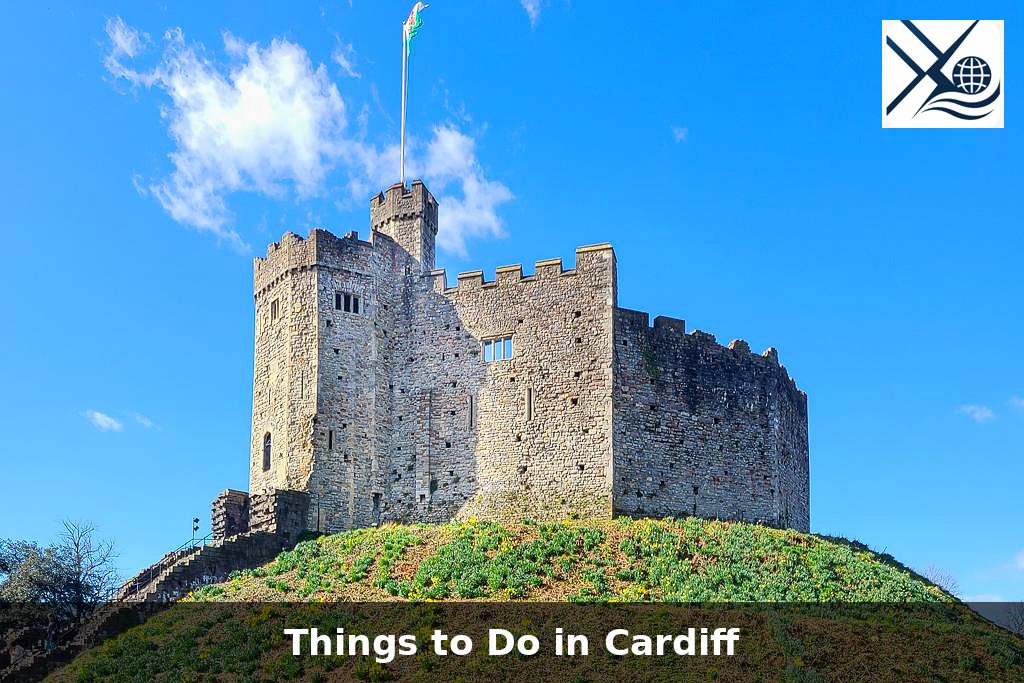
You do not ease yourself into Cardiff. You start with the castle, because the city has placed one of its strongest cards right in the middle of town. Cardiff Castle brings together Roman foundations, a Norman stronghold, and lavish Victorian interiors in one site, which means your visit never settles into a single mood. One minute it feels military and severe, the next it feels theatrical and strangely intimate. That contrast makes it memorable.
What works so well here is the location. You step out of shops and busy streets, then suddenly history crowds around you. The keep gives you wide views, the interiors reward anyone who likes detail, and the grounds make a good reset when the city centre starts to feel loud. It is not some awkward side trip. It is the natural starting point for understanding Cardiff itself.
The smart move is to pair the castle with the surrounding civic centre streets and arcades rather than treating it as a single-ticket stop. That wider area gives Cardiff its character: old shopping arcades, dignified public buildings, and a city centre that still feels made for walking. Plenty of capitals tire you out. Cardiff usually invites one more turn around the block.
That is also where Things to Do in Cardiff starts to make real sense as a search phrase. You are not chasing scattered attractions across a sprawling map. You are moving through a city where the headline sights sit close enough together to build a day that feels full rather than rushed.
Bute Park Gives the City Room to Breathe
Straight after the castle, Cardiff does something clever. It gives you space. Bute Park sits just behind the historic core and changes the tempo completely, which is exactly why it works. Instead of stacking one landmark on top of another, the city opens into lawns, tree-lined paths, wildlife pockets, cafés, and an arboretum that is nationally significant for its tree collection. You feel the shift almost at once.
This park is not just decorative. It is the kind of place that saves a city break from becoming too hard-edged. If you have spent the morning climbing towers, reading panels, and dodging centre traffic, Bute Park lets you stretch the day without wasting it. You can walk by the river, stop for coffee, or simply sit for ten minutes and watch Cardiff calm down around you. Sometimes that is the difference between a trip that feels packed and one that feels well judged.
Families get something useful here too. Natural play areas, open paths, and seasonal activities give children room to move without turning the day into a full-on kid itinerary. Adults get the better end of the bargain as well, because the park never feels like a compromise. It feels like one of the city’s strengths.
Many visitors underrate urban green space because it does not always photograph like a major attraction. That is their mistake. In Cardiff, the park is part of the city’s argument for better Uk Travel choices: fewer forced itineraries, more places that actually let you enjoy where you are.
Cardiff Bay Feels Like a Different City in the Best Way
After the city centre, Cardiff Bay changes the mood so sharply that it almost feels like a second destination. That is a good thing. The Bay grew from former docklands into one of the city’s most distinctive areas, and today it blends waterside walking, public buildings, cultural venues, and open-air breathing room in a way that suits both slow afternoons and lively evenings. It has range.
The first thing you notice is the sense of openness. In the centre, Cardiff feels compact and layered. Down at the Bay, the skyline loosens up and the water takes over. The barrage walk, the wetlands reserve, and the broad pedestrian spaces give you that rare city feeling of having room to look around rather than merely moving through crowds. It is especially good after a museum-heavy morning.
There is also a practical advantage here. Cardiff Bay offers activities without forcing everyone into the same plan. One person can visit the Senedd area, another can take a waterside walk, and someone else can go looking for food and people-watching near the waterfront. When a city can handle mixed interests without becoming inconvenient, it usually wins repeat visits. Cardiff does that well.
I would argue this is where many trips either become memorable or stay merely decent. Plenty of cities have a castle. Fewer can follow it with a waterfront district that feels relaxed, modern, and genuinely useful rather than overbuilt for tourists. Cardiff Bay gets the balance right often enough to matter.
Museums and Cultural Venues Add Real Depth
Cardiff would still be enjoyable with just the castle, park, and Bay. The reason it becomes a stronger city break is culture. National Museum Cardiff brings together art, geology, and natural history, with free admission supported by the Welsh Government for the main museum experience. That matters because it lowers the barrier to curiosity. You do not have to overcommit. You can walk in, see something excellent, and let the day grow from there.
The art side is especially strong. The museum describes its galleries as one of Europe’s finest art collections, with five hundred years of painting, sculpture, silver, and ceramics, including a major Impressionist collection. Big claims usually make me suspicious. Here, the cultural weight feels earned.
Then there is Wales Millennium Centre in Cardiff Bay, the national arts centre for Wales. The building itself looks like a statement piece, and its programme ranges across musicals, opera, cabaret, family work, and other live performances. Even if you do not book a show, the venue gives the Bay a cultural pulse that lifts the whole district. Book a ticket, though, and Cardiff becomes an evening city, not just a daytime one.
For a longer visit, St Fagans strengthens the case further. It is an open-air museum exploring Welsh life through historic buildings and everyday stories, and entry is free. That is not a filler attraction on the edge of town. It is one of the smartest add-ons you can make when you want the trip to mean more than photos and snacks.
Plan Cardiff Around Rhythm, Not a Checklist
The biggest mistake in Cardiff is trying to “complete” it. The city works better when you build the day around rhythm. Start with the weight of history, lighten it with green space, then finish with the Bay or a performance after dark. That sequence suits Cardiff because the city itself keeps shifting tone without losing coherence. You do not need a frantic checklist. You need timing.
A good first day might begin at Cardiff Castle, drift into Bute Park, and loop back through the centre for food and arcades. A second day can belong to the Bay, the museum, or St Fagans depending on how much culture you want and how far you feel like travelling. That flexibility is one of Cardiff’s best qualities. It gives you enough structure to stay engaged and enough freedom to avoid burnout.
The city also rewards people who leave space between plans. A café stop near the civic centre, an unplanned detour through a shopping arcade, or an extra half hour by the water can end up feeling more “Cardiff” than the headline attraction you thought would define the day. That is not a weakness. It is a sign of a place with real texture.
Treat Cardiff as a city to experience rather than conquer, and it becomes much more enjoyable. That sounds simple because it is. Some travel advice needs less drama and more honesty. This is one of those times.
Cardiff works because it gives you contrast without chaos. You get deep history in the centre, breathing room in Bute Park, a fresh waterside atmosphere in the Bay, and serious cultural weight from its museums and performance venues. Very few compact capitals handle all of that without feeling fragmented or exhausting. Cardiff does. It feels connected, human, and easy to return to.
The smartest way to approach Things to Do in Cardiff is to stop chasing quantity and start choosing shape. Build one day around heritage and city walks. Build another around waterfront time and cultural stops. Leave room for a show, a museum detour, or an hour that goes nowhere except somewhere pleasant. That is where Cardiff starts to outperform louder destinations.
So do not plan this city like a race. Plan it like a well-paced weekend with range. Pick your must-see, leave space for surprise, and let the city prove its point. Then turn that trip into something bigger by mapping out your next Wales stop while the experience is still fresh. Cardiff is not a place you tick off. It is a place that quietly makes you want another booking.
What is the best time of year to visit Cardiff for sightseeing?
Spring and early autumn usually give you the best balance in Cardiff. You get milder weather, greener park views, and fewer packed areas than peak summer. Winter still works well if you care more about museums, shows, and cosy city evenings.
How many days do you need to explore Cardiff properly?
Two days is the sweet spot for most visitors. One day covers the centre, castle, and park. A second day lets you enjoy Cardiff Bay, a museum, or St Fagans without rushing. Three days gives you a far more relaxed and rewarding pace.
Is Cardiff Castle worth visiting if you only have one day?
Yes, and I would put it first. Cardiff Castle gives you history, architecture, views, and a quick feel for the city’s identity in one stop. When time is tight, places that do several jobs well are the ones worth backing every time.
What can couples do in Cardiff for a relaxed weekend?
Couples do well in Cardiff because the city does not force a frantic pace. You can mix a castle visit, park walk, waterside dinner, and theatre night without long transfers. It feels easy, which is exactly what a proper weekend break should feel like.
Are there free things to do in Cardiff city centre?
Yes, more than many first-time visitors expect. You can enjoy Bute Park, walk through the civic centre, browse arcades, and visit National Museum Cardiff for free general admission. Cardiff feels generous as a city, and that improves the whole trip immediately.
Is Cardiff Bay better during the day or at night?
Both work, but they offer different moods. Daytime suits walks, views, and relaxed exploring around the waterfront. Evening brings restaurants, venue crowds, and a livelier atmosphere. If you can, go twice. The area changes enough to feel fresh on a return visit.
Can you visit Cardiff without a car and still enjoy it?
Yes, easily. Cardiff’s centre is compact, many major sights are walkable, and the Bay is simple to reach. You do not need a car for a strong city break here. In fact, driving can add hassle you really do not need.
What are the best cultural attractions in Cardiff for first-time visitors?
Start with National Museum Cardiff, Wales Millennium Centre, and Cardiff Castle. That trio covers art, performance, and history without feeling repetitive. Add St Fagans if you have extra time. Together, they give you a much fuller picture of Wales than one attraction ever could.
Is Cardiff a good destination for families with children?
Yes, especially if your family likes variety. Cardiff mixes open space, history, museum visits, and waterfront walking without making the day feel too rigid. Bute Park helps a lot here. Children get room to move, and adults still feel like the trip has substance.
What food and drink areas should visitors try in Cardiff?
The city centre and Cardiff Bay are your safest strong bets. The centre suits casual stops between attractions, while the Bay works better for slower meals and evening plans. Choose based on mood, not hype. Cardiff rewards sensible timing more than trend chasing.
Should you choose Cardiff or Bristol for a short city break?
Choose Cardiff if you want a more compact capital feel with easier pacing, strong history, and a clear waterfront contrast. Choose Bristol for a bigger urban sprawl and edgier energy. Cardiff often wins when you want less effort and more balance overall.
Is St Fagans worth adding to a Cardiff itinerary?
Yes, if you have enough time to give it proper attention. St Fagans adds depth that city-centre sightseeing alone cannot provide. It turns a pleasant break into a richer Welsh experience. Skip it only when your schedule is so tight that rushing would spoil it.