
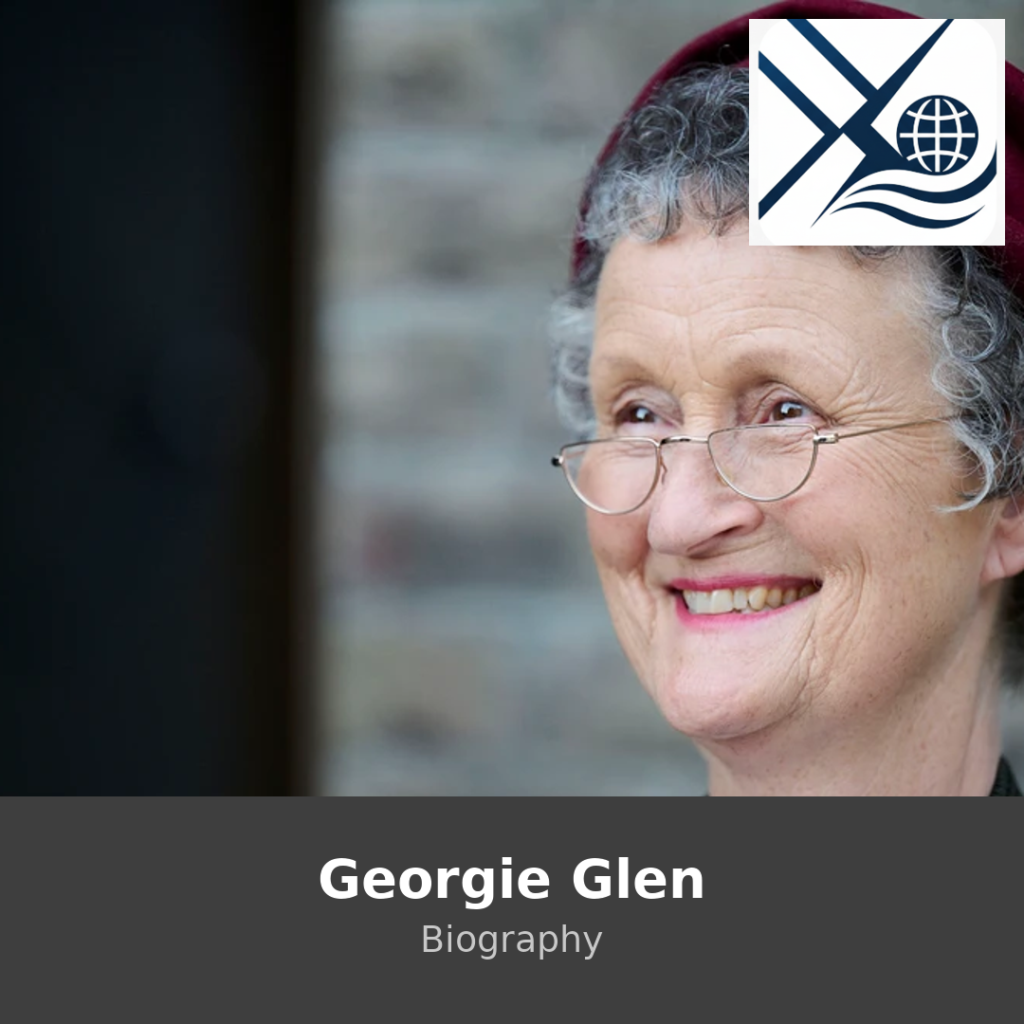
Georgie Glen has been on British screens for decades, but the recent attention around her work has a particular texture. It is not about a sudden reinvention, or a late-life breakthrough that arrived out of nowhere. It is the steady visibility that comes from being present in long-running dramas, appearing in prestige series that travel globally, and landing supporting roles that viewers remember long after the plot moves on. With Call the Midwife continuing to renew its world, and with roles like Ruth, Lady Fermoy in The Crown still circulating through streaming re-watches, Georgie Glen has become one of those familiar performers whose face prompts an immediate sense of recognition before a name catches up.
That recognition has a practical basis. Georgie Glen’s career is built on range rather than a single signature part, spanning period drama, contemporary comedy, and tightly observed character work. She has also spoken openly about the mechanics of sustaining that kind of career, where the job is often to sharpen a scene rather than own it. In a television landscape that can be unforgiving to actors outside the narrow bracket of headline roles, Georgie Glen’s longevity tells its own story.
Personal and Family Profile
Spouse or Long-Term Partner
Georgie Glen has maintained a noticeably private posture around romantic relationships in mainstream coverage. Publicly available profiles tend to focus on her work, training, and the breadth of her credits, while offering little that is definitive about a spouse or long-term partner. Where online references float claims, they are not consistently supported by widely cited, reputable biographical reporting.
That absence of a clear, publicly established record is not unusual for working actors who have spent most of their careers as ensemble players rather than tabloid fixtures. Georgie Glen’s public footprint reads as deliberate. The emphasis stays on craft, on repertory instincts, and on the working rhythm of production, rather than on personal disclosure.
What can be said, with restraint, is that Georgie Glen has not built a public persona around coupledom. If there is a long-term partnership, it has not been presented as part of her professional narrative in a way that allows for confident reporting without overreach.
Children and Family Life
Georgie Glen is a mother of twin daughters, Holly and Nell, a detail that appears in mainstream biographical summaries. Beyond that, the public record becomes sparse, and responsibly so. Their lives, names aside, are not treated as public material, and there is no credible reason to force detail into view.
In interviews that focus on her background, Georgie Glen has described a childhood in Helensburgh and an early life shaped more by making things than performing them. That creative impulse later broadened into acting, but it also helps explain why her domestic life is not packaged for consumption. The through-line is work and practice, not exposure.
The result is a portrait that feels familiar to anyone who has watched British television closely: a performer who is widely seen, often praised, and still largely protected from the sort of personal sprawl that follows celebrity in louder forms.
Friends and Professional Circle
Georgie Glen’s professional circle is easiest to trace through institutions rather than social headlines. Her route into acting went through training, theatre practice, and the kind of networks that form around companies, rehearsal rooms, and long shoots. She has credited formative encouragement from Alan Rickman at a moment when acting was not yet her plan, a detail that situates her within a tradition of backstage mentorship rather than star-making.
Later, her circle has been shaped by the ensemble nature of her best-known work. A drama like Call the Midwife relies on sustained cast chemistry across seasons, and Georgie Glen has spoken about the pleasure of scenes that depend on contrast and relationship rather than plot mechanics. That sense of partnership with fellow actors is central to how she describes her work: you are part of an ecosystem, often entering midstream and trying not to disturb what already works.
Professional friendships in this world rarely present as public “best friends” narratives. They show up as repeat collaborations, guest roles that lead to another call, and directors or writers who know what a specific actor can do in five lines.
Parents and Early Family Background
Georgie Glen was born in Helensburgh, Scotland, and her early path was not initially an acting one. She trained in graphic design at Glasgow School of Art, then moved into publishing work, including a period as an assistant book designer. The early chapters of her life suggest a practical creativity: skills, deadlines, and making objects that have to function.
That matters because it frames her acting career as a chosen shift rather than a childhood inevitability. There is a particular tone to performers who arrive through a second route. The work can feel less like destiny and more like decision, something built with intent and maintained through discipline.
In later reflections on her youth, Georgie Glen has spoken about sending crafted items to children’s television and collecting small acknowledgements. It is an unusually specific kind of origin detail, and it rings true: not the myth of the born performer, but the child who wanted to make something good and have it recognised.
Relationship History
A responsible account of Georgie Glen’s relationship history is necessarily limited, because the public record is limited. She has not placed romantic milestones at the centre of her public biography, and credible sources do not consistently fill that gap. In those circumstances, the honest journalistic move is to treat the absence as information in itself, rather than to patch it with assumptions.
What is visible is a performer whose long-term commitments appear to be professional. Training, repertory discipline, and decades of television work suggest stability of a different kind. Georgie Glen’s relationship to the audience is mediated through characters, not confession.
If further details exist, they may remain private by design. That choice deserves to be respected, especially when it involves other individuals who are not public figures and have not invited attention.
What is publicly known about Georgie Glen’s partner?
Georgie Glen’s mainstream biographies do not consistently name a spouse or long-term partner. Without clear public confirmation, it’s not responsible to present one as established fact.
Does Georgie Glen have children?
Yes. Georgie Glen is publicly reported to have twin daughters, Holly and Nell. Further personal details about them are not widely published.
Where is Georgie Glen from?
Georgie Glen was born in Helensburgh, Scotland. She has spoken about growing up there before moving into design work and later acting training.
Did Georgie Glen start out as an actor?
No. Georgie Glen trained in graphic design and worked in publishing before pursuing acting, later attending drama school and moving into stage and screen roles.
Who influenced Georgie Glen’s career change?
Georgie Glen has publicly credited Alan Rickman with encouraging her to apply to drama school after she was involved in theatre as a hobby, helping redirect her path.
Career Overview
Early Career and First Breakthrough
Georgie Glen’s early acting work fits a familiar British pattern: a long run of television appearances that build credibility before fame becomes a question at all. Her filmography includes episodic roles across major series and formats, from drama to comedy, often in parts that demand precision in limited screen time.
A recurring role in Heartbeat as Sergeant Jennifer Noakes gave her visibility within a popular, ongoing series environment. That kind of work is less about a single breakout moment and more about being reliable, watchable, and adaptable. Casting directors remember that. So do audiences, even when they do not immediately place the name.
The sense of “first breakthrough” with Georgie Glen is therefore cumulative. She became a familiar face through repetition, not through one explosive lead role.
How the Career Started
Before acting, Georgie Glen’s professional life ran through design. The move from graphic design into performance did not happen through a conventional child-actor pipeline. It emerged through contact with theatre in a practical, non-star context, and then formal training.
She attended Bristol Old Vic Theatre School, a recognised route into the profession, after working in publishing. In later recollections, she has described the transition with the bluntness of lived experience: years in a job, then the decision to step into something riskier. That shift is part of her professional identity. She did not “arrive” as a headline. She built a career by joining the workforce of acting.
Early stage work, including a period at the Wolsey Theatre in Ipswich, reflects a repertory model where actors learn through volume: new roles, new demands, and the need to hold an audience without camera tricks.
Major Achievements and Milestones
If Georgie Glen has a defining milestone for contemporary audiences, it is Call the Midwife. As Millicent Higgins, she sits in the machinery of the show: reception, order, judgment, and, at times, unexpected warmth. The role works because it is not played as a joke and not softened into cliché. It is a portrait of a working woman with a code.
The Crown offered a different kind of impact. Playing Ruth Roche, Lady Fermoy, she entered a drama where small gestures can read as political statements. The performance had to carry authority, restraint, and the kind of social certainty that is intimidating because it believes itself to be normal.
Her career also includes notable film appearances in projects such as Shakespeare in Love, Mrs Brown, Calendar Girls, Amazing Grace, Les Misérables, and Jackie, often in roles that sharpen the social world around the leads. That is not incidental work. It is structural. These films rely on credible supporting performances to make the story feel inhabited rather than staged.
Career Challenges and Growth
A career built on supporting roles carries its own challenges. The work is steady until it is not. A “day on this, a day on that” rhythm can be productive, but it also means living without the security that comes with long contracts. Georgie Glen has spoken about envying actors who leave set with the next day’s call sheet already printed.
Waterloo Road appears to have been a turning point in that respect: a more regular part, played across a substantial run, allowing familiarity to deepen rather than reset each job. Long-form television changes an actor’s relationship to character. Instead of inventing a life quickly, you are asked to maintain it, season after season, while adjusting to new writers and story demands.
Growth, for Georgie Glen, also seems to involve tonal agility. The same actor who can anchor a period drama scene can turn up in comedy, sketch work, or darker contemporary pieces without feeling imported from another genre.
Current Work and Professional Direction
In more recent credits, Georgie Glen has continued to move between long-running roles and sharply defined guest parts. Ridley cast her as Dr Wendy Newstone, a role that required professional coolness and technical credibility. She has described preparing for that world in ways that underline her approach: practical research, attention to detail, no romance about the subject matter.
Alongside that, she has appeared in series such as Am I Being Unreasonable?, Inside No. 9, Behind Her Eyes, and The Larkins, demonstrating a willingness to move across tones and audiences. This is not a late-career retreat into comfortable repetition. It is a continuation of what she has always done: enter a story, make the world more believable, then move on.
Her professional direction reads as consistent rather than curated. She is not chasing reinvention for its own sake. She is working, and the body of work accumulates into something recognisable: a career defined by competence, specificity, and quiet force.
What role made Georgie Glen widely recognisable recently?
For many viewers, Georgie Glen became most recognisable through Call the Midwife as Millicent Higgins, a steady presence whose authority and restraint define key scenes.
Did Georgie Glen have a career before acting?
Yes. Georgie Glen trained in graphic design, worked in publishing, and only later pursued acting through formal drama school training and repertory-style theatre work.
What are Georgie Glen’s most notable TV credits?
Georgie Glen is known for Call the Midwife and Waterloo Road, with significant appearances in The Crown, Heartbeat, and a wide range of British series.
Has Georgie Glen worked in film as well as television?
Yes. Georgie Glen has appeared in films including Shakespeare in Love, Mrs Brown, Calendar Girls, Amazing Grace, Les Misérables, and Jackie, often in supporting roles.
What has Georgie Glen done in recent years besides Call the Midwife?
Recent work includes Ridley as Dr Wendy Newstone and roles in series such as Am I Being Unreasonable?, Inside No. 9, and Behind Her Eyes.
Public Image and Social Impact
Media Representation and Press Coverage
Press coverage of Georgie Glen tends to be respectful and work-focused. She is not commonly framed as a celebrity who generates headlines through personal drama. Instead, she appears in profiles when a show returns, when a character becomes unexpectedly popular, or when her career story offers a useful counterpoint to the usual narrative of overnight discovery.
That kind of coverage often carries an implicit argument about British acting: that the industry depends on people who are not leads, and that the audience’s experience is often shaped by the supporting cast. Georgie Glen’s face is familiar precisely because she has been present across so many worlds.
When the press does linger, it is typically on how she makes “small” roles feel substantial. That is a particular kind of praise, and it matches the work.
Public Persona and Audience Perception
Audience perception of Georgie Glen is often immediate: recognition, trust, and sometimes surprise at how many productions she has been part of. She is one of those performers who prompts a running mental list in the viewer’s head. Where else have I seen her? The answer is usually: everywhere.
As Miss Higgins, she is perceived as strict, efficient, and slightly intimidating, but the performance leaves space for vulnerability without signalling it too clearly. That restraint makes the character feel like a real person rather than a narrative device.
As Lady Fermoy, she is perceived differently: coldness, control, and social certainty. The shift between those two roles alone helps explain why she is valued. She can play authority in multiple registers, from bureaucratic competence to aristocratic power.
Influence on Social and Cultural Conversations
Georgie Glen’s influence is not the influence of a public campaigner. It is the influence of representation and texture. Call the Midwife, in particular, is a show that invites conversation about class, care, and the institutions that shape women’s lives. Her character sits at the intersection of those themes: she is part of the system, but also a working woman navigating it.
There is also a quieter cultural impact in how she embodies older women on screen. She has noted that it is rare to see women of a certain age given full space in television rather than being reduced to a token presence. Whether or not audiences articulate it, that reality shapes what feels possible on screen. Georgie Glen’s continued prominence is a practical rebuttal to the idea that only youth carries narrative weight.
Her career also touches a specifically British cultural pattern: the prestige of the ensemble. In an era that often markets shows through a small set of names, the audience still bonds with the supporting cast. Georgie Glen’s work helps keep that tradition alive.
Advocacy, Awareness, and Social Causes
Publicly, Georgie Glen is not best known for attaching her name to a single cause in a sustained, headline-making way. When she speaks, it often returns to work: how acting functions as part of a team, how roles are built, and how theatre training shaped her instincts.
That does not mean she is indifferent to broader issues. It means her public identity is not constructed around activism in the way some performers choose. In a media climate that sometimes treats advocacy as a branding requirement, that restraint is itself a kind of statement: the work is the work.
Where she has offered broader reflections, they tend to be grounded rather than performative, shaped by the realities of making a living in the arts and the fragility of training pathways.
Reputation Management and Public Response
Georgie Glen’s reputation is that of a reliable, high-calibre character actor. There is little evidence of a scandal-driven narrative following her career. The public response is more consistent: affection, respect, and the sense that she improves the material she is given.
That kind of reputation is built slowly and can be lost quickly, which makes its durability notable. Georgie Glen has navigated decades of changing television tastes, shifting production models, and evolving audience expectations without becoming a relic of a previous era.
In the end, her reputation is not a social media phenomenon. It is professional consensus made visible: casting choices, repeat collaborations, and roles that land.
Is Georgie Glen considered a lead actor?
Georgie Glen has frequently been cast as a supporting performer rather than a lead. Her public interviews emphasise the importance and craft of strong supporting roles.
Why do audiences often recognise Georgie Glen immediately?
Georgie Glen has appeared across many long-running British series and films. That volume of work creates instant familiarity, even when viewers struggle to place a title.
Has Georgie Glen’s role in Call the Midwife shaped her public image?
Yes. As Miss Higgins, Georgie Glen is strongly associated with authority and precision, but the character’s depth has broadened audience perception beyond a single stereotype.
Does Georgie Glen take part in public campaigns?
Georgie Glen is not widely known for sustained, high-profile activism. Publicly, she tends to speak more about craft, training, and the realities of working life in acting.
What is Georgie Glen’s professional reputation in the industry?
Georgie Glen is widely regarded as a dependable character actor with range, valued for elevating scenes and building believable worlds around lead performances.
Lifestyle and Personal Interests
Daily Routine and Personal Habits
Georgie Glen’s working life suggests a routine built around preparation and adaptability. She has described the practical realities of acting schedules, including the difference between short jobs and long runs. When she is filming, routine is often dictated by call times, costume fittings, and the physical demands of whatever world the story requires.
She has also spoken about the small transformations that come with roles: scrubs, hairnets, and medical environments for Ridley; the tailored authority of Miss Higgins’s suits in Call the Midwife. These are not superficial details. They shape posture, movement, and confidence.
Away from set, her public comments do not indicate a carefully curated lifestyle brand. The impression is straightforward: someone who works, watches television like everyone else, and values the quieter pleasures of radio and reading.
Hobbies and Recreational Activities
One of the more revealing details Georgie Glen has shared is her affection for radio, including Radio 4, and her experience doing voice work. It points to a performer who enjoys language and rhythm beyond the visual performance.
Her stated viewing habits are similarly ordinary in the best way. She has mentioned being drawn into contemporary series that reward attention, a reminder that working actors are also audience members, absorbing what the industry produces.
There is also a persistent thread of making things, rooted in her design background. Even when she talks about her youth, it is the act of crafting and sending something off that stands out.
Health, Fitness, and Well-Being
Georgie Glen has been candid about squeamishness in the context of playing medical professionals, a detail that humanises the work without sentimentalising it. It also underlines that actors do not need personal comfort with a subject to portray professional competence. They need preparation, respect for the role, and control under pressure.
No responsible account should invent wellness routines or private health details. What can be inferred, cautiously, is that her career longevity implies stamina and discipline. Long shoots, long runs, and the demands of performance do not allow for chaos indefinitely.
Her approach to research, such as reading around forensic pathology for Ridley, suggests a mental discipline as much as a physical one.
Travel, Leisure, and Personal Preferences
The nature of Georgie Glen’s work has inevitably involved travel, whether for theatre placements earlier in her career or for screen production schedules. But she is not publicly documented as a celebrity traveller, and she does not appear to build her persona around leisure as spectacle.
What she has shared tends to be understated: work locations, the feel of costumes, the oddness of acting situations, the small shock of stepping into a high-pressure set like The Crown. These moments imply a professional life that involves movement, but not escapism.
Her preferences, when they surface, are often about the texture of work rather than luxury. Clothes that fit well. A scene partner who brings out something unexpected. Writing that treats older women as real.
Interests Outside Professional Work
Outside professional work, Georgie Glen’s publicly stated interests lean toward storytelling in different forms. Radio, television drama, and books appear as recurring reference points. The interests are consistent with someone who has built a life inside narrative worlds and still consumes them for pleasure.
Her design background remains an important clue. Even when her career moved away from publishing, the foundational habit of observing, composing, and making something coherent did not disappear. It simply migrated into performance.
In a culture that often expects performers to sell a second identity as influencer, entrepreneur, or public advocate, Georgie Glen’s outside interests read as quieter and more personal. They are not packaged. They are simply there.
Does Georgie Glen share much about her day-to-day life?
Not extensively. Georgie Glen speaks publicly mainly about work, preparation, and the realities of production, rather than offering detailed personal routines or private lifestyle content.
What interests has Georgie Glen mentioned outside acting?
Georgie Glen has spoken about enjoying radio, including Radio 4, and watching contemporary television drama. She has also referenced reading as part of role preparation.
Is Georgie Glen comfortable playing medical roles?
Georgie Glen has described herself as squeamish, yet she approaches medical roles through research and professional detail, separating personal comfort from performance requirements.
Does Georgie Glen have a background in the arts beyond acting?
Yes. Georgie Glen trained in graphic design at Glasgow School of Art and worked in publishing before shifting into acting through theatre and drama school.
Is Georgie Glen active on social media as a public personality?
Georgie Glen is not widely known for a prominent influencer-style social media presence. Her public profile is driven more by screen work and interviews than constant online visibility.
Conclusion
Georgie Glen’s career is a reminder that public recognition does not always map neatly onto the industry’s hierarchy of leads and headlines. Her work has been widely seen, often absorbed almost subconsciously, because it sits in the architecture of British television and film: the teachers, receptionists, judges, mothers, nuns, and authority figures who make a story feel real. When she is at her best, she creates the sense that the character exists off-screen, with a life that does not require explanation.
The public record around Georgie Glen is also instructive in its limits. It provides a clear professional narrative—Helensburgh, design training, the shift into acting, and a long list of credits that span eras and genres. It provides a few personal facts, including her twin daughters, and then it stops. That absence is not a failure of reporting so much as a boundary that appears to have held across decades.
What remains unresolved, and perhaps deliberately so, is any fuller account of private relationships and domestic detail. The temptation in celebrity culture is to treat that as missing information. In Georgie Glen’s case, it may be part of the achievement: a long working life in public view without turning private life into material. As new seasons air and older roles resurface, the interest will likely continue. The work invites it, even when the person behind it keeps a measured distance.