

In a busy food service setting, a soft serve dispenser is a profit-generating workhorse, but its dependability depends entirely on a strict cleaning and sanitising schedule. Ignoring this vital process can cause off-flavours, bacterial growth, uneven product texture, and possibly health code infractions, leading to. The shutdown task demands a methodical dismantling, intense cleaning, and appropriate sanitisation to get rid of milkstone, fats, and sugars from every piece, not just a fast rinse. This is especially true for the sensitive systems regulating flow and portion size. The dispensing mechanism itself, such as a Taylor Handle-draw Valve, is a major element requiring close monitoring as it must be routinely taken apart, cleaned, and maintained to guarantee food safety and smooth operation.
Turn Off the Machine and Empty It
Safety comes first before you start any cleaning process. To avoid any inadvertent start-up that could cause major bodily harm from moving components, make sure the control switch is in the OFF position. Once the device is safely off, you should drain it of any remaining contents. For equipment with a CLEANOUT capability, use this setting to dispense all the mix from the freezing cylinder. Following this, one must start with a quick rinse. Let the hopper agitate briefly after filling it with cold or lukewarm water before draining entirely. At this phase, never use hot water as it can harm the appliance. Repeat this until the water is clear, guaranteeing most of the product is gone.
Complete Disassembly
Once the machine is empty, the next step is full dismantling. Remove all detachable components following the manual of your particular operator. This usually comprises the hopper, freezer door, beater assembly, scraper blades, drive shaft, and all dispensing components. For the draw valve, this entails taking it apart down to its components. Remove the keeper pin on the valve body, pull out the draw rod assembly, unscrew the valve piston, and slide the bearing holder off the rod as described in the Taylor 8657 handbook. Every O-ring has to be taken out of these components so that a full cleaning may be guaranteed.
The O-Ring Pinch and Roll Method
If not thoroughly cleaned, O-rings provide perfect hiding places for bacteria. Using the pinch and roll technique suggested in service manuals will help to get rid of them damage-free. Grab the O-ring, squeeze it, and rotate it out of its groove using a dry paper towel. This method is far safer and more efficient than using a metal instrument that might scratch the surface. Once removed, check all O-rings, gaskets, and seals for hardening, tearing, or any indications of wear. Replacing worn rubber components regularly, ly as some companies advocate, is essential to stop leaks and preserve a sanitary seal.
Components should be hand-washed using an approved cleanser.
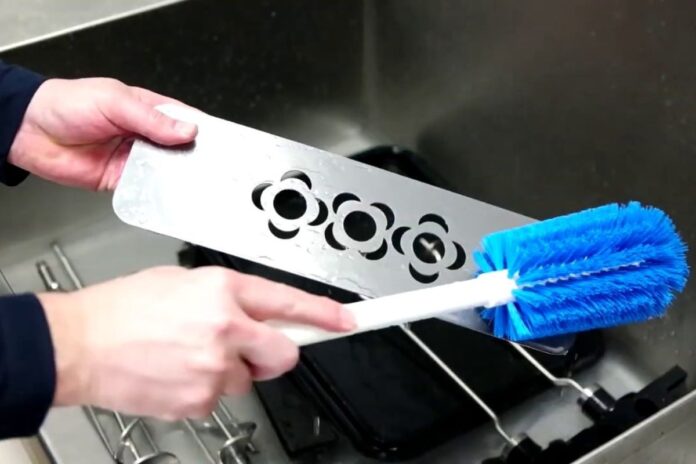
Now it’s time to wash everything apart. Prepare a sink with warm water and an approved food-grade cleaning solution, such as Stera Sheen Green Label. The appropriate dilution is vital; for instance, a typical ratio to get a decent cleaning concentration is one 2 oz. Scoop two gallons of warm water. Scrub every area carefully with the black bristle brushes supplied by the manufacturer. Pay close attention to every hole, port, and groove, making sure all lubricant and blend film is completely gone. Wash all sections well with clean water after scrubbing.
The sanitising stage
The components have to be sterilised after cleaning and rinsing. This is a specific procedure that eradicates any surviving bacteria. Using the same 2 oz. to 2 gallons of warm water ratio, prepare a new batch of sanitising solution at the right concentration, normally 100 parts per million (ppm) available chlorine. Always immerse all taken apart components, including the draw valve parts, in this sanitising fluid. Most guidelines call for a minimum of 60 seconds to five minutes; hence, contact time is crucial. Once cleaned, take the components off and let them air dry completely on a clean, dry surface. Do not dry them, as this could bring pollutants back in.
Conclusion
The single most crucial element in guaranteeing product quality, customer safety, and equipment lifespan is a disciplined approach to cleaning and sterilising your soft serve dispenser. Each phase has a crucial part, from the first safety inspection and complete dismantling to the exact use of cleaning and sterilising agents. Prevent leaks and mechanical problems by carefully monitoring the little but important elements like the seals and moving parts of your Taylor Handle-draw nd making sure they are well maintained with food-grade lubricant. You guard your company against expensive fixes, health code violations, and the letdown of delivering a subpar product by creating and strictly adhering to a daily and weekly maintenance schedule.