
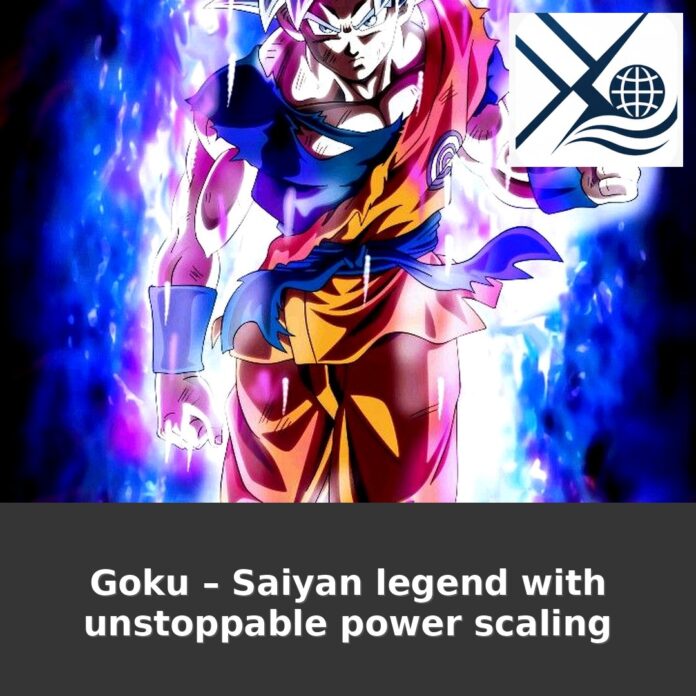

Goku sits at a strange crossroads of pop culture right now: nostalgia is loud, new viewers keep arriving, and every debate eventually turns into math. Not numbers on a chart, but a feeling—how far a character can stretch before the story snaps. That’s why unstoppable power scaling still matters in 2026 fandom talk. It’s not only about who wins a fight. It’s about what Goku represents when the ceiling keeps getting rebuilt, and why that idea refuses to age out.
Quick Character Profile Fans Should Know
The public-facing identity
Goku is the approachable face of Dragon Ball, but his “simplicity” is partly misdirection. He reads as friendly, direct, even goofy, and that masks how relentlessly he organizes his life around growth. Unstoppable power scaling isn’t an accident here; it’s baked into his day-to-day instincts.
The core temperament
He’s unusually calm about danger, including his own. That isn’t ignorance so much as clarity. Goku tends to treat crises like tests, and tests like invitations. Even when stakes are personal, he returns to the same internal question: can I become better than I was yesterday?
The consistent motivations
Food, friends, fighting—those jokes land because they’re true. But underneath is a stricter engine: competence. Goku wants to meet the strongest thing in the room and prove he can stand there too. That desire keeps feeding unstoppable power scaling, because satisfaction for him is always temporary.
Is Goku actually “simple-minded”?
He’s socially blunt and misses cues, but his strategic thinking shows up in combat choices and training discipline. He can be naive about people, not about consequences in a fight. That split is part of his charm, and part of the chaos he causes.
Why does unstoppable power scaling follow him everywhere?
Because his identity is built around exceeding limits. He doesn’t chase dominance; he chases the next level of capability. When a story keeps rewarding that mindset, scaling becomes the language the audience uses to keep up.
What makes him different from other shonen leads?
Many heroes grow to protect. Goku protects too, but he also grows because growth itself feels like truth to him. That extra motive creates tension: noble outcomes can come from selfish curiosity, and the story leans into that contradiction.
Is he more fighter than father?
He’s both, but he prioritizes differently than most people expect. He can love deeply while still choosing training over comfort. The friction isn’t that he doesn’t care. It’s that he defines “care” through preparedness and strength.
Does his personality change across eras?
The tone around him shifts, and different series emphasize different traits. But the spine stays: optimism, stubbornness, and an almost scientific relationship with challenge. Unstoppable power scaling feels consistent because his internal compass stays pointed the same way.
Backstory That Explains Their True Nature
Origin that reframes everything
Goku’s origin as a Saiyan—Kakarot—turns the “pure-hearted hero” idea into something more complicated. His species is tied to conquest, and the story plays with that inherited shadow without turning him into a cynic. Unstoppable power scaling becomes, in part, a way of rewriting what “Saiyan” means through his choices.
The shaping force of upbringing
Being raised away from Saiyan culture matters. It gives him a moral baseline that isn’t transactional. Yet it doesn’t erase the hunger for battle. It redirects it. The result is a fighter who seeks intense conflict but doesn’t need cruelty to enjoy it.
The relationship with loss
Goku’s backstory is full of separations that would harden most characters. Instead, he becomes oddly open. He grieves, then returns to motion. That pattern—hurt, adapt, transform—mirrors unstoppable power scaling in emotional form, not just physical.
How important is the Saiyan identity to his “true nature”?
It’s foundational, but not deterministic. The Saiyan capacity for growth and combat instinct fuels his trajectory. The moral direction comes from relationships and environment, not biology alone. The tension between the two creates his most interesting decisions.
Did early life make him more heroic or more reckless?
Both. His kindness is real, but it can coexist with risk-taking that scares allies. He trusts that he can rise to meet consequences, which is a heroic confidence until it becomes a gamble with other people’s lives.
Why does he bounce back from trauma so quickly?
He doesn’t “forget” trauma; he metabolizes it. Training becomes his processing language. That can look like emotional avoidance, but it also means he keeps functioning when the world is on fire. The story frames it as resilience, with costs.
Is unstoppable power scaling tied to his past or just plot escalation?
It’s tied to his past because his identity was forged through repeated reinvention—new teachers, new worlds, new rules. Plot escalation exists, sure, but the character’s history makes escalation feel like the natural continuation of his life pattern.
What role do mentors play in his origin story?
Mentors turn raw potential into direction. Each one gives him a different definition of strength: technique, restraint, creativity, sacrifice. Those lessons shape how unstoppable power scaling shows up—less as brute force, more as layered mastery.
Story Role That Drives Major Twists
Catalyst more than centerpiece
Goku is often the engine rather than the destination. The plot moves because he chooses risk, mercy, or challenge at exactly the wrong—or right—time. That’s how twists land: his values collide with the world’s rules, then something breaks.
Mercy as a plot device
His mercy is famous, but it’s also narrative leverage. Sparing enemies creates future threats and future allies, sometimes in the same arc. Unstoppable power scaling thrives here because letting an opponent live often means the next meeting comes with higher stakes and a sharper ceiling.
The “absent hero” effect
He disappears often—dead, traveling, training, recovering. That absence forces other characters to grow, then he returns as a measuring stick. The story uses him like gravity: even off-screen, he shapes decisions, rivalries, and fear.
Why do writers use him to trigger twists?
Because his priorities are clean and predictable, which makes consequences feel earned. If he chooses challenge, you anticipate danger. If he chooses mercy, you anticipate complications. Predictability becomes suspense when the world reacts in unpredictable ways.
Does he steal focus from other characters?
Sometimes, yes. But the structure often treats him as a standard rather than a spotlight hog. His presence forces others to define themselves—especially rivals and students—so even when he “wins,” the emotional victory can belong elsewhere.
How does unstoppable power scaling relate to story twists?
Scaling is the twist mechanism. A new form, a new technique, a new threshold—these moments reframe what’s possible. The surprise isn’t only the power-up. It’s how the power-up changes the moral math of the conflict.
Is Goku a hero or a force of nature?
He behaves like both. He saves people, but he also attracts disasters by refusing to fear them. The story treats him like a weather system: mostly life-giving, sometimes catastrophic, always moving.
Why does his mercy work in some arcs and fail in others?
Because the story tests whether compassion is wisdom or vanity. Some enemies respond to dignity. Others treat it as weakness. The inconsistency is the point—mercy is a risk, not a rule, and he accepts the risk.
Powers, Skills, and Combat Intelligence Breakdown
Technique over raw numbers
The fan conversation often reduces him to forms and multipliers, but his most consistent advantage is how he learns. He copies, adapts, and refines under pressure. Unstoppable power scaling looks flashy, yet it’s often the quiet mid-fight adjustment that changes the outcome.
Transformations as language
Super Saiyan isn’t just a power increase; it’s emotional translation. Later states—Blue, Ultra Instinct—turn into philosophical statements about control, instinct, and restraint. These forms tell you what lesson he absorbed, not only what threat he surpassed.
The underrated intellect
Goku can be foolish in ordinary life, then coldly precise in combat. He reads timing, psychology, and stamina like a craftsman. When he gambles, it’s often because he’s weighing probabilities in real time, not because he’s clueless.
Is his strength mostly genetics?
Genetics give him capacity. The outcome comes from obsession and exposure to high-level training environments. Most Saiyans don’t become him. He turns potential into inevitability through repetition, failure, and a willingness to be embarrassed while learning.
Why is unstoppable power scaling believable in his fights?
Because he keeps paying a price for growth—pain, time, risk, and relationships strained by obsession. It’s not “free.” Even when the story accelerates, it usually anchors the jump in his pattern: adapt, break, rebuild.
What makes Ultra Instinct different from earlier upgrades?
It reframes victory as efficiency rather than aggression. The form implies a separation between intention and movement, like the body acting without the mind’s delay. It’s less “stronger punch,” more “no wasted motion,” which fits his evolution into refinement.
Is he a better tactician than Vegeta?
Different styles. Vegeta often plans with pride and principle; Goku improvises with curiosity and speed. In a static matchup, planning wins. In chaos, improvisation wins. Their rivalry works because neither approach fully replaces the other.
Does he rely too much on new forms?
He uses forms, but he also wins with fundamentals—footwork, feints, energy management, pressure control. The best fights make that clear: the form creates opportunity, the skill cashes it. Unstoppable power scaling is the headline; technique is the article.
Iconic Moments That Defined Their Reputation
The first Super Saiyan shockwave
That moment didn’t just change Goku; it changed the audience’s idea of escalation. It set a template: emotion, rupture, transformation, consequence. Unstoppable power scaling becomes a cultural reference point because that reveal felt like a line the genre crossed permanently.
Sacrifice that complicates the legend
Goku has multiple moments where he chooses loss on purpose—because winning clean isn’t always possible. These scenes matter because they prove the legend isn’t only power. It’s judgment, timing, and sometimes stepping aside so others can live.
The “limit” that never holds
Every time the story says he’s reached the end, he contradicts it. That loop can feel repetitive, but it’s also the thesis: the ceiling is a story device, not a law. Unstoppable power scaling is basically the audience watching that thesis play out again and again.
Which moment made him globally iconic?
For many, it’s the Super Saiyan breakthrough against Frieza—a combination of rage, grief, and sudden clarity. It’s visually unforgettable, but more importantly, it changes the moral temperature of the fight.
Are iconic moments only about winning?
No. Some defining moments are about choosing restraint, accepting help, or trusting someone else to finish the job. Those scenes expand his reputation beyond “strongest.” They show he can be flexible with pride when lives are involved.
Does unstoppable power scaling cheapen older iconic scenes?
It can, if later upgrades make earlier victories look small. But strong storytelling preserves meaning by tying scenes to emotion and consequence, not just output. A lower “power level” moment can still feel heavier because it cost more.
Why do fans keep returning to the same scenes?
Because they function like benchmarks. You can argue forms all day, but a scene is evidence you can replay. Iconic moments become shared language, a way to debate without re-litigating the entire timeline.
What role does Piccolo play in iconic Goku moments?
Piccolo often represents the “other” Goku could have been—hardened, isolated, pride-driven. When they align, it signals growth beyond combat. Their dynamic frames Goku’s reputation as something built with former enemies, not just defeated ones.
Relationships and Rivalries That Shape Decisions
Rivalry as a compass
Vegeta isn’t only competition; he’s calibration. Their rivalry gives Goku a mirror that reflects both his strengths and his blind spots. Unstoppable power scaling gains emotional weight because it’s not happening in solitude—someone is always watching, judging, chasing.
Family as an uneasy anchor
Goku’s family life is complicated. He loves his kids, but he doesn’t live like a conventional parent. That creates friction, especially as Gohan grows into his own identity. Goku’s decisions often reveal what he values: not comfort, but readiness.
Enemies turned allies
His relationships with former threats are a recurring pattern: trust offered early, boundaries tested later. This shapes decisions in battle because he tends to see potential first, danger second. It’s generous. It’s also a recurring source of disaster.
Why does rivalry matter more to him than status?
Because he isn’t chasing a throne. He’s chasing proof that growth is real. Rivalry supplies measurable pressure: a living standard that changes as he changes. That makes his choices feel personal, not political.
Does unstoppable power scaling damage relationships?
It can. Training requires time, absence, and risk that others didn’t sign up for. He sometimes treats danger as manageable when others experience it as trauma. Those mismatched perceptions create emotional distance, even when love is present.
Is Goku selfish or just singularly focused?
He’s focused to the point of self-centeredness, which isn’t the same as cruelty. He can overlook others’ fear because he doesn’t feel it the same way. The story usually treats this as a flaw, not a quirk, especially when consequences land.
How do allies influence his fighting style?
Allies give him different “rules” for strength: patience, teamwork, restraint, sacrifice. He absorbs those rules and expresses them mid-fight. That’s why he can switch from playful sparring to lethal precision when someone he respects is threatened.
What makes his rivalries feel different across arcs?
The stakes shift from survival to philosophy. Early rivals challenge whether he deserves to exist. Later rivals challenge what strength should mean. Unstoppable power scaling becomes a debate about values, not just output.
Strengths, Flaws, and Emotional Complexity Explained
The strength that causes problems
His optimism is real power, but it can become denial. He often assumes a future where he can fix anything by getting stronger. That belief fuels unstoppable power scaling, and it also explains why he sometimes chooses the hard road even when a safer one exists.
The flaw that repeats
He gives opponents chances. Sometimes it’s compassion, sometimes it’s curiosity. The difference is subtle, and the story keeps testing it. When it goes wrong, it isn’t because he didn’t understand danger. It’s because he trusted growth—his and theirs—over certainty.
The emotional core
Goku isn’t emotionless; he’s selective. He doesn’t dramatize his feelings, but they surface as decisive turns: rage when innocence is violated, quiet grief when loss becomes permanent, tenderness that flashes and then vanishes behind action.
Is his optimism naïve or strategic?
Both. Optimism keeps him moving when fear would freeze him. But it can also function as strategy—if he believes a path exists, he’ll search until he finds it. The risk is that belief can ignore signals that other people can’t afford to ignore.
Does unstoppable power scaling reflect emotional growth too?
Yes, when it’s written well. New levels often correspond to new emotional control, new humility, or new clarity about sacrifice. The best transformations feel like character development made physical, not a cosmetic upgrade.
Why do some fans call him irresponsible?
Because he treats existential threats as solvable through confrontation, and that can look like gambling with lives. He sometimes prioritizes a “fair” fight over an immediate win. The story frames that as a defining trait, not always a virtue.
What makes him emotionally complex despite his bluntness?
He holds contradictions without resolving them. He can be kind and reckless, devoted and absent, humble in victory and stubborn in belief. Complexity isn’t always verbose. Sometimes it’s a character repeatedly making the “wrong” choice for the “right” reason.
Does he ever learn from his worst mistakes?
He learns, but he doesn’t become cautious. The lesson is usually refinement—better judgment, better control, better timing—not retreat. That keeps him recognizable, and it keeps unstoppable power scaling alive as the default solution he improves rather than abandons.
Legacy, Impact, and Ongoing Fan Searches
The genre template he helped cement
Goku’s legacy isn’t just “strong hero.” It’s the narrative expectation that limits are negotiable. Modern power fantasies often borrow that rhythm—struggle, breakthrough, new horizon—whether they admit it or not. Unstoppable power scaling became a shorthand because his story made it feel normal.
Cultural reach beyond anime
He’s a symbol now: referenced in sports celebrations, music, memes, and casual conversation that doesn’t even require context. The character crossed the boundary where you don’t need to have watched the show to know what he represents—persistence, transformation, refusal to stay small.
Why the debates never end
Because the text invites debate. New arcs add new rules, fans reinterpret old feats, and the franchise keeps multiple eras in play at once. The argument becomes part of the fandom’s social glue. Unstoppable power scaling isn’t only analysis; it’s participation.
Why is his legacy so durable?
Because it’s adaptable. You can read him as a pure hero, a reckless competitor, a spiritual martial artist, or a walking metaphor for self-improvement. Different generations pick different versions without breaking the core.
Does unstoppable power scaling hurt storytelling long-term?
It can, if conflict becomes only a ladder. But it can also deepen storytelling when strength changes what a character must sacrifice, not just what they can defeat. The best arcs use scaling to force moral choices, not to replace them.
Is he still relevant compared to newer protagonists?
Yes, partly because newer protagonists are often responding to the template he popularized. Even stories that subvert power escalation define themselves against that tradition. He remains a reference point, which is a form of relevance that doesn’t depend on being “new.”
What’s the biggest misconception about Goku?
That he’s only about strength. Strength is the surface. Underneath is an ethic: meet challenge honestly, keep learning, and accept consequences even when they’re painful. That ethic is why people keep returning, even after the debates get loud.
How does Akira Toriyama shape the legacy?
Through tone as much as plot. The balance of humor, menace, and sudden sincerity gives Goku room to be more than a warrior. That tonal elasticity is why the character survives shifts in audience taste and still feels recognizable.
Conclusion
Goku remains the cleanest argument for why fictional strength still grabs real attention. The fights are spectacle, but the deeper hook is the insistence that a limit is only a temporary story beat. Unstoppable power scaling keeps following him because it’s how the character thinks, not just how he wins. Even when the franchise changes tone or era, the same gravity returns: challenge arrives, he answers, the ceiling moves. That loop can exhaust some viewers, but it also explains why the legend refuses to fade.