
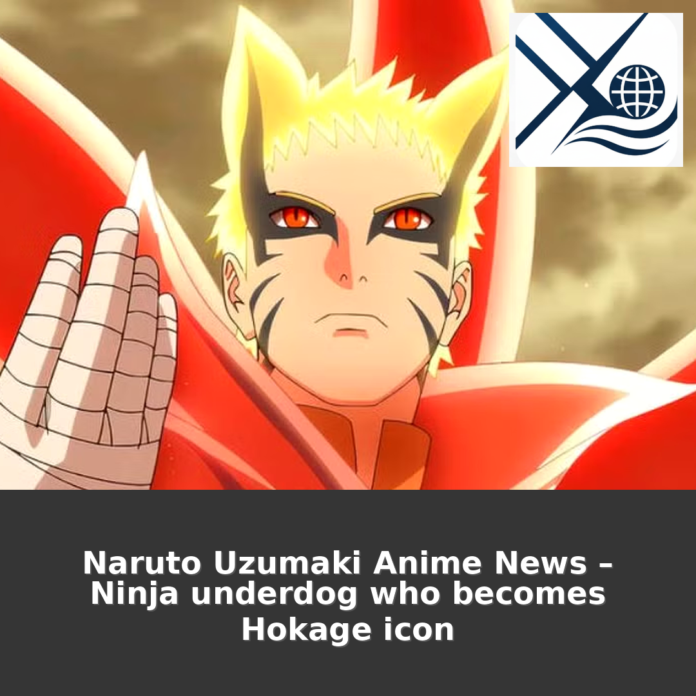

Naruto Uzumaki grip on pop culture hasn’t faded; it’s shifted. A new generation clips old scenes like they’re current, long-time fans argue arcs with fresh heat, and the franchise still sets the tone for how shōnen heroes are measured. What keeps it alive is the friction inside the character. Ninja underdog Hokage isn’t a slogan in his story—it’s a lived contradiction, loud on the surface, complicated underneath. He starts as the village problem and ends as the village promise, but the path between those points is where the real narrative weight sits.
Quick Character Profile Fans Should Know
Intro: Why Naruto still reads as “now”
Naruto enters the story as noise—pranks, shouting, attention-seeking that borders on desperate. But the series frames that chaos with intent. The boy isn’t annoying for comedy alone; he’s trying to exist in a town that pretends he doesn’t. That’s why the ninja underdog Hokage arc lands so hard. His optimism isn’t naïve, it’s tactical. He can’t afford to stop believing, because belief is the only currency he starts with.
The essentials without flattening him
He’s an orphan raised inside a social freeze-out, carrying a sealed beast that makes adults flinch and kids copy their fear. Naruto’s personality—brash, clingy, defiant—functions like armor. He fails loudly, learns publicly, and absorbs humiliation without disappearing. The ninja underdog Hokage identity grows out of that exposure. He isn’t handed mystique; he earns visibility the painful way, by surviving being seen.
What fans misread when they summarize him
People reduce Naruto to “never gives up,” but stubbornness is the least interesting part. The deeper engine is his hunger for acknowledgement—and the fear that if he stops moving, the loneliness returns full volume. When he talks about becoming Hokage, he’s not chasing a title first. He’s chasing proof that his life isn’t an accident. Ninja underdog Hokage becomes a self-made receipt.
Is Naruto’s personality mostly comedy early on?
Early Naruto is written with loud humor, but the jokes sit on top of social rejection. The comedy is a cover for isolation, not the point. His pranks aren’t random; they force the village to react. That emotional context is what keeps his early behavior from feeling hollow.
What makes Naruto different from typical shōnen leads?
He’s not born admired, not quietly competent, and not socially safe. Naruto begins as someone people avoid. The story makes him win trust the hard way—through repeated public risk and consistent empathy. That social climb, not just power growth, is the real distinction.
Does the Nine-Tails define Naruto as a character?
It defines how others treat him, which shapes how he treats himself. But Naruto’s core choices—protecting people who rejected him, refusing to discard rivals—are his. The beast is a pressure source, not the author of his morality. He becomes larger than the seal.
Why is “Hokage” such a big deal to him?
Hokage represents recognition and belonging, not just leadership. Naruto wants the village to say his name without fear. The role is a symbol that the social exile is over. In that sense, becoming Hokage is his version of being allowed a home.
Is Naruto’s story still relevant without new episodes?
Yes, because the themes aren’t tied to release cycles. Loneliness, identity, resentment, forgiveness—those don’t expire. Even when fans revisit older scenes, they read them through new life experience. That’s why the character keeps returning to timelines and debates.
Backstory That Explains Their True Nature
Intro: The loneliness that creates motion
Naruto’s childhood isn’t just sad; it’s structurally isolating. Adults avoid him. Kids sense the rule without being told the reason. The result is a child who learns that silence equals erasure. He reacts by being impossible to ignore. Ninja underdog Hokage begins as a survival response, long before it becomes a heroic narrative.
The village’s secret as a daily sentence
Carrying Kurama isn’t merely “having power.” It means walking through streets where kindness feels illegal. Naruto grows up with no stable family anchor, no gentle explanation, and no emotional translator for what’s happening. That absence forces him to interpret rejection as a personal flaw, then fight that interpretation with sheer noise and will. It’s not pretty. It’s human.
The moment the story quietly pivots
When Naruto finally receives real guidance—especially from figures who don’t flinch at him—the character’s trajectory changes. Not because he becomes calmer overnight, but because he gains a reason to refine himself. The ninja underdog Hokage dream stops being pure protest and starts becoming purpose. He’s still messy. He’s just no longer alone in the mess.
Did Naruto know about the Nine-Tails as a child?
He doesn’t fully understand it early on. He feels the consequences—fear, distance, whispers—without receiving the context. That lack of explanation is part of the cruelty. The story uses that ignorance to show how easily a child can be blamed for something they never chose.
Why didn’t the village support him more?
In-world, fear and trauma drive the behavior. People associate Kurama with disaster and project that onto the container. It’s not rational, but it’s believable social behavior. The narrative also needs Naruto to start from emptiness so that earned bonds later have real weight and cost.
Was Naruto’s dream always about leadership?
Not at the beginning. It starts as a hunger to be acknowledged, even if the route is exaggerated. Leadership becomes real later when he understands what protecting others actually demands. The dream matures in parallel with his empathy, not with his ego alone.
Does Naruto’s childhood explain his emotional outbursts?
It explains the intensity, yes. A kid who isn’t comforted doesn’t learn emotional regulation in a normal way. Naruto’s outbursts read like insecurity turned outward. As he gains bonds and mentorship, the outbursts reduce—not because he “improves,” but because his nervous system finally gets relief.
Is Naruto’s backstory unusually dark for a mainstream series?
It’s dark, but it’s delivered in layers. The series often masks it with comedy and action, then reveals the emotional cost when it matters. That pacing makes the darkness more digestible while still leaving a lasting impression. The contrast is part of the storytelling hook.
Story Role That Drives Major Twists
Intro: A hero who changes the plot by refusing endings
Naruto isn’t just the protagonist; he’s a destabilizer of outcomes. Many arcs are built on the assumption that hatred must conclude in death or exile. Naruto interrupts that assumption, again and again. It’s why ninja underdog Hokage feels like a disruptive identity: he refuses the social rules and the narrative rules at the same time.
Turning enemies into mirrors
The series uses Naruto as a lens that forces antagonists to confront what they became. That doesn’t mean everyone gets redeemed, and it doesn’t mean consequences vanish. But Naruto’s insistence on seeing the person behind the threat changes the tone of conflict. Battles become arguments about meaning, not just power. That’s why major twists hit harder around him; he pulls hidden motives into daylight.
The pressure point of legacy and prophecy
Naruto’s role also sits inside wider forces—lineage, mentorship chains, inherited will. Yet the story repeatedly stresses choice. He’s not valuable because fate picked him; he’s valuable because he keeps choosing the harder emotional route when easier options exist. Ninja underdog Hokage becomes the spine of the plot: a boy insisting that the future doesn’t have to resemble the past.
Does Naruto “talk” his way out of fights too much?
He talks because the story frames ideology as part of combat. Many enemies are driven by grief, ideology, or betrayal, not simple malice. Naruto’s words are a weapon—sometimes clumsy, sometimes precise. It’s fair to dislike the trope, but it’s consistent with the series’ core argument about cycles of violence.
Why are rivalries so central to Naruto’s plot?
Rivalries provide pressure that forces growth without turning the story into pure training. Naruto needs a living benchmark—someone close enough to compare, distant enough to chase. That dynamic keeps the plot personal even when stakes become global. It also turns battles into emotional reckonings.
What’s Naruto’s biggest narrative function?
He’s the character who refuses to let pain become policy. Where others turn trauma into ideology, Naruto keeps trauma as a memory and chooses a different path. That decision doesn’t erase loss, but it blocks the automatic reproduction of cruelty. The plot pivots around that refusal.
Does Naruto rely too much on destiny themes?
Destiny exists as background tension, but the story repeatedly undercuts deterministic outcomes by emphasizing will, relationships, and sacrifice. Naruto gets opportunities he didn’t earn, and then he earns what the opportunities require. That interplay keeps it from being pure fate worship. It’s more “fate opens doors; choices decide rooms.”
Is Naruto’s role unique compared to other leads?
What feels unique is the social dimension. He doesn’t just grow stronger; he becomes acceptable in a community that initially rejected him. That’s a different kind of victory than simply surpassing a villain. The plot treats belonging as a form of power, and Naruto is built to prove it.
Powers, Skills, and Combat Intelligence Breakdown
Intro: Power that looks simple until it isn’t
Naruto’s toolkit is often mocked as repetitive—shadow clones, Rasengan, more clones. But the simplicity is deceptive. He uses volume as strategy, not laziness. The ninja underdog Hokage path demands a style that can compensate for gaps: low status, limited early polish, constant underestimation. Naruto turns those conditions into fuel.
Shadow clones as learning technology
Shadow clones aren’t only for swarming opponents. They’re a way to multiply practice, multiply risk-taking, and multiply information. Naruto’s growth accelerates because he’s willing to endure the exhausting feedback loop of failure at scale. That’s combat intelligence—turning a flashy move into a training system. He also uses clones for misdirection, rescue, scouting, and emotional decoys in tense moments.
The evolution from brute force to layered tactics
As Naruto matures, his fighting becomes less about raw chaos and more about timing, empathy, and reading people. Sage Mode reflects that shift: still aggressive, but disciplined. Later transformations carry higher stakes because they require control, negotiation, and emotional regulation. The ninja underdog Hokage doesn’t become a genius in the quiet, conventional sense. He becomes a battlefield thinker who understands momentum, morale, and the cost of hesitation.
Is Naruto naturally talented or mostly hardworking?
He’s both, but the story emphasizes that talent without guidance didn’t help him early. His raw chakra and stamina are extraordinary, yet he flounders until mentorship and motivation align. Once that happens, his work ethic turns potential into usable skill. The narrative frames effort as the bridge between gift and identity.
Why does Naruto keep using the same signature moves?
Signature moves are branding inside a long-running action series, but there’s also logic. Clones and Rasengan scale with creativity; they’re frameworks, not single answers. Naruto continually modifies how he applies them. The repetition becomes a language the audience understands while the details evolve over time.
Is Naruto “smart” in fights?
He isn’t academically framed as a prodigy, but he reads situations fast, improvises under stress, and learns from pain. That is a form of intelligence. His best moments involve baiting opponents, controlling space, and using clones to manipulate perception. The surprise is how often he wins by thinking, not overpowering.
What does Sage Mode represent for Naruto?
It’s a visual marker of discipline and patience—qualities he struggled with early. The mode requires stillness, balance, and awareness, which contrasts with his noisy childhood self. It’s not just a power-up; it’s character development expressed in mechanics. Naruto’s body mirrors his mind gaining control.
How does Kurama change Naruto’s fighting style?
Kurama adds scale and danger. It offers huge power, but it also threatens Naruto’s autonomy. Over time, Naruto’s style shifts from “borrow power” to “integrate power,” which changes his decision-making. The fights become less about unleashing rage and more about choosing when not to.
Iconic Moments That Defined Their Reputation
Intro: Reputation built through public risk
Naruto’s most defining scenes aren’t only about victory; they’re about being seen doing something that contradicts how people labeled him. He repeatedly steps into danger for others, often when nobody expects it. Ninja underdog Hokage becomes believable because the series shows him paying for his principles in front of witnesses.
The emotional headline scenes fans replay
Certain moments endure because they combine action with exposure: Naruto standing his ground against impossible odds, choosing mercy when revenge is available, and refusing to discard someone everyone else has written off. Those scenes function like public testimony. He isn’t arguing he deserves respect—he’s demonstrating why the village’s judgment was wrong.
The quieter moments that age well
Naruto’s legacy also lives in small exchanges: apologies that aren’t performative, grief that doesn’t turn into cruelty, laughter that returns after trauma. These scenes matter because they reveal continuity. The boy who wanted attention becomes a man who can carry responsibility without losing warmth. That transition is the real iconography, not a single punch.
What’s the most important “iconic” trait Naruto shows?
Consistency. He doesn’t become kind only when it’s convenient. He stays emotionally present even in conflict, which is rarer than brute strength in shōnen storytelling. That reliability turns him into a moral reference point for other characters. The audience feels it as trust.
Why do Naruto’s speeches stick in memory?
Because they’re usually directed at someone broken, not someone abstract. Naruto’s words often come after he’s been hurt, not before. That timing gives the speech weight. It’s not a lecture; it’s a decision made under pressure, in front of someone who expects cruelty.
Are Naruto’s iconic moments more emotional than action-based?
Often, yes. The action sequences are memorable, but the emotional context is what makes them replayable. Naruto’s fights tend to resolve identity questions as much as power questions. Fans remember what the win meant, not only how it looked. The emotional landing is the hook.
Do iconic scenes rely on nostalgia?
Nostalgia amplifies them, but it’s not the source. Many scenes work even for first-time viewers because they are structurally clear: a rejected kid chooses courage, again. The storytelling is direct, and the stakes are personal. That clarity is why scenes survive edits, memes, and rewatch culture.
Does Naruto’s reputation change inside the story convincingly?
It changes gradually, which helps. The village doesn’t flip overnight; trust accumulates through repeated proof and shared danger. Some skepticism lingers longer than fans like, but that realism supports the payoff. Naruto earns his place, step by step, in the public eye.
Relationships and Rivalries That Shape Decisions
Intro: Bonds that aren’t always comfortable
Naruto’s relationships aren’t clean inspiration posters. They’re messy, emotionally charged, and often built through conflict. That’s the point. The ninja underdog Hokage arc requires connection, because isolation is what created his worst impulses. His bonds become both motivation and restraint.
Team dynamics that teach him who he is
Early team structures expose Naruto’s insecurity and competitiveness, but they also give him a stable stage to grow on. Mentors don’t just teach technique; they teach boundaries, accountability, and trust. Naruto learns that being loved doesn’t mean being indulged. It means being challenged by people who stay.
Rivalry as a lifelong negotiation
The rivalry at the center of Naruto’s story isn’t a simple “who’s stronger.” It’s a tug-of-war over worldview. Naruto’s insistence on not giving up on someone who is actively leaving becomes the emotional engine of the series. That’s where ninja underdog Hokage stops being personal ambition and turns into a philosophy: nobody gets thrown away as a solution.
Why is Naruto so attached to certain rivals?
Because he recognizes the same loneliness wearing a different mask. Naruto senses that if someone like him can be lost, then his own progress is fragile. Saving the rival becomes a way of saving the idea that bonds matter. It’s personal, but it’s also ideological.
Does Naruto’s empathy ever become unrealistic?
Sometimes it stretches plausibility, but the story usually grounds it with pain. Naruto doesn’t empathize from safety; he empathizes while bleeding. That doesn’t guarantee realism, but it keeps the gesture from feeling cheap. The narrative wants empathy to be costly, not decorative.
Which relationship changes Naruto the most?
Mentorship relationships reframe his identity. When someone competent treats him as worth teaching, Naruto’s self-image shifts. He stops performing for attention and starts working for meaning. That pivot changes everything that follows, including how he handles conflict and power.
Are Naruto’s friendships mostly one-sided early on?
Many are. Naruto gives more than he receives at first, partly because he’s starved for connection. Over time, that imbalance corrects as others witness his reliability. The payoff is stronger because the series makes early loneliness visible. Friendship becomes earned, not assumed.
Why do bonds matter as much as battles in this story?
Because battles are used to test values. A fight isn’t only about who wins; it’s about what someone is willing to destroy to win. Naruto’s bonds define his limits and his courage. They make him hesitate in the right places and charge in the right places. That’s narrative structure, not filler.
Strengths, Flaws, and Emotional Complexity Explained
Intro: The charm comes with sharp edges
Naruto’s strengths are obvious—resilience, courage, emotional openness—but the story doesn’t pretend those are always pretty. His need for connection can turn into obsession. His optimism can become pressure on others. Yet the ninja underdog Hokage identity works because it includes those flaws, not because it hides them.
Strength as endurance, not invincibility
Naruto takes hits in every sense: physical defeat, humiliation, rejection, grief. His strength is the ability to keep functioning while carrying emotional weight. He doesn’t win by being untouched. He wins by being willing to be hurt and still show up. That kind of resilience reads more mature as viewers age.
Flaws that create friction, not just “quirks”
He can be impulsive, intrusive, stubborn to the point of ignoring someone’s agency. The story sometimes celebrates these traits and sometimes punishes them. That inconsistency mirrors real life: the same trait can be heroic in one context and harmful in another. Naruto’s emotional complexity comes from learning where the line is, then still occasionally crossing it.
Is Naruto’s optimism ever toxic?
It can be. When optimism becomes refusal to hear someone’s boundaries, it stops being kindness. The story flirts with that line in key arcs. But it often re-centers the idea that optimism must include accountability and risk, not just words. Naruto’s best optimism is the kind that shows up in action.
What’s Naruto’s biggest emotional weakness?
Fear of abandonment. It’s threaded through his loudness, his loyalty, and his refusal to let relationships end. That fear makes him persistent, but it also makes him cling. The story treats it as both a wound and a source of empathy. He understands loneliness because he lived it.
Does Naruto actually grow emotionally, or just get stronger?
He grows emotionally in visible ways: he listens more, he chooses restraint, he carries responsibility without constant validation. Power growth is flashy, but the emotional growth is what changes his leadership capacity. The ninja underdog Hokage arc isn’t complete until he can hold stress without breaking into performance.
Why do some fans find Naruto annoying?
Because his early behavior is designed to grate. It reflects insecurity, not coolness. Viewers who don’t connect with that kind of vulnerability may only see noise. Others recognize it as a believable coping mechanism for a rejected kid. The character asks for patience, and not everyone wants to give it.
Is Naruto emotionally intelligent?
In a specific way, yes. He reads pain in others quickly and responds with directness. He’s less skilled at subtle social nuance early on, but he improves. His emotional intelligence is rooted in experience rather than polish. That’s why it feels earned, not scripted.
Legacy, Impact, and Ongoing Fan Searches
Intro: Why the character won’t stop being referenced
Naruto sits in the DNA of modern anime fandom. Not because he’s the first underdog hero, but because the series ties underdog status to social belonging, not just strength. The phrase ninja underdog Hokage captures why the legacy sticks: it’s about going from unwanted to indispensable without turning bitter.
Influence on storytelling and character archetypes
After Naruto, many series borrowed the template—loud protagonist, inner monster, rival with trauma, mentor with scars. But what’s harder to copy is the emotional through-line: Naruto’s refusal to treat people as disposable. That stance shaped how fans talk about redemption, cycles of violence, and “talk no jutsu” as a cultural shorthand—even when they’re joking.
The long tail: memes, edits, debates, and rewatch culture
Naruto thrives because it’s re-readable. People return for different reasons: action choreography, rival arcs, grief themes, friendship dynamics. Each rewatch changes the emphasis. The underdog isn’t always the same to a 14-year-old as to a 30-year-old. That’s the rare trick—Naruto grows with the audience, even when the footage stays fixed.
Why does Naruto remain popular years after the main story?
Because the character hits multiple emotional entry points: loneliness, ambition, found family, rivalry, grief, forgiveness. Those themes don’t age out. Also, the series has enough tonal range—comedy, tragedy, hype—that different viewers can latch onto different parts. Popularity becomes self-sustaining through community.
Is Naruto’s legacy more about the character or the world?
Both, but the character is the anchor. The world is rich, yet Naruto’s emotional journey gives the world meaning. Without him, the politics and clans are just lore. His movement from outsider to leader makes the setting feel lived-in and morally consequential.
How did Naruto change anime fandom culture?
It helped normalize long-form emotional investment in mainstream shōnen. It also created a shared vocabulary of arcs, moments, and rival dynamics that fans still reference. Even critiques become part of the culture. When a character becomes a meme and a model at once, the footprint is permanent.
Do modern viewers still connect with Naruto’s themes?
Yes, especially the social themes. Being judged for something you didn’t choose is a universal fear. Naruto turning that judgment into connection rather than revenge remains compelling. The ninja underdog Hokage idea still reads like a challenge: what if you refuse to become what hurt you?
Does Naruto’s story have an “open-ended” legacy?
It does, because debates around his choices never fully settle. Some viewers see his forgiveness as strength; others see it as unrealistic. That tension keeps the story alive in discussion. A closed legacy would be quiet. Naruto’s legacy stays noisy, which suits him.
Conclusion
Naruto’s endurance isn’t a mystery of marketing; it’s a character built on pressure. He begins as a walking stigma and becomes a public symbol without losing the scar tissue that got him there. The ninja underdog Hokage arc matters because it doesn’t treat belonging as automatic, or power as the only proof of worth. Naruto’s best scenes aren’t just victories; they’re refusals—refusals to abandon people, refusals to accept easy hatred, refusals to let loneliness dictate the future. That kind of hero leaves room for argument, and room for return. The icon holds because it’s imperfect, and still standing.