
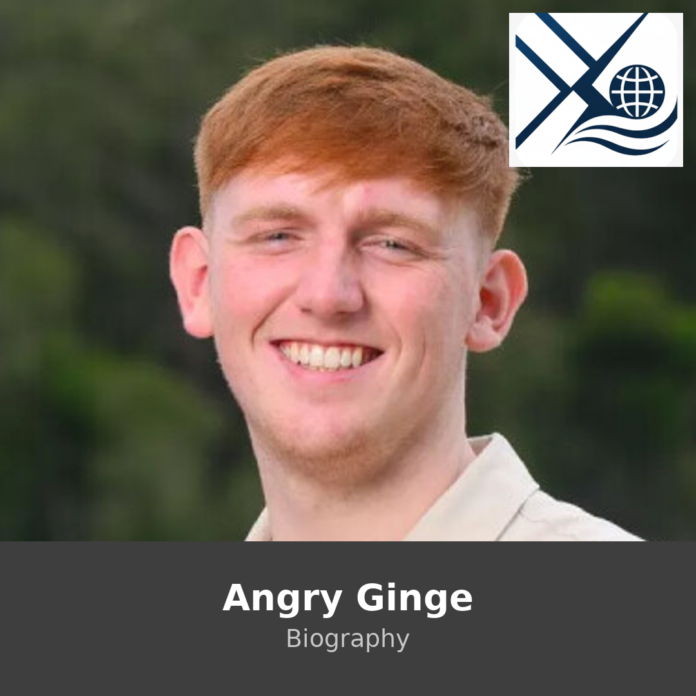

He has become harder to describe as “just” an online personality. Angry Ginge now sits in that crowded, newly familiar territory where streaming culture and mainstream entertainment overlap, and where the audience is no longer confined to a single platform or demographic. The renewed attention has not come from a carefully staged reinvention. It has arrived through visibility that stacked up quickly: major collaborations, charity-football appearances, wider media bookings, and the kind of mainstream exposure that puts a creator in front of people who have never opened Twitch.
Angry Ginge’s rise also reflects a shift in how British celebrity is manufactured and maintained. The old route was linear: television, tabloids, brand deals. The newer route can run backwards. A creator builds an audience in public, in real time, with the awkwardness, volatility, and occasional brilliance left in the edit. When the mainstream finally looks over, the person is already fully formed.
That is why Angry Ginge is being discussed now with a different tone. Not as a novelty or a clip in circulation, but as a figure with a footprint that keeps widening.
Personal and Family Profile
Angry Ginge’s personal profile is, in many ways, typical of creators who come up through live streaming: highly visible in one sense, carefully controlled in another. The audience can spend hundreds of hours watching him talk, react, argue with a game, celebrate a win, or spiral into frustration. Yet the same audience may know surprisingly little that is concrete about his private life, because the content is intimate without being revealing.
What is publicly established is straightforward. Angry Ginge is the professional name of Morgan Sam Lee Burtwistle, an English streamer and YouTuber associated most strongly with football and FIFA-era gaming content. He has spoken publicly about growing up in Greater Manchester, and the setting matters because it informs the persona: directness, humour that can turn sharp, and a kind of self-mockery that keeps things from drifting into self-importance.
The rest of the picture is partial, and the gaps are not accidental. With creators, privacy is less a single decision than a daily practice. You choose what you never mention. You choose what you reference once and never again. You choose what you allow to become a storyline.
Angry Ginge has, for the most part, kept the personal material from overwhelming the professional narrative. That separation becomes harder as fame expands beyond the core audience, but it remains visible in how little is definitively stated in the public record about relationships and family life.
Spouse or Long-Term Partner
There is no widely consistent, clearly public confirmation that Angry Ginge is married. Where online speculation circulates, it tends to move faster than verifiable information, and it is often built from fragments: a passing remark on stream, an assumption from a photo, a rumour repeated as if it were fact.
In the absence of a clear public statement from Angry Ginge, responsible reporting stays conservative. It is fair to say that his content has not been structured around a public partnership, and that he has not presented a spouse as part of the brand.
That choice is not uncommon for creators who rely on spontaneity. Once a partner becomes content, the boundary is difficult to rebuild.
Children and Family Life
Nothing in the widely accessible public record establishes that Angry Ginge has children. That does not close the door on private reality, but it does set limits on what should be presented as fact.
Creators face a particular problem here: audiences can confuse familiarity with entitlement. A streamer can feel like someone you know, because you have spent time with them, but the relationship is one-way. Family details are often where that illusion becomes most risky.
Angry Ginge has spoken about family in broad terms, and he has referenced his background. He has not, as far as public confirmation goes, turned children or parenting into a public narrative.
Friends and Professional Circle
Angry Ginge’s professional circle is visible through collaborations, appearances, and the creator ecosystem that now functions like an entertainment industry in miniature. In that environment, friendship and business blur. The “friend” is also the guest, the co-streamer, the person who can share an audience.
He has been associated publicly with football-content creators, podcast hosts, and larger group projects where the dynamics are part of the appeal. Those relationships often look informal on camera, but they are sustained by a shared understanding of timing, exposure, and the unwritten rules of internet status.
When Angry Ginge appears alongside more established internet brands, it signals acceptance as much as it signals popularity. It also shows that he is considered reliable enough for someone else’s platform.
Parents and Early Family Background
Angry Ginge’s early background has been referenced publicly in ways that frame his rise as a contrast story: ordinary beginnings, sudden visibility, and an ongoing insistence that he has not changed as much as people assume.
He has spoken publicly about where he is from, and he has referenced family members in ways that point to support and grounding. It is also clear that his identity is tied to place and class markers that many audiences recognise immediately, and that he has not tried to sand them down for broader appeal.
Beyond what he has himself chosen to share publicly, the details remain limited. That restraint is appropriate. It keeps non-public relatives out of an attention cycle they did not sign up for.
Relationship History
Angry Ginge’s relationship history is not mapped in a way that supports definitive claims. Online audiences often attempt to build timelines, but those timelines tend to be made of assumptions, and they are frequently wrong.
What can be said with confidence is that he has not relied on relationship drama as a visibility engine. His public momentum has come from content performance, platform growth, and increasingly mainstream bookings, not from turning private life into a recurring plot.
That does not mean relationships have not mattered. It means they have not been treated as public property.
Is Angry Ginge married?
There is no widely established public confirmation that Angry Ginge is married. Online chatter exists, but it is not the same as a clear statement from him or a consistent public record. In responsible profile writing, the absence of confirmation matters. It keeps the focus on what is verifiable.
Does Angry Ginge have a publicly known long-term partner?
Angry Ginge has not consistently presented a long-term partner as part of his public identity. If a relationship exists, it has not been positioned as a central feature of his media presence. Creators often protect this boundary because once a partner becomes content, privacy becomes difficult to recover.
Does Angry Ginge have children?
Nothing in the commonly available public record establishes that Angry Ginge has children. Because children are not public figures and privacy risks are high, it is important not to imply details that have not been clearly disclosed. Where creators keep family matters private, that choice should be respected.
What is publicly known about Angry Ginge’s family background?
Angry Ginge has spoken publicly about being from Greater Manchester and has referenced his upbringing in broad terms. The most consistent theme is grounding: an origin story that he does not romanticise but also does not hide. Specific identifying details about non-public family members are not necessary to understand his profile.
Is Angry Ginge close with his family?
Publicly, Angry Ginge has referenced family in a way that suggests attachment and loyalty, particularly when discussing where he comes from. But closeness is hard to quantify from content alone. Streamers share emotion in public, yet they can still keep real boundaries. The record supports a general sense, not certainties.
Who are Angry Ginge’s closest friends?
Angry Ginge’s friendships are partly visible through collaborations, but online proximity is not a perfect measure of private closeness. Many creator relationships are professional alliances that look like friendship on screen. He has appeared in circles tied to football content and wider internet entertainment, but a definitive “inner circle” is not publicly mapped.
Has Angry Ginge spoken about past relationships?
Angry Ginge has not built his public narrative around detailed discussion of past relationships. Passing remarks can circulate, but they rarely form a consistent public account. Without sustained, direct disclosure, it is better to treat relationship history as private. The available record prioritises career trajectory over personal chronology.
Where is Angry Ginge from?
Angry Ginge is publicly associated with Salford and the wider Greater Manchester area. That geographic identity is part of his public persona and is frequently referenced in media profiles. It also shapes how audiences interpret his tone and humour. Place is not a footnote for him; it is an anchor.
What is Angry Ginge’s real name?
Angry Ginge’s real name is publicly known as Morgan Sam Lee Burtwistle. This detail appears across mainstream profiles and platform biographies connected to him. He has not treated the name as secret; it functions as standard biographical information. The stage name remains the brand most audiences recognise.
Why is there limited information about Angry Ginge’s private life?
Limited information is often a deliberate strategy for creators whose work is already intimate. Streaming can expose mood, language, and daily habits without requiring disclosure of private relationships or family specifics. As Angry Ginge’s reach expands, keeping boundaries becomes more important, not less. The public record reflects that balance.
Career Overview
Angry Ginge’s career is a modern creator story with a distinctly British rhythm: fast, messy, funny, and increasingly institutional. He rose through live streaming at a time when football gaming and reaction content were becoming reliable engines of engagement. The appeal was not polish. It was immediacy.
His content style turned a familiar format into something more personal. The rage, the jokes, the sudden shifts in energy, and the sense that anything could happen in a live moment became the product. Over time, he built the sort of audience that does not simply watch clips but follows a personality across platforms.
What has changed in recent years is scale and legitimacy. Angry Ginge is not only streaming to an existing fanbase; he is appearing in environments that validate him to outsiders: larger productions, brand partnerships, high-profile charity events, and reality-competition formats that convert internet fame into mainstream recognition.
The career also shows the typical tension of creator growth. The platform that makes someone famous can also trap them. As expectations widen, creators must decide whether they remain niche specialists or become broader entertainers. Angry Ginge has been moving toward the second category, while still keeping football culture at the centre.
Early Career and First Breakthrough
Angry Ginge’s early breakthrough is closely associated with the COVID-era acceleration of streaming. That period created conditions where a creator could build momentum quickly if the content felt authentic and the schedule was relentless.
His initial recognition came from football and FIFA-centric content, where personality matters as much as skill. In that space, emotional volatility can become a hook, provided the audience reads it as performance rather than cruelty.
The first breakthrough phase for Angry Ginge was not a single viral moment. It was accumulation: streams that built community, clips that travelled, and the slow conversion of casual viewers into a loyal base that showed up repeatedly.
How the Career Started
The start looks simple from the outside: create an account, go live, post highlights, repeat. The reality is more structural. A creator has to learn timing, audience management, and an on-camera identity that can survive bad days.
Angry Ginge’s early content leaned into a tone that felt conversational rather than produced. He was not presenting himself as a brand strategist. He was presenting himself as someone audiences could understand instantly, especially within UK football culture.
As the audience grew, he expanded across platforms, using short-form visibility and longer streams to create a loop of discovery and retention.
Major Achievements and Milestones
Milestones for Angry Ginge include audience growth figures that moved him into the top tier of UK creators in his niche, plus recognition that extends beyond gaming. Award nominations and invitations to major internet entertainment formats matter because they are signals of industry perception, not just fan enthusiasm.
Another milestone has been participation in high-profile charity football matches and football-adjacent events, which function as a stage for creators to demonstrate their appeal in a real-world environment. That presence also helps shift a streamer into a broader “personality” category.
Brand association, including being publicly linked with major sponsors, is a different milestone. It marks a transition from creator popularity to commercial reliability.
Career Challenges and Growth
The obvious challenge is sustainability. A creator can grow quickly and burn out just as quickly. Streaming rewards overwork, because consistency is algorithmically and culturally reinforced. When mainstream attention arrives, the schedule can become punishing.
Another challenge is tone management. Angry Ginge’s brand includes anger as performance. As he becomes more visible, that same performance can be interpreted differently by audiences who do not share the original context. What reads as banter to one group reads as aggression to another.
Growth also involves widening the content without losing the core. When a creator becomes “too mainstream,” the original audience can treat it as betrayal. When a creator stays too narrow, opportunity narrows as well. Angry Ginge has had to navigate both pressures in public.
Current Work and Professional Direction
Angry Ginge’s current direction points toward a hybrid career: still anchored in streaming and football content, but increasingly supported by appearances, collaborations, and broader entertainment projects.
He is now part of a wider ecosystem where creators are booked like traditional talent. That includes podcast circuits, reality formats, brand campaigns, and live football-adjacent events. The skill set shifts. It is not only about being funny live. It is about being consistent across contexts.
The likely next phase is consolidation: deciding which mainstream opportunities strengthen the brand and which dilute it. The public record suggests he is moving carefully, but steadily.
What is Angry Ginge known for?
Angry Ginge is best known for football and FIFA-era gaming content, delivered through live streaming and short-form highlights. His appeal is strongly personality-driven, with humour and emotional reactions as core features. Over time, his visibility has expanded into broader media spaces, making him recognisable beyond niche gaming audiences.
When did Angry Ginge start streaming?
Angry Ginge began building public momentum during the early 2020s, when streaming surged and football-gaming content grew rapidly. The exact first date matters less than the pattern: consistent output, audience capture, and cross-platform growth. His rise aligns with the period when creators could scale quickly through live content and clips.
What platforms made Angry Ginge famous?
Angry Ginge is strongly associated with Twitch for live streaming and YouTube for longer-form videos and highlights. His wider reach has also been amplified through social media clips and collaborations. The platform mix matters because it creates multiple entry points: discovery through clips, retention through streams, and expansion through appearances.
What are Angry Ginge’s biggest career milestones?
Key milestones include reaching top-tier visibility within UK creator culture, receiving industry recognition in creator awards contexts, and being invited into major collaborative formats. Participation in high-profile charity football events also functions as a milestone because it places him in front of mainstream audiences. Brand partnerships further signal commercial credibility.
Has Angry Ginge appeared in mainstream television?
Angry Ginge has been associated with mainstream entertainment formats and wider media exposure beyond streaming. When creators cross into television, the significance is not only the appearance itself but the audience shift it produces. It introduces the name to viewers who do not follow online platforms, altering how the public categorises the person.
What challenges has Angry Ginge faced as he grew?
The main challenges are sustainability, schedule pressure, and the changing interpretation of his on-camera persona. Streaming rewards constant output, which can lead to exhaustion. Growth also increases scrutiny; behaviour that felt contextual within a core audience can be judged differently by broader viewers. Managing that transition is ongoing work.
How did Angry Ginge’s content style stand out?
Angry Ginge’s style stands out through immediacy and personality. The “anger” is part performance, part brand identity, and it creates moments that clip well. His humour is culturally specific, rooted in UK football banter and directness. The content feels less like a show and more like being in the room.
Is Angry Ginge still focused on football content?
Yes, Angry Ginge remains strongly linked to football-related content, even as his media presence expands. Football operates as the centre of gravity for his persona and audience. The expansion appears to be additive rather than a full pivot away. That balance helps maintain the core audience while enabling broader opportunities.
Does Angry Ginge work with major brands?
Angry Ginge has had public associations with major brands and sponsorship contexts, reflecting his commercial reach. Brand work for creators typically follows audience trust and reliable visibility. The existence of such partnerships signals that he is viewed as a scalable personality rather than a niche streamer. Specific deals evolve, but the pattern is clear.
What is Angry Ginge’s professional direction now?
His direction appears to be hybrid: continuing streaming while increasing mainstream-facing work such as collaborations, live events, and entertainment appearances. This is a common evolution for creators who reach a certain scale. The strategic question becomes selectivity. The next stage is likely defined by which opportunities he prioritises and sustains.
Public Image and Social Impact
Angry Ginge’s public image is built on contradiction that he manages in real time. He is both chaotic and controlled. The anger is part of the brand, but it is rarely allowed to collapse into genuine hostility for long. The humour is sharp, but it also often turns back on himself, which keeps the tone from feeling predatory.
As his visibility has grown, his image has been tested outside its original context. People encountering Angry Ginge through mainstream coverage may not read the same cues as long-time viewers. That difference matters because it can reshape the narrative around him: from “entertaining streamer” to “volatile personality” or “working-class authenticity,” depending on who is doing the interpreting.
Press coverage now treats him less like a niche creator and more like a cultural figure in the broader conversation about internet celebrity. That carries consequences. The stakes rise. The audience gets larger and less forgiving. Yet the upside is also real: influence expands.
Social impact here is not only about campaigning or formal advocacy. It is also about representation. Angry Ginge’s prominence signals that a creator can come from a non-polished background, speak in a recognisably local voice, and still break into the highest tiers of visibility. That matters to audiences who rarely see themselves reflected in traditional entertainment pipelines.
Media Representation and Press Coverage
Media representation of Angry Ginge often centres on the “rise” narrative: a rapid climb from online platforms to wider fame. That framing is tempting because it is simple, but it can obscure the work involved and the years of repetition behind the clips.
Press coverage also tends to translate creator culture into traditional celebrity language. That translation can distort. A streamer is not only a performer; he is also a producer, editor, community manager, and public-facing brand. When coverage flattens the role into “influencer,” it misses the mechanics that built the audience.
Still, mainstream coverage has brought Angry Ginge new visibility, and the tone has shifted from curiosity to recognition. He is now more frequently referenced as part of the entertainment landscape rather than a visitor from the internet.
Public Persona and Audience Perception
Audience perception of Angry Ginge is shaped by proximity. Streaming creates a sense of closeness, and that closeness can create loyalty that looks unusually intense to outsiders. Fans may describe him as if he is a mate, not an entertainer.
The persona is also shaped by conflict, because anger is part of the hook. But the audience often reads it as theatre, especially when it is paired with quick humour or self-correction. That distinction becomes more fragile as the audience broadens.
For many viewers, Angry Ginge represents a kind of unfiltered honesty. For others, he represents the risk of internet fame: too much access, too little restraint. Both perceptions can be true in different moments.
Influence on Social and Cultural Conversations
Angry Ginge’s influence shows up in how creator culture is discussed in Britain now. The conversation is less about whether streaming counts as entertainment and more about how it reshapes the old industry.
He also sits inside the football-content ecosystem, where online creators have become part of the sport’s public culture. They are not journalists, not players, not pundits in the traditional sense, yet they shape how audiences talk about teams, matches, and fandom.
There is also a cultural conversation about class and access. Angry Ginge is often discussed in ways that imply he did not arrive through a gatekept system. That narrative resonates, even when it oversimplifies.
Advocacy, Awareness, and Social Causes
There is no need to inflate public impact into activism unless it is clearly established. Angry Ginge’s public profile is not primarily built around campaigning. Where social causes enter the picture, it is often through charity football events or broader community-facing moments rather than a defined advocacy platform.
That does not mean he lacks views or values. It means they are not the most documented part of his public identity. In the creator world, some people build around causes, others around entertainment. Angry Ginge has been positioned more in the entertainment lane.
The most consistent form of awareness he participates in is visibility itself: showing what a creator from his background can become.
Reputation Management and Public Response
Reputation management for a streamer is different from reputation management for an actor. Live content means mistakes happen in public. Tone slips. Comments land wrong. A creator then has to respond quickly, sometimes within minutes, in front of the same audience that witnessed the moment.
Angry Ginge’s reputation has been shaped by his ability to keep control of a persona built around losing control. That sounds paradoxical, but it is the job. The audience wants volatility, but not real damage.
Public response to him tends to polarise less than expected. Even critics often concede that he is compelling. The debate is usually about taste and tone, not about whether he has made himself culturally visible.
How does the media describe Angry Ginge?
Media coverage often frames Angry Ginge as a creator who has crossed from streaming into mainstream attention, highlighting rapid growth and expanding bookings. The emphasis tends to sit on personality and momentum rather than technical detail. As coverage increases, language shifts toward traditional celebrity framing. That can simplify the creator role, but it increases recognition.
Is Angry Ginge seen as controversial?
Angry Ginge’s brand includes anger and blunt humour, which can generate criticism depending on context. Some audiences read the persona as entertainment; others read it as excessive. He is not uniformly labelled controversial, but he is more exposed to scrutiny as his reach expands. The risk rises with mainstream visibility and broader audiences.
Why do audiences feel connected to Angry Ginge?
Streaming creates perceived closeness because it is live, frequent, and conversational. Viewers spend long stretches watching a creator react in real time, which can feel like friendship. Angry Ginge’s style intensifies this effect through direct address and emotionally expressive moments. The connection can become loyalty, especially within football culture where identity is strong.
How has mainstream exposure changed Angry Ginge’s image?
Mainstream exposure tends to reframe a creator from niche specialist to general entertainer. For Angry Ginge, wider visibility introduces him to audiences without platform context, which can change how the persona is interpreted. What long-term fans view as banter can be read differently by new viewers. The image becomes broader, and less controllable.
Does Angry Ginge influence football culture online?
Yes, Angry Ginge operates within a creator ecosystem that shapes football conversation online through reaction content, live commentary, and personality-driven fandom. Creators like him influence how younger audiences talk about teams and matches, even without traditional pundit roles. The influence comes from attention and relatability, not institutional authority.
Is Angry Ginge a role model?
Whether he is seen as a role model depends on what the audience values. Some view his rise as proof that a creator can build a career without gatekeepers, which is inspiring. Others focus on tone and volatility. The public record supports a picture of impact through visibility, but “role model” is a judgment, not a fact.
Has Angry Ginge spoken publicly about social causes?
Angry Ginge is not primarily known for sustained public advocacy. Where social causes intersect, it is often through charity events or community-facing moments rather than a dedicated campaign platform. Without consistent public statements, it is better to avoid overstating activism. His most evident public contribution is entertainment and cultural presence.
How does Angry Ginge handle criticism?
In creator culture, criticism is often immediate and public. Angry Ginge’s approach appears to rely on continuing output, maintaining audience trust, and keeping the persona within boundaries that fans recognise. He cannot fully avoid negative commentary as his reach widens. What matters is whether controversy becomes the main story, and so far it has not.
What makes Angry Ginge’s public persona distinctive?
The persona is built on emotional expressiveness and comedic bluntness, anchored in football culture. The anger is a recognisable brand feature, but it is often paired with self-deprecation that softens the edge. His voice feels local and specific rather than corporate. That specificity is part of why he is memorable across platforms.
How is Angry Ginge perceived by people who don’t watch streaming?
To non-streaming audiences, Angry Ginge can appear sudden: a name that arrived quickly through television appearances and viral clips. Without context, the persona can read as louder or more extreme than it feels to fans. Mainstream exposure often compresses a creator into a few moments. Over time, repetition determines whether that perception stabilises.
Lifestyle and Personal Interests
Lifestyle reporting about creators is often unreliable because the content itself can be mistaken for life. A streamer can be online for hours and still have an off-camera existence that remains mostly unseen. With Angry Ginge, the visible lifestyle is heavily shaped by the work: streaming schedules, football culture, travel for events, and the constant demand to stay present on multiple platforms.
The rhythm of his public life now appears less like a hobby turned job and more like an entertainment career with obligations. That can look glamorous in snapshots, but the reality is usually a mixture of fatigue and momentum. When a creator grows quickly, rest becomes complicated. There is always another appearance, another collaboration, another stream to keep the audience warm.
His personal interests are most visible where they overlap with the brand: football, gaming, and the social world that surrounds both. Beyond that, details are sparse, which is common for creators who do not want their entire identity flattened into consumable quirks.
Health and well-being are also difficult topics to treat responsibly without prying. The public can observe schedule strain and occasional admissions of exhaustion, but private health specifics are not needed to understand the trajectory. The more grounded approach is to note that the job itself can be punishing.
Angry Ginge’s lifestyle, as a public-facing matter, is therefore best understood as work-led. The personal life exists, but it is not the product.
Daily Routine and Personal Habits
A daily routine for Angry Ginge is likely structured around production demands: going live, recording, editing workflows, and coordination with others. Even when the stream looks spontaneous, it is supported by preparation. The larger the career becomes, the more scheduling replaces improvisation.
He has also had to incorporate mainstream obligations that do not exist for smaller creators: travel days, filming blocks, press commitments, and brand deliverables. That changes routine from “whenever I feel like it” to “when the calendar says so.”
The personal habit that stands out most publicly is consistency. Not constant output every day, but a pattern of returning to the audience as the default.
Hobbies and Recreational Activities
The hobby that turned into a career remains visible. Football is not merely content for Angry Ginge; it appears as a cultural identity that shapes language, humour, and relationships. Gaming is similarly woven in, less as pastime now and more as the setting where the persona operates.
Recreational activity outside those spheres is less documented. That is not unusual. Creators often find that anything they mention becomes an expectation. A “hobby” can quickly become a demand for content.
When he does appear in off-platform settings, it is often still adjacent to football culture: events, matches, charity fixtures, and creator gatherings that function as social life and work simultaneously.
Health, Fitness, and Well-Being
Creators are increasingly candid about burnout, because audiences can see it. Exhaustion appears in missed streams, shortened appearances, or brief public notes about needing recovery time. That is not scandal. It is occupational reality.
Angry Ginge’s public workload suggests the same pressure points that hit many fast-rising creators: irregular sleep patterns, heavy travel blocks, and the psychological weight of constant performance. He also occupies football-adjacent spaces that reward physical participation, which introduces a fitness dimension even for someone primarily known as a streamer.
The responsible line remains clear. Public-facing strain can be noted. Private medical detail should not be invented.
Travel, Leisure, and Personal Preferences
Travel is now part of Angry Ginge’s visible life, tied to collaborations and public events. For creators, travel often collapses leisure into work. A trip can contain a shoot, a podcast, a match appearance, and only a small pocket of actual rest.
Leisure, when it exists, may look ordinary rather than curated: time off-camera, time with friends, time away from the feedback loop. But ordinary is difficult to maintain when audiences expect constant access.
Personal preferences do appear occasionally through casual remarks, but they are not central to his public identity. The persona is more about reaction than about lifestyle branding.
Interests Outside Professional Work
Interests outside professional work are the least visible, which is often a sign of deliberate boundary-setting. With Angry Ginge, the public can see football and gaming. They can infer social life from collaborations. They cannot responsibly claim much more.
That limitation is not a weakness in a profile. It is an accurate reflection of how modern internet fame works. The creator can be present every day and still be private in meaningful ways.
What is clear is that he has not tried to repackage every personal interest into content. That restraint may become more valuable as the career becomes more public and more demanding.
What does Angry Ginge’s daily routine likely look like?
Angry Ginge’s routine appears work-led, structured around streaming, content production, and coordination for collaborations and appearances. Even when the on-camera energy feels spontaneous, the schedule behind it is usually planned. As mainstream bookings increase, travel and filming blocks become part of the routine. The consistent element is returning to the audience.
Does Angry Ginge have hobbies outside football and gaming?
Publicly, Angry Ginge’s interests are most visible where they overlap with football culture and gaming. Other hobbies may exist, but they are not consistently documented, and creators often keep them private to avoid turning everything into content. When audiences reward access, privacy becomes a deliberate choice. The record supports broad interests, not specifics.
Is Angry Ginge into fitness?
Angry Ginge’s public presence includes football-adjacent activities that can imply a baseline of fitness, especially when appearances involve physical participation. However, detailed fitness routines are not clearly established in public. For creators, fitness can be functional rather than performative. It is safer to describe the demands of his activities than to claim a personal training regimen.
Has Angry Ginge spoken about burnout or exhaustion?
Creators frequently face exhaustion due to constant output and public expectation. Angry Ginge has had moments of schedule strain visible through reduced or adjusted appearances, which is common during high-demand periods. It is reasonable to note that the workload can be punishing. Specific health claims, however, should not be made without clear public disclosure.
Does Angry Ginge travel a lot for work?
As Angry Ginge’s profile has widened, travel has become more visible through events, collaborations, and football-related appearances. For creators, travel is often work packaged as lifestyle. The trips can include filming, public commitments, and short windows of rest. The pattern suggests increasing travel frequency tied to professional growth.
What does Angry Ginge do for leisure?
Leisure for a high-output creator is often off-camera and therefore not easily documented. Angry Ginge’s public leisure overlaps with football culture and social time within the creator ecosystem. Beyond that, details are limited, which may be intentional. In modern fame, the most genuine leisure is often what the audience never sees.
Does Angry Ginge share personal preferences publicly?
Angry Ginge occasionally reveals preferences through casual remarks, but he does not present a heavily curated lifestyle brand. His content focuses more on reactions, humour, and football identity than on showcasing private taste. As a result, personal preferences do not form a stable public storyline. That keeps the emphasis on performance rather than consumption.
Is Angry Ginge’s lifestyle different now than earlier in his career?
As creators scale, lifestyle shifts from self-directed streaming to scheduled entertainment work. Angry Ginge’s increasing mainstream exposure implies more travel, more commitments, and less flexibility. The creator becomes a booked personality, not only a person who goes live. That kind of shift often brings higher visibility and higher pressure simultaneously.
What interests does Angry Ginge have outside his professional work?
Outside interests are not comprehensively documented for Angry Ginge, and that is common for creators who protect privacy. The public can see football and gaming clearly. Other interests may exist but are not reliably established. A responsible profile acknowledges that limitation rather than filling it with assumptions designed to satisfy curiosity.
How does Angry Ginge balance privacy with public exposure?
Angry Ginge’s content is intimate in tone but selective in detail. He shares personality and live emotion while keeping private relationships and non-public family specifics largely out of the narrative. That balance becomes harder as mainstream attention increases, but it remains visible. It is a form of boundary-setting that allows a public career to expand without total personal access.
Conclusion
Angry Ginge’s rise is no longer only a streaming story. It is a case study in how internet-native entertainment becomes mainstream without changing its DNA. The persona was built in public: loud, reactive, funny, occasionally abrasive, and recognisably rooted in football culture. As the audience expanded, the same traits became both asset and liability, because what is celebrated in one context can be questioned in another.
The public record is clear on the broad outline. Angry Ginge, known professionally under that name and publicly identified as Morgan Sam Lee Burtwistle, has moved from platform growth into wider media presence through collaborations, major appearances, and football-adjacent visibility that now reaches beyond his original base. What is less resolved, and may remain so by choice, is the private architecture: relationships, family specifics, and the off-camera life that does not belong to the audience.
That tension is the defining feature of the next phase. The more mainstream the career becomes, the more demand there will be for personal narrative, and the harder it will be to maintain the boundary between what is entertaining and what is intrusive. Angry Ginge has grown by being accessible. The question now is how much access he can afford to keep giving, and what he decides to withhold as the spotlight becomes less optional.