
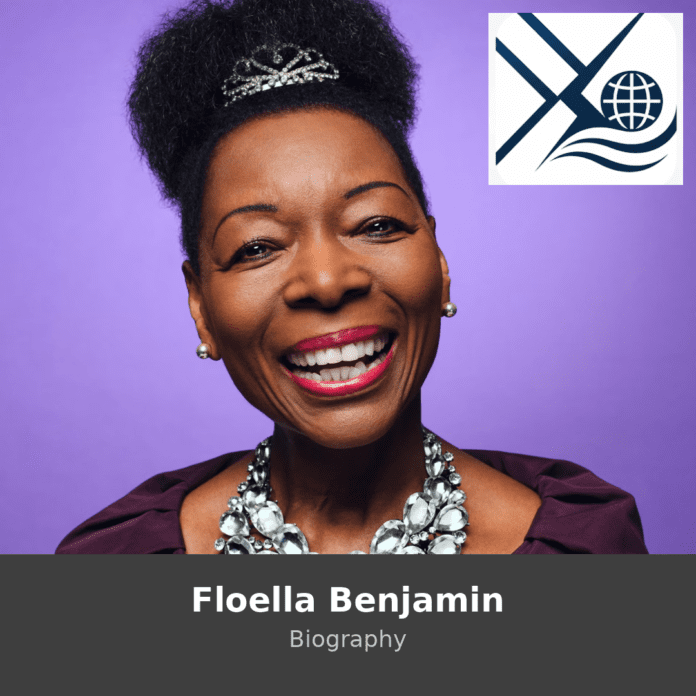

A familiar face from British childhood television has been drawing fresh attention again, not through nostalgia alone but through the steady accumulation of public roles that don’t usually sit together in one life. Awards season moments, recent interviews, and ongoing parliamentary work have put a sharper light back on Floella Benjamin—still recognised by many as “Floella” first, and only then by the formal titles that came later.
She has never belonged to a single category for long. Presenter, actor, writer, producer, campaigner, peer: each label is accurate, none is complete. That mix is part of why mentions of her keep resurfacing in different places, from entertainment coverage to debates about children’s welfare and representation.
The public record around Benjamin is substantial, but it isn’t uniformly detailed. Some parts of her life are well documented because she has put them on the page and on the record. Other parts remain private by choice, even as she has spent decades in roles that invite scrutiny. That boundary—between the recognisable public figure and the guarded personal life—has been one of the consistent themes in how she has moved through British public life.
Personal and Family Profile
Spouse or Long-Term Partner
Floella Benjamin has been publicly identified for decades as the wife of Keith Taylor, with their marriage dating to 1980. The pairing is often described in professional terms as well as personal ones, with Taylor frequently referenced as her manager and agent in publicly available profiles.
What stands out in the public narrative is not a celebrity-couple storyline, but continuity. The relationship is usually mentioned as an anchoring fact rather than a subject of publicity, appearing in biographies, interviews, and official-style summaries without the churn of speculation that follows many public figures.
That restraint has shaped how her private life is discussed. Benjamin has spoken openly about childhood experiences and identity, yet tends to keep the mechanics of her home life out of the spotlight. When family appears in interviews, it is usually in service of a wider point about parenting, resilience, or the long view of a life lived in public.
Children and Family Life
Benjamin is widely reported to have two children. Their names, Alvina and Aston, have appeared in mainstream coverage, and they are described as adults. Beyond those basic points, she has generally avoided making her children a public project.
When she does speak about parenting, she often frames it as values and boundaries rather than anecdotes. The tone is rarely sentimental. It is more observational—what worked, what was difficult, what she learned from her own upbringing and tried to translate into a different era.
That approach has protected her family from becoming part of her brand, while still allowing her to speak with authority on children’s welfare. It also reflects a pattern: she will use personal history to illuminate public arguments, but without turning relatives into characters for public consumption.
Friends and Professional Circle
Benjamin’s professional circle, as reflected in public records, spans children’s television, theatre, cultural institutions, and politics. She has held positions linked to broadcasting and public service, and she has been involved in charity work over many years.
In the entertainment sphere, she is often spoken of as part of a generation of presenters who shaped early-years programming when the medium carried a different kind of authority in family homes. In the policy sphere, she has been associated with work and committees connected to children, education, diversity, and Windrush-related commemoration.
What is less visible—by design—is a named list of close friendships. The public picture is instead one of networks: colleagues, institutional partners, and cross-sector alliances built around children’s culture and social outcomes. It is an adult, pragmatic kind of circle, formed through work rather than social display.
Parents and Early Family Background
Benjamin was born in Trinidad and Tobago and came to Britain as a child, a move she has placed firmly within the Windrush-era story of Caribbean migration. She has publicly described arriving in England at age 10 in 1960, an experience that has remained central to how she talks about identity, belonging, and the responsibilities of the state to children.
Her family story is not treated as a decorative origin tale. In her telling, it is about separation, adjustment, and the sharp realities of race and class in mid-century Britain. Those experiences have been echoed in interviews and in her writing, particularly around the idea that childhood is not an abstract policy concern but a lived environment shaped by institutions and adults.
The public record also indicates she grew up as one of six children. That larger family context appears in her accounts of discipline, expectations, and the sense of responsibility that followed her into adulthood.
Relationship History
Beyond her long marriage, there is limited verified public detail about any earlier relationships, and she has not cultivated a public chronology of partners. In practical terms, this means most relationship narratives attached to her are either absent or framed as speculation without firm grounding.
Her public life has provided endless hooks for gossip—fame, honours, politics—yet her private romantic history has not been widely litigated in public. That may be partly generational, partly personal, and partly strategic. The consistent through-line is that Benjamin has allowed public attention to focus on her work and advocacy rather than on a revolving door of personal narratives.
Where ambiguity exists, it remains unresolved in the public record because she has not chosen to resolve it. That is a legitimate editorial fact in itself: not every detail is owed to an audience, even when a person becomes widely known.
FAQs
Is Floella Benjamin married?
Floella Benjamin has been publicly described for many years as married to Keith Taylor, with the marriage commonly dated to 1980. The fact appears across multiple biographical and media profiles. She has not framed her marriage as a publicity tool, so details beyond the basic confirmation tend to be limited.
Who is Floella Benjamin’s husband?
Keith Taylor is widely named as Floella Benjamin’s husband and is also often described in public profiles as her manager and agent. Their partnership is typically presented as long-standing and stable, without the usual tabloid-style narrative surrounding it.
Does Floella Benjamin have children?
Floella Benjamin is reported to have two children. Their names, Alvina and Aston, have appeared in public coverage. She generally keeps their lives private, so most reporting stays at the level of confirmation rather than personal detail.
What is publicly known about Floella Benjamin’s family life?
Public information focuses on broad facts: her marriage, her children, and her background as a child migrant from Trinidad to Britain. In interviews, she sometimes discusses parenting values and childhood experiences, but she avoids exposing private family details about non-public individuals.
Where was Floella Benjamin born?
Floella Benjamin was born in Trinidad and Tobago, with biographies commonly citing Pointe-à-Pierre as her birthplace. Her Trinidadian origins are a recurring part of her public story, especially in discussions about the Windrush generation and the meaning of belonging in Britain.
When did Floella Benjamin come to Britain?
Benjamin has publicly stated that she came to Britain from Trinidad as a 10-year-old in 1960. That journey is central to her memoir work and is frequently referenced in interviews and public discussions about Windrush-era migration.
Is Floella Benjamin part of the Windrush generation?
Benjamin has explicitly described herself as part of the Windrush generation, linking her childhood arrival in Britain to the wider Caribbean migration story. Her advocacy and public commentary often connect that history to present-day debates on identity, education, and children’s welfare.
Does Floella Benjamin speak publicly about her parents?
She has spoken publicly about her parents and the values they instilled—discipline, aspiration, and resilience—often in the context of her own parenting and her concern for children’s wellbeing. She tends to focus on principles and experience rather than intimate family specifics.
Are there confirmed public records of Floella Benjamin’s earlier relationships?
Verified public detail about relationships prior to her marriage is limited. She has not maintained a public timeline of partners, and responsible reporting generally avoids filling that gap with speculation.
Why does Floella Benjamin keep parts of her private life out of view?
Her public pattern suggests deliberate boundaries. She uses personal history when it relates to public work—children’s welfare, identity, resilience—but does not routinely invite attention into private family matters, particularly where it could involve non-public individuals.
Career Overview
Early Career and First Breakthrough
Before she became synonymous with children’s television, Floella Benjamin worked as an actor in theatre and on screen. Public credits place her in West End musicals and stage productions, a route that demanded stamina and adaptability long before she became a household name.
That early period matters because it explains her later authority on camera. Children’s television can look effortless when done well, but the craft is real: timing, clarity, presence, and the ability to hold attention without forcing it. Benjamin’s theatre background gave her the technical grounding to make warmth look natural.
Her breakthrough came when she moved into presenting for BBC children’s programming in the 1970s. The leap was not simply career expansion. It became identity-defining, placing her in front of generations of children for whom television was a daily companion rather than a fragmented, on-demand backdrop.
How the Career Started
Benjamin’s career is often described as a progression from performance into broadcasting and production. The public record shows her appearing in stage work and screen roles before becoming a presenter in 1976, notably on Play School.
That shift placed her at the intersection of entertainment and early-years education, whether or not the programmes were formally framed that way. The work required an adult who could speak to children without condescension, who could embody safety without becoming saccharine.
Over time, she broadened her activities beyond presenting. She became associated with production work through her own company, and she wrote extensively for children. The result is a career that does not sit neatly inside “TV presenter” as a limiting definition.
Major Achievements and Milestones
Benjamin’s public milestones stretch across entertainment, honours, and institutional roles. She became a well-known face on Play School across the late 1970s and 1980s, later appearing in other children’s programmes and acting roles.
She has also accumulated formal recognition: an OBE for services to broadcasting, a BAFTA Special Lifetime Achievement Award, and later the BAFTA Fellowship. She was created a life peer in 2010, taking her seat in the House of Lords and building a public parliamentary profile around children’s issues, diversity, and media-related concerns.
Beyond Westminster, she served as Chancellor of the University of Exeter from 2006 to 2016, a role that further repositioned her as a civic figure rather than purely an entertainment personality. The public record suggests she treated the role as presence-heavy, attending ceremonies and engaging with graduates in a way that became part of her reputation.
Career Challenges and Growth
A career built in public carries visible pressures and quieter ones. For Benjamin, one challenge has been the “forever presenter” label—being fixed in public memory as the comforting children’s TV figure, even as her professional life expanded into politics, governance, and policy debates.
Another challenge has been the context in which she first appeared on national television. Representation was thinner, and the expectations placed on visible minority figures were often contradictory: be reassuring, be exceptional, be non-threatening, be grateful. Benjamin’s longevity suggests she navigated those pressures without allowing them to narrow her range.
Growth, in her case, looks less like reinvention and more like accumulation. She did not abandon one field to enter another. She stacked roles—broadcasting, writing, charity leadership, then parliamentary work—until the combined picture no longer resembled a conventional entertainment career.
Current Work and Professional Direction
Benjamin remains active as a public figure through her House of Lords role and ongoing involvement in cultural and charitable initiatives. Her public profile continues to renew itself through events and coverage that bring her back into view—awards recognition, interviews, and public commemorations connected to Windrush history and children’s culture.
She also remains linked to her writing, including Coming to England, which has continued to circulate through schools, publishing, and adaptation discussions. The story’s endurance keeps her personal history in public conversation in a way that is less about celebrity and more about national narrative.
Her professional direction now sits at a mature intersection: public service shaped by a career in storytelling. She is not simply a former presenter turned politician. She is a cultural figure whose credibility comes from having spent decades in spaces where children, families, and institutions meet.
FAQs
What made Floella Benjamin famous?
Floella Benjamin became widely known as a presenter on BBC children’s television, particularly Play School. Her visibility on a programme watched by generations of children established her as a familiar national figure, long before she entered formal public roles such as the House of Lords.
When did Floella Benjamin join Play School?
Public biographies commonly place her as a Play School presenter beginning in 1976. She remained associated with the programme through the 1980s, a period that cemented her reputation as one of the recognisable faces of British children’s broadcasting.
Was Floella Benjamin an actor before presenting?
Yes. Public credits and biographies describe her early work in theatre, including West End productions, and screen roles before her presenting career took off. That performance background is often cited as part of what gave her confidence and control on camera.
What honours has Floella Benjamin received for broadcasting?
Her honours include an OBE for services to broadcasting and major recognition from BAFTA, including a Special Lifetime Achievement award and later the BAFTA Fellowship. These honours reflect a sustained career rather than a single moment of popularity.
When did Floella Benjamin become a member of the House of Lords?
Floella Benjamin became a life peer in 2010 and took her seat in the House of Lords that year. Her parliamentary work is widely linked to children’s issues, diversity, and media-related matters, aligning with themes from her broader public career.
What is Floella Benjamin known for outside television?
Beyond television, she is known as an author of children’s books, a charity and advocacy figure, and a working peer. She also held a prominent university role as Chancellor of the University of Exeter for a decade, reinforcing her public-service profile.
Did Floella Benjamin write Coming to England?
Yes. Coming to England is publicly identified as Floella Benjamin’s memoir-style children’s book about her journey from Trinidad to Britain. It has been repeatedly referenced in interviews and coverage, and its continued circulation keeps her personal story in public view.
Has Floella Benjamin worked in production?
Public profiles describe her involvement in production through her own company and wider television work beyond presenting. While not all production credits are equally visible to the general audience, the record supports her as more than an on-screen personality.
What is Floella Benjamin doing now?
She remains active in public life, including parliamentary work in the House of Lords and participation in cultural and charitable initiatives. Recent coverage has also highlighted her recognition by BAFTA and the continued relevance of her writing and advocacy.
Why is Floella Benjamin’s career considered unusual?
Because it crosses sectors that rarely overlap: children’s entertainment, cultural governance, charity work, and national politics. Rather than switching fields once, she has built a layered career in which public service grows out of cultural work, not apart from it.
Public Image and Social Impact
Media Representation and Press Coverage
Press coverage of Floella Benjamin tends to fall into two modes. One is affectionate retrospection: the child-facing presenter remembered as a symbol of safety and warmth. The other is institutional recognition: the peer, the honouree, the public advocate, photographed in formal settings and quoted on policy.
The tension between those modes creates a distinct media identity. She is simultaneously approachable and official. That combination can look contradictory, but it has worked for her, because her public presence has never relied on cynicism or reinvention for attention.
Recent coverage has also underscored how her work is read through milestones: major awards, anniversaries connected to her writing, and public commemorations tied to Windrush history. Each event creates a new reason for editors to return to her story without pretending it is newly discovered.
Public Persona and Audience Perception
Benjamin’s public persona is often described in terms of warmth, but that word can flatten what is actually a disciplined professional technique. Her best-known television work required calm authority. It was not merely friendliness; it was steadiness, delivered day after day to an audience that could not be persuaded by performance alone.
That steadiness carried into later public roles. In politics, she is not known for theatrical aggression. Her interventions are more often framed as insistence—on standards, on safeguarding, on the idea that children’s experiences should be treated as serious national infrastructure rather than a private family matter.
Audience perception also reflects generational layering. Some people meet her first through honours lists and parliamentary identity. Others meet her through memory, then feel surprised to learn she has spent years in the Lords. Both routes create a similar conclusion: she has been present for longer than many realised.
Influence on Social and Cultural Conversations
Benjamin’s influence sits most visibly in conversations about representation and the status of children’s culture. Her presence on mainstream television in the 1970s and 1980s mattered not only because she was visible, but because she was positioned as trusted. That is a different kind of representation than a single guest role. It places a person inside the emotional furniture of family life.
Her writing, especially Coming to England, has kept her migration story in circulation as part of children’s literature and educational discussion. The endurance of that book and its adaptations has made her personal history a recurring reference point when Britain revisits Windrush-era narratives.
In Parliament and public advocacy, she has also been associated with arguments about what children are exposed to, what is regulated, and how institutions should respond when technology and culture change faster than policy.
Advocacy, Awareness, and Social Causes
Benjamin’s advocacy has repeatedly returned to children’s welfare and opportunity. She has been linked publicly to charitable work and to campaigns that treat childhood as a serious societal concern rather than a sentimental one.
Her public statements and appearances have emphasised safeguarding, education, and the responsibility of broadcasters and platforms. She has also participated in Windrush commemoration work, aligning her own story of arrival with a broader community history and with contemporary questions about recognition and repair.
Her charity work has included long-term association with Barnardo’s, and she has spoken publicly about running the London Marathon over consecutive years in support of the charity. That kind of sustained fundraising is less glamorous than headline advocacy, but it has reinforced her reputation as someone who treats public concern as a long assignment, not a seasonal stance.
Reputation Management and Public Response
Benjamin’s public reputation has been largely stable, helped by a consistent tone and by the absence of scandal-driven personal exposure. When criticism appears, it is more likely to be political disagreement or scepticism about honours culture than a personal controversy.
Her reputation management has also benefitted from predictability in the best sense. She does not present as unpredictable. She does not chase conflict. She shows up, often in formal roles, and repeats core themes: children matter; representation matters; institutions must be held to account.
Public response to her major recognitions—particularly high-profile awards—has tended to read as collective affirmation rather than surprise. The story is not “who is she?” but “it’s about time,” a tone that speaks to her long presence in British life.
FAQs
Why is Floella Benjamin considered influential in British culture?
Because her work reached children at scale and over time, shaping early-years television as a shared national experience. She later carried that cultural credibility into public service, where she has continued to argue for children’s welfare and for representation with an institutional voice.
How has Floella Benjamin been portrayed by the media in recent years?
Coverage often balances nostalgia with formal recognition. She appears both as the familiar childhood presenter and as a decorated public figure—honoured by major institutions and active in the House of Lords—creating a dual narrative that remains unusually consistent.
What issues does Floella Benjamin speak about publicly?
She is frequently associated with children’s welfare, education, diversity, and media standards. Her public record includes advocacy connected to safeguarding and the responsibilities of broadcasters and platforms, as well as Windrush-related commemoration and cultural recognition.
Has Floella Benjamin’s Windrush story shaped her public role?
Yes. She has publicly linked her childhood arrival in Britain to Windrush-era history, and that story has fed directly into her writing and advocacy. It positions her as both a cultural figure and a witness to a national migration narrative that remains politically resonant.
What is Floella Benjamin’s relationship with charity work?
Public profiles and her own statements describe long-term charity involvement, including work connected to children’s charities. She has spoken about sustained fundraising efforts, reinforcing the idea that her advocacy is tied to long-term commitments rather than one-off campaigns.
Why do people associate Floella Benjamin with “safety” in childhood?
Because her presenting style on early-years television projected calm, reassurance, and attentiveness. For many viewers, that tone became part of their memory of childhood. The association has persisted into adulthood, often resurfacing when she appears in interviews or public events.
Has Floella Benjamin received major recognition for her impact?
Yes. She has received high-level honours and awards across broadcasting and public service, including major recognition from BAFTA. These awards are generally framed as acknowledging sustained contribution rather than a single career moment.
Does Floella Benjamin face controversy in her public work?
There is no single defining controversy consistently attached to her public reputation. Where disagreement appears, it tends to be political or policy-based rather than personal, reflecting her role as a peer and advocate rather than an entertainment figure courting conflict.
How does Floella Benjamin influence debates about media and children?
She brings lived credibility from decades in children’s broadcasting and pairs it with parliamentary status. That combination allows her to argue about standards, regulation, and children’s wellbeing from both cultural and policy perspectives.
Why does Floella Benjamin’s public image remain strong across generations?
Because she has remained visible without overexposure. People remember her from childhood television, then encounter her later through honours, interviews, and public service. The continuity of tone—measured, child-focused, institution-aware—helps her image travel across decades.
Lifestyle and Personal Interests
Daily Routine and Personal Habits
Floella Benjamin’s day-to-day life is not publicly itemised in the way it is for influencers or reality personalities. What is visible is the structure imposed by public duty: parliamentary responsibilities, formal events, charity engagements, and media appearances that still occur often enough to keep her recognisable in current coverage.
Her work rhythm suggests a person accustomed to preparation and repeat performance. That habit likely comes from theatre and live broadcasting, where reliability is not optional. Even her public interviews tend to carry that sense of readiness: she speaks with warmth, but not with looseness.
There is also an evident pattern of service as routine. The titles and honours are intermittent headlines, but the underlying public labour—committees, events, advocacy—appears more like regular work than ceremonial life.
Hobbies and Recreational Activities
One of the clearer personal interests on the record is music. She has been publicly associated with performing as a singer, including with a rock and blues band. That detail matters because it complicates the “children’s presenter” memory. Her public self has always contained adult creative life alongside the work aimed at the young.
She has also maintained a connection to storytelling and children’s culture through writing, which functions partly as craft and partly as personal expression. Writing is not commonly treated as a hobby in profiles of her—it is work—but it also reads as a personal through-line that she has chosen to keep active across decades.
Recreation, in her case, appears less about leisure branding and more about sustaining energy: music, performance, and creative practice that continues alongside public roles.
Health, Fitness, and Well-Being
Benjamin has spoken publicly about running the London Marathon over consecutive years for charity, a demanding undertaking that suggests discipline and long-term physical commitment. That public record has reinforced an image of stamina rather than glamour.
She has also been vocal in public discussions about children’s wellbeing, including boundaries and the effects of modern life on younger generations. Even when those comments are directed outward, they reveal a personal concern with the conditions that shape health—routine, attention, and the stability of daily life.
For her own wellbeing, the most visible strategy has been continuation: staying active in work, staying connected to causes, and maintaining a public schedule that would be difficult to sustain without deliberate care.
Travel, Leisure, and Personal Preferences
Travel appears in Benjamin’s public narrative less as luxury and more as biography. Trinidad remains part of her identity story, while Britain became the site of her formative years and career. That dual geography has informed her public work on belonging and the meaning of national story.
Her leisure preferences are not heavily documented in lifestyle terms, and she has not built a public profile around taste. When she appears socially in coverage, it is usually through formal cultural events—awards, commemorations, charity functions—rather than leisure as entertainment.
That does not mean leisure is absent. It means it is not offered up as content. The line between public duty and private enjoyment remains largely intact.
Interests Outside Professional Work
Outside her formal roles, Benjamin’s interests—where they are visible—tend to align with children’s arts, education, and cultural memory. She has held positions and patronages connected to those themes, reinforcing the impression that her “outside” interests are still oriented toward the same mission that runs through her work.
There is also a clear interest in commemoration and narrative: how a country remembers, how it teaches, what it acknowledges. Her involvement in Windrush-related initiatives and her continued engagement with her own story suggest a person who takes cultural memory seriously as a practical matter.
It is a particular kind of personal interest: not escapist, not decorative, but focused on what endures and what gets passed on.
FAQs
What does Floella Benjamin do outside public appearances?
Publicly, she remains engaged with parliamentary work, charity initiatives, and cultural events. Beyond that, she keeps much of her private routine out of view. What is visible suggests a structured life shaped by service commitments rather than a lifestyle built for public display.
Does Floella Benjamin have interests in music?
Yes. Public biographies have linked Floella Benjamin to singing and performing, including with a rock and blues band. This aspect of her life complicates the common memory of her solely as a children’s television figure and reflects a broader creative identity.
Is Floella Benjamin known for fitness or endurance?
She has spoken publicly about running the London Marathon over consecutive years in support of Barnardo’s. That sustained effort points to discipline and stamina, and it has become part of her public image as someone who backs causes with long commitments.
Does Floella Benjamin share details about her private daily routine?
Not in a granular way. She appears to maintain privacy around personal habits and home life. Most public information about her routine comes indirectly through her formal roles, appearances, and interviews rather than through lifestyle-oriented disclosure.
How does Floella Benjamin approach wellbeing in public discussions?
When she speaks about wellbeing, it is often through the lens of children’s welfare—boundaries, safe environments, and the conditions that allow children to develop. While that is outward-facing, it reflects a consistent personal belief in structure and protection as foundations.
Does Floella Benjamin travel often?
Her public narrative includes travel as part of identity and life history—Trinidad and Britain are central reference points. Contemporary travel details are not extensively documented, and she does not appear to foreground leisure travel as part of her public persona.
What personal preferences are publicly known about Floella Benjamin?
Relatively few. She is not a figure who markets taste or lifestyle. Public profiles focus on her work, honours, and advocacy. When preferences appear, they are usually connected to values—education, children’s arts, representation—rather than consumer or leisure choices.
Is Floella Benjamin still involved with children’s culture?
Yes, in the sense that her public work continues to intersect with children’s welfare, education, and cultural representation. Her writing and public advocacy keep her connected to children’s culture, even as her roles have expanded beyond broadcasting.
How does Floella Benjamin stay connected to her Trinidadian roots?
She has consistently referenced her Trinidadian background in interviews and writing, particularly through the story of arriving in Britain as a child. Her roots are presented less as nostalgia and more as part of a living identity that informs her public positions.
Why does Floella Benjamin’s private life remain relatively protected?
Her long public career suggests deliberate boundaries. She uses personal history where it serves public understanding—especially around childhood and migration—but generally avoids turning family members and private routines into public material, particularly when it could affect non-public individuals.
Conclusion
Floella Benjamin’s public story is unusually layered, and that is what keeps it returning to view. She is remembered as a children’s television presence, yet the public record shows a career that did not stop at broadcasting. It widened into writing, institutional leadership, charity work, and then formal political life. The trajectory is not a neat “reinvention” narrative. It is more like a steady expansion of responsibility, with each role building on the credibility of the last.
At the same time, the record has limits. Much is documented—her migration story, her long public service, her honours, the contours of her family life. Other details remain absent because she has chosen not to make them public, and because responsible reporting does not fill private space with assumption. That absence is part of what distinguishes her public image: she has not asked to be known in every dimension.
What emerges, instead, is a figure whose influence has been less about spectacle and more about presence—on screen, in institutions, and in debates where children are too often spoken about as abstractions. The open question is not whether she has achieved enough. It is what Britain chooses to do with the arguments she keeps making, as childhood, media, and national memory continue to shift underfoot.