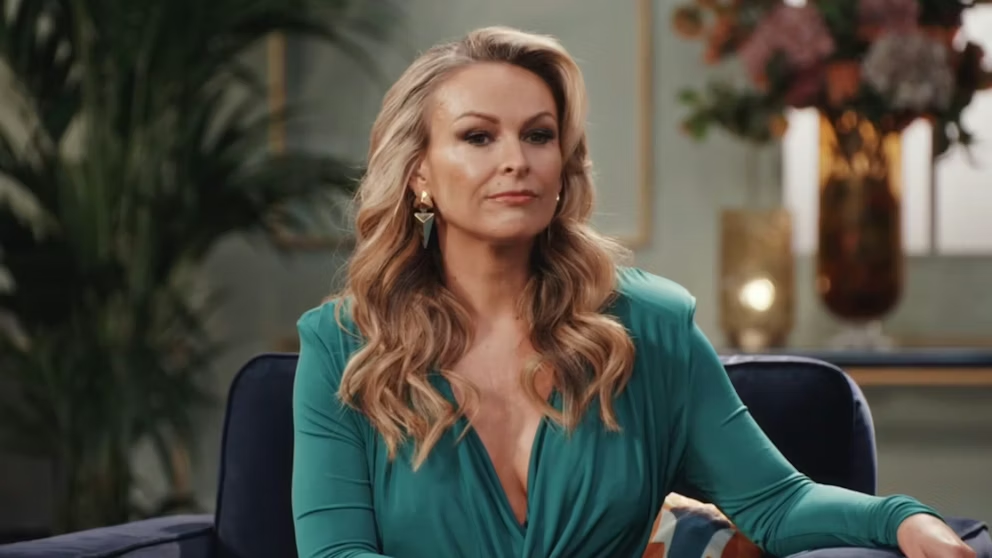
Mel Schilling’s story has moved television fans because the support around her has felt raw, immediate, and painfully sincere. A March 2026 live report from The Independent says Schilling thanked fans for the messages she received during her cancer battle, writing that they “meant more” than she could properly express and helped shape the mindset she needed to keep fighting. After news of her death at 54, that same wave of love came rushing back in public tributes from colleagues, former contestants, and television figures who had clearly not forgotten what she meant to them.
What makes this story hit harder than a standard celebrity tribute cycle is that the emotion does not feel borrowed. It feels earned. Schilling was not being remembered only as a familiar face from Married at First Sight. She was being remembered as someone people felt personally changed by. The report gathers tributes describing her as warm, caring, courageous, and unforgettable, which helps explain why the reaction has spread beyond reality TV fans and into the wider television audience.
There is also something especially affecting about the timing. The Independent reports that Schilling had only recently told the public her colon cancer had become terminal, after it spread and doctors said there was nothing further they could do. That meant the support messages were not part of some distant, neatly closed chapter. They were still alive in the public memory when news of her death arrived. Readers were not revisiting an old struggle. They were still emotionally inside it.
That is one reason the tributes have carried so much force. Davina McCall, quoted in the report, said Mel “was the light,” describing her as someone who brought joy, love, and care wherever she went. Nikita Jasmine remembered her as brave and understanding. John Aiken, her MAFS co-star, wrote that he was heartbroken and spoke in unusually intimate terms about their friendship behind the scenes. Those are not generic farewell lines written because somebody famous died. They read like people trying to process the loss of someone whose presence had become part of their working and emotional world.
The strongest part of the story may be the way Schilling herself framed public support before her death. According to The Independent, she said the messages from fans had helped shape the mindset she needed to keep going. That detail changes everything. It means the public response was not just comforting to watch from the outside. It was something she actively felt and valued while she was still here. That gives the whole wave of support a different weight. It stops being symbolic and becomes personal.
It also explains why television fans have responded so emotionally. People often assume reality-TV experts sit at a distance from viewers, offering advice without leaving much of themselves behind. Schilling clearly left more than that. The coverage shows someone whose kindness travelled off-screen, into production teams, contestants’ memories, and the wider industry. When a person is mourned not only for what they did on camera but for how they made people feel away from it, the reaction becomes much deeper than standard fan sadness.
There is another detail in the report that makes the tributes even harder to read without feeling something. Her husband said she went through two years of chemotherapy, never complained, never stopped showing compassion, and never missed a day of filming. That kind of description lands because it is so specific. It paints a picture of stamina, discipline, and quiet care rather than abstract bravery. Fans are not only mourning a television figure. They are responding to the image of someone who kept showing up while carrying far more than most people around her may have realised.
That is why Mel Schilling support messages move television fans. The story is not built on nostalgia alone. It is built on gratitude, grief, and the sense that the affection pouring in now was the same affection helping hold her up during the hardest stretch of her life. That gives the coverage a rare kind of emotional clarity. It feels less like a headline and more like a public thank-you that arrived just in time to matter.
Source: The Independent
Leave a Reply