
Bristol does not charm you in a neat, polished way. It grabs you by the sleeve with dockside air, mural-covered walls, old brick, sharp opinions, and a skyline that somehow makes room for both maritime grit and creative swagger. Things to Do in Bristol are not locked inside a tidy tourist loop either. The city rewards wandering, then rewards you again when you step off the obvious route and find something better two streets later.
That is the real pull of Bristol. You can start the morning beside the Floating Harbour, drift past museums and boats, stop for coffee in a place that looks half-industrial and half-art-school, then finish the day crossing one of Britain’s most famous bridges with the Avon Gorge opening beneath you. It feels active, lived-in, and slightly unruly in the best possible way.
For Uk Travel, Bristol works because it gives you more than postcard moments. It gives you texture. You are not just ticking off attractions here; you are stepping into a city shaped by trade, engineering, theatre, activism, and art. The Harbourside now mixes waterside food, cultural venues, boat trips, M Shed, and Brunel’s SS Great Britain, all in an area that once worked as a busy dock.
Start at the Harbourside because Bristol makes sense from the water
Bristol reveals itself best when you begin where the city once did business. The Harbourside is not some decorative waterfront built to impress weekend visitors. It used to be a working dock, and that history still gives the place weight even now that it is packed with cafés, bars, galleries, museums, and people moving at a much better pace than London ever allows. Visit Bristol describes it as a former dock area that now buzzes with markets, restaurants, boat activity, and attractions clustered around the Floating Harbour.
What makes this area worth your first hours is the rhythm. You can walk the water’s edge without feeling trapped in a sightseeing script. Millennium Square acts as a practical hub, while nearby stops such as M Shed, Arnolfini, Watershed, and the SS Great Britain give you choices rather than repetition. That matters. A lot of city breaks fall apart because every attraction starts to feel like a variation of the last one.
Bristol avoids that trap. One minute you are looking across the harbour at converted industrial buildings, and the next you are watching paddleboarders cut through water that once carried merchant traffic. The contrast is the point. Harbourside activity today includes boating, paddleboarding, rowing, and walking routes around a district now built as much for culture and leisure as trade.
My advice is simple: do not rush it. Walk first, decide later. Bristol tends to reward that approach.
Bristol’s street art scene is not background decoration, it is part of the city’s voice
Once you leave the water, the city starts talking through its walls. That sounds dramatic, but in Bristol it is also true. Street art here does not feel pasted on for branding. It feels argued over, layered, local, and alive. The city’s reputation for murals and public art is inseparable from Banksy’s Bristol roots, and Visit Bristol points visitors toward self-guided Banksy walks, audio tours, expert-led street art tours, and even graffiti workshops.
That is why a stroll through areas tied to the scene feels different from visiting a formal gallery. You are not entering a sealed room to admire finished work. You are reading a city in public. Some pieces feel playful. Others feel barbed. A few look like they were made to irritate somebody powerful, which is often when Bristol is at its best.
The smart move is to treat the art as a route, not a single stop. Follow one mural to the next, then let yourself be pulled toward Stokes Croft, Gloucester Road, or another side street where the city looks rougher and more honest. Clean cities can be boring. Bristol rarely is.
This is also where Uk Travel gets interesting. You are not just consuming landmarks; you are reading local character in real time. A Banksy-themed day works because the city gives context, not just names on a map. Even the official tourism material frames Bristol as a place where walking tours and themed trails help you connect the artist’s work to the wider street art culture that grew around it.
Historic ships and old stories give Bristol more depth than most creative cities manage
Some cities sell themselves as edgy and modern, then turn hollow the second you ask what came before the coffee shops. Bristol does not have that problem. Its past is right there, sometimes gloriously preserved, sometimes argued over, and often sitting beside the harbour where you can feel how trade and engineering shaped everything around you.
The headline stop is Brunel’s SS Great Britain. The official site calls it the ship that changed the world, and that is not empty marketing. It stands in Bristol as a preserved steamship and museum complex tied directly to Brunel’s ambition and the city’s maritime identity.
Nearby, M Shed gives the wider civic story room to breathe. Visit Bristol describes it as Bristol’s social history museum, exploring what made the city what it is today, while also standing as part of the Harbourside’s own shift from working docks to cultural destination. The museum’s story is stronger because the building itself belongs to that same industrial landscape.
That blend matters if you want more from a trip than surface-level fun. Bristol’s history stretches back centuries, and official city history traces its development from Roman and Saxon roots through medieval trade and later industrial growth.
You feel that long timeline in the harbour district more than anywhere else. The water, the ships, the warehouses, the museums, the conversations around empire and trade — none of it feels fake. Bristol does not hand you a softened version of itself. Good. Cities should not.
Cross the bridge, climb for the view, and let Bristol show off a little
After the harbour and the murals, you need elevation. Bristol earns its bragging rights when you see the city from higher ground, and that means making time for Clifton and the Suspension Bridge. A flat day in Bristol is a mistake.
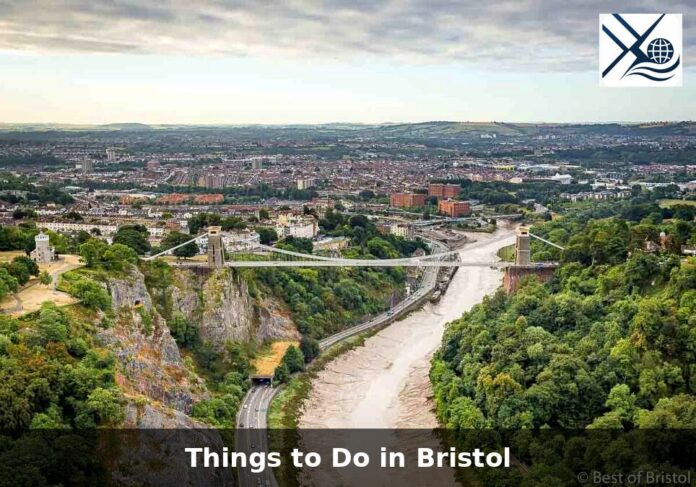
The Clifton Suspension Bridge is one of those places that could have been ruined by cliché but somehow survives it. Yes, it is photographed constantly. Yes, everyone tells you to go. They are right. The official bridge history says the story began in 1754, and the structure opened in 1864, giving Bristol one of its defining landmarks.
The Clifton Suspension Bridge is one of those places that could have been ruined by cliché but somehow survives it. Yes, it is photographed constantly. Yes, everyone tells you to go. They are right. The official bridge history says the story began in 1754, and the structure opened in 1864, giving Bristol one of its defining landmarks.
What hits you first is not just the engineering. It is the position. The bridge cuts across the Avon Gorge with a kind of calm confidence, and the view makes Bristol feel broader, greener, and more dramatic than it does at street level. This is where the city stops feeling like a collection of good neighbourhoods and starts feeling like a place with genuine physical presence.
Do this later in the day if you can. Bristol handles evening light well. The stone, the trees in the gorge, the water below, and the city behind you all start working together. It is the rare famous viewpoint that does not feel overrated when you finally get there.
And here is the counterintuitive part: the bridge is not the end point. It sharpens the rest of the trip. Once you have seen Bristol from above, the harbour, the boats, and the older streets below make more sense. Perspective changes everything. Travel should do that sometimes.
Markets, theatre, and everyday stops are what turn a Bristol visit into a proper city break
Big sights get you into Bristol. Smaller stops are what make you want to come back. That is why any serious list of Things to Do in Bristol should leave room for markets, live performance, and the ordinary corners where the city feels most itself.
Start with St Nicholas Market. The official Bristol City Council page lists the indoor market on Corn Street, regular trading hours, and food-focused market events, while the market’s history traces the Exchange building to 1741–1743 before later changes added the covered hall.
That sounds tidy on paper. In person, it is better. You go for lunch and end up staying because the place has actual life in it. Street food smells drift into old architecture, and the mix of traders stops the market from feeling staged. Some city markets become props for tourists. St Nick’s still feels used.
Then there is Bristol Old Vic, which remains one of the city’s finest flexes. The theatre states that it is the oldest continuously working theatre in the English-speaking world, and Visit Bristol dates the building to 1766.
That is not just trivia. It means you can spend the afternoon eating in a market inside an old commercial district, then walk to a theatre that has been doing its job for centuries. Very few cities package culture that well without making it feel expensive or stiff.
Throw in an Arnolfini visit on the Harbourside, where contemporary art meets a waterfront setting, and you have the shape of a city break that feels varied without ever feeling forced.
Bristol is the kind of city that rewards curiosity more than strict planning
The best ending for Bristol is not a neat summary because Bristol itself is not neat. It is layered, opinionated, creative, and still shaped by the harbour that built it. You can do the famous things, and you should. Walk the water. Find the murals. Step aboard the ship. Cross the bridge. Eat at the market. Catch a show. But the city really starts working when you leave room for one extra detour, one wrong turn, one café you did not research, one view you did not expect.
That is why Things to Do in Bristol works as more than a travel keyword. It points to a city that gives you range. You get engineering, history, theatre, food, waterfront calm, and public art that refuses to behave itself. Few places balance those elements without feeling stitched together by committee. Bristol does it naturally.
For Uk Travel, that makes Bristol a very strong choice for a weekend that feels fuller than its size suggests. Go with good shoes, a loose plan, and enough time to linger by the harbour when the light gets softer. Then build your next step properly: map your walking route, book one anchor attraction, and let the rest of the city prove its point on foot.
What is the best area to explore first in Bristol?
Start at the Harbourside because it gives you Bristol’s mood straight away. You get water, museums, cafés, boat views, and easy walking routes. It also links neatly to the SS Great Britain, M Shed, and Arnolfini without wasting time on complicated planning first.
Is Bristol good for a weekend city break in the UK?
Bristol is excellent for a weekend because the city centre packs history, food, art, theatre, and waterfront walks into a manageable area. You can cover major sights without rushing, yet the place still feels varied enough to stay interesting over two full days.
What are the most famous things to do in Bristol?
The biggest names are Clifton Suspension Bridge, the SS Great Britain, Harbourside walks, Banksy-linked street art spots, and St Nicholas Market. Those places earn their reputation because they show different sides of Bristol rather than repeating the same kind of tourist experience.
Can you explore Bristol without a car?
You do not need a car for central Bristol. Many of the best-known attractions sit within walking distance or short public transport connections. In fact, driving can slow you down because the city works better when you explore it on foot and pause often.
Where can I see Banksy art in Bristol?
You can follow Banksy-related locations through self-guided walking routes and official tourism suggestions around the city. Bristol suits this kind of exploring because the street art culture spreads beyond one single stop, so the search becomes part of the fun itself.
Is Bristol a walkable city for tourists?
Bristol is walkable, but it is not flat, and that matters. The reward for the hills is better views and more character between neighbourhoods. Wear proper shoes, keep your route flexible, and treat the climbs as part of the city’s personality, not a nuisance.
What should I do in Bristol if I like history?
Focus on the SS Great Britain, M Shed, the old harbour, Clifton Suspension Bridge, and Bristol Old Vic. Together they show how the city developed through trade, engineering, performance, and civic change, which gives you a much richer picture than isolated museum visits.
Is St Nicholas Market worth visiting in Bristol?
St Nicholas Market is worth your time because it feels active rather than decorative. You get independent traders, food options, old architecture, and a central location that fits naturally into a walking day, making it one of Bristol’s easiest and most satisfying stops.
When is the best time of year to visit Bristol?
Late spring to early autumn is the sweet spot if you want longer daylight, easier harbour walks, and a livelier street atmosphere. That said, Bristol also handles cooler months well because markets, museums, theatres, and cafés stop the weather ruining the trip.
How much time do you need to see Bristol properly?
Two days is enough for a strong first visit, but three gives you breathing room. Bristol improves when you stop sprinting between landmarks and start noticing the details, so an extra half-day for markets, side streets, and waterfront pauses makes a real difference.
What makes Bristol different from other UK city breaks?
Bristol stands out because it mixes maritime history, major engineering, theatre, public art, and an independent streak without feeling polished into blandness. It has edge, but it also has warmth, which is a harder balance to strike than many cities realize.
Are there free things to do in Bristol?
Yes, and some of them are among the city’s best experiences. Harbourside walks, bridge viewpoints, street art hunting, browsing St Nicholas Market, and simply exploring the old streets cost little or nothing, which makes Bristol a stronger value than many rivals.

