
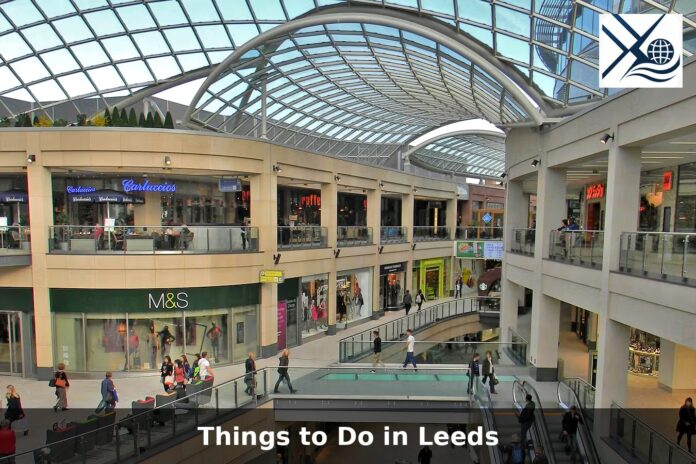
Leeds does not beg for your attention. It just gets on with being one of the most rewarding city breaks in northern England, then leaves you wondering why more people do not talk about it with the same obsession they reserve for Manchester or Edinburgh. That works in your favour. The city feels lived-in rather than staged, stylish without trying too hard, and varied enough that you can spend a day shopping under Victorian glass, then switch gears and end the evening by the waterfront or inside a loud, packed venue.
If you want a city that lets you move quickly from grand arcades to green space without wasting half the day in transit, this one earns its place. Things to Do in Leeds is not a short list built around one cathedral and a tired shopping street. Leeds has Kirkgate Market, the Corn Exchange, major galleries, Leeds Dock, Roundhay Park, and a city centre that is compact enough to explore on foot. Visit Leeds also highlights its Victorian arcades, Leeds Art Gallery, and the city’s strong mix of culture and entertainment.
What makes the place stick in your mind is balance. You get polish and rough edges together. You get chain stores, independent traders, serious art, late-night noise, and enough local confidence to stop the city feeling manufactured for visitors. That is why a proper Travel Guide UK view of Leeds has to go beyond landmarks and tell you how the place actually feels when you walk it.
Start with the city centre arcades and shopping streets
Leeds city centre rewards wandering more than rigid planning. The shopping core is compact, walkable, and layered, which means you can move from modern retail space into ornate Victorian arcades in a matter of minutes. That contrast gives the centre its character. It never feels like one flat commercial zone.
The real pleasure is in the detail. Victoria Leeds and the surrounding arcades bring drama, polish, and old architectural confidence, while Briggate keeps the pace moving with familiar high-street energy. Visit Leeds specifically points visitors toward the Victorian arcades, including Queen’s Arcade, Thornton’s Arcade, Victoria Leeds, and Grand Arcade, where the old Potts Clock still pulls attention.
Victoria Leeds feels expensive, but it is still worth your time
You do not need a luxury budget to enjoy Victoria Leeds. The place works even if you are only there to look up, slow down, and absorb the setting. The tiled floors, ironwork, glass roofing, and careful presentation make ordinary browsing feel sharper than it should.
That matters because shopping districts often die once they become too polished. This one does not. People actually use it. You will see visitors taking photos, locals cutting through, and shoppers who clearly know exactly which stores they came for. The area earns attention without feeling like a museum piece.
It is also a useful reset point in the middle of a busy day. If Leeds starts feeling loud, Victoria Leeds gives you a cleaner, calmer tempo before you step back into the busier streets outside. Good cities need those shifts in pace. Leeds has them.
The arcades give Leeds more personality than most retail cities
Many city centres have shops. Fewer have shopping spaces that feel memorable in their own right. Leeds does. The older arcades carry a sense of theatre, and they stop the retail experience from becoming bland or repetitive.
Grand Arcade has charm that lands immediately, while Thornton’s Arcade feels like the kind of place you remember later for its quirks rather than its floor plan. That is the difference between functional retail and place-making. Leeds understands it better than most.
You should not rush these streets. Walk them once at normal speed, then loop back through the ones that caught your eye. The city centre reveals itself properly on the second pass, not the first. That is when Leeds starts feeling personal rather than merely convenient.
Kirkgate Market and Corn Exchange show the city’s older trading heart
If the grand arcades show Leeds at its polished best, Kirkgate Market and the Corn Exchange show the city’s older commercial nerve. This is where the place feels less curated and more honest. You get history, trade, noise, food, and a bit of chaos. Good. A city should not be too tidy.
Kirkgate Market is a serious stop, not a filler attraction. Leeds City Council describes it as a Grade I listed building from 1875, and city planning documents call it the largest covered market in England. The Corn Exchange, also Grade I listed, has been repurposed for speciality shopping and independent businesses.
Kirkgate Market still feels like a working place, not a stage set
That is the appeal. Too many historic markets have been scrubbed into polite food halls aimed almost entirely at weekend visitors. Kirkgate still feels practical. People shop there because they need things, not because they are building content for social media.
You can buy food, browse for bits you did not expect to want, and get a more grounded sense of Leeds than you will ever get from the shinier end of the city centre. The atmosphere is part of the value. It has movement, voices, and actual purpose.
It also saves you from the trap of seeing Leeds only through its better-lit corners. Markets tell the truth about a city. They show price points, habits, taste, and rhythm. Kirkgate does exactly that, and it does not flatter anyone in the process.
The Corn Exchange is where independent retail gets a stronger setting
The Corn Exchange has presence before you even step inside. The building itself does a lot of the work. Once you are in, the circular layout and independent feel make it a far more interesting stop than another standard block of chain stores.
What works here is tone. It feels self-assured without becoming smug. The shops tend to suit people who want something with a bit more character, and the building gives the whole visit a sense of occasion that modern retail units usually cannot match.
This is also where you notice Leeds refusing to choose one identity. The city is commercial, yes, but it also likes spaces with memory. That combination keeps it from feeling disposable.
Leeds museums and galleries are better than many visitors expect
Leeds has one of those cultural offers that gets underestimated because the city is not always sold as an arts capital first. That is a mistake. The museums and galleries here are not decorative extras. They give the city weight.
Visit Leeds highlights Leeds Art Gallery as home to one of the UK’s largest collections of 20th-century British art, and the city’s broader tourism material places institutions such as the Royal Armouries Museum, Henry Moore Institute, and Leeds City Museum among its core cultural draws.
Leeds Art Gallery is the right kind of civilised pause
Some galleries make you feel as if you must behave correctly before they let you enjoy anything. Leeds Art Gallery is better than that. It has seriousness, but it does not put on airs. You can spend a focused hour there and come out refreshed rather than drained.
The building helps. So does the Tiled Hall Café downstairs, which Visit Leeds points to as part of the experience. That pairing matters more than people admit. Art lands better when the space around it knows how to slow you down a little.
Even if you are not someone who plans trips around galleries, this one earns a place in your day. It gives Leeds intellectual texture. Without places like this, city breaks become little more than spending with scenery.
Royal Armouries brings a different kind of energy
The Royal Armouries is not subtle, and that is exactly why it works. It has scale, drama, and the kind of subject matter that grabs people who might otherwise drift through a museum on autopilot. Weapons, armour, conflict, display — it is direct and memorable.
Leeds benefits from having a museum like that near the dock area. It broadens the city’s appeal without making the cultural side feel split between “serious” and “popular.” The museum has enough substance to satisfy people who like history and enough spectacle to keep casual visitors awake.
A city is stronger when its cultural offer is not all pitched at the same personality type. Leeds gets that. One gallery gives you light, calm, and reflection. Another institution gives you steel, force, and visual punch. That mix keeps the day alive.
Roundhay Park proves Leeds is not all brick and retail
Cities often promise green space, then hand you a patch of grass and a duck pond. Leeds can do better than that. Roundhay Park is the point where the city opens up and reminds you it is not just about streets, arcades, and bars.
Leeds’ official tourism and city sources regularly point visitors toward major green spaces including Roundhay Park as part of the city’s appeal, and Leeds is also promoted as a compact urban centre with easy access to broader Yorkshire landscapes.
You go to Roundhay Park for breathing room, not a quick box-tick
That distinction matters. A lot of visitors treat parks as spare-time add-ons, somewhere to kill forty minutes before the next booking. Roundhay deserves more respect than that. It is the kind of place where you can stretch a short visit into a proper afternoon without trying hard.
The park gives you scale, and scale changes your mood. It is easier to think clearly after time in a place that is wider, quieter, and less crowded than the centre. Even a city loyalist has to admit that urban pleasure improves when it is broken up by trees and open paths.
Go when you need the day to reset. Go when the shops start blurring together. Go when you want Leeds to stop performing and simply exist in front of you. That is when the park does its best work.
Parks reveal how locals actually use their city
Visitors often chase headline attractions while missing the deeper test of whether a place is pleasant to live in. Parks answer that fast. Watch who is there, how long they stay, and what they are doing. That tells you more than polished tourism copy ever will.
At Roundhay, you see Leeds behaving like a real city rather than a destination brochure. People walk, sit, meet, run, snack, and let children burn off energy. Nothing about that sounds glamorous. It is still one of the strongest endorsements a place can have.
You should pay attention to that. Cities worth revisiting are rarely the ones with only obvious attractions. They are the ones where ordinary life looks good from the outside.
Leeds Dock and the waterfront bring a calmer side of the city
Water changes urban mood almost immediately. Leeds Dock is proof. The area gives the city a different face, one that feels more open, more modern, and less pressed in by retail and traffic. It is a good place to walk off the denser parts of the centre.
The dock also makes practical sense as a stop because the Royal Armouries sits nearby, creating an easy cultural-and-waterfront pairing. Leeds tourism material regularly links central attractions with dockside exploration as part of a broader city itinerary.
Waterfront areas are often overhyped, but this one earns a visit
Some redeveloped waterfronts feel too polished to trust. Leeds Dock avoids the worst of that. It still feels planned, obviously, but not fake. There is enough space, movement, and visual clarity to make the visit worthwhile.
This is where you go when you want the city to lower its voice. The reflections, paths, and cleaner lines around the water create a softer setting than the busier shopping streets. After a packed morning, that shift can save your energy for the evening.
You do not need a long checklist here. Walk, sit for a while, look across the water, and let the city rearrange itself in your head. That is enough. Not every good stop needs an agenda.
The dock works best when paired with nearby attractions
Leeds is strong when you combine its experiences rather than isolate them. The dock on its own is pleasant. Paired with the Royal Armouries or a longer city-centre walk, it becomes part of a well-built day.
That is the thing many visitors miss. Good urban travel is often about sequencing. Loud then quiet. Historic then modern. Shopping then open air. Leeds is particularly good at those transitions because distances are manageable and the city centre is compact.
Plan with rhythm in mind and the city will reward you. Rush from stop to stop and you will come away thinking Leeds was fine. It is better than fine. You just need to let it change shape as the day goes on.
Entertainment in Leeds gets stronger after dark
Leeds is not shy about nightlife, and it should not be. The city has enough venues, bars, and late-evening energy to carry a trip well past dinner. This side of Leeds matters because it stops the place feeling like a day-only destination.
City sources describe Leeds as having restaurants, bars, pubs, comedy clubs, music venues, cinemas, theatres, and the 12,500-seat first direct arena as part of its central leisure offer. That scale explains why evenings here can feel busy without becoming one-note.
first direct arena gives Leeds big-event muscle
Large arenas can be soulless, but they still matter. They tell you whether a city can host major acts and large crowds without looking second-tier. Leeds can. first direct arena gives the city that scale, and it helps pull entertainment traffic into the centre.
Even when you are not attending an event, the arena affects the city’s evening atmosphere. Nearby bars fill differently, taxis move differently, and there is a sense that something is happening. That pulse matters. Cities feel stronger when nights have momentum.
If you are choosing between a quiet weeknight and an event evening, take the busier option. Leeds wears a crowd well. The energy sharpens the whole place.
Smaller venues and bar streets give the city its real character
Big rooms prove capacity. Smaller ones prove personality. Leeds needs both, and the balance is part of its appeal. Areas known for bars and independent venues do more to define the city’s social tone than any giant arena ever could.
This is where Things to Do in Leeds becomes more than a daytime shopping-and-museum list. Evening culture changes your reading of the city. You stop seeing it as efficient and start seeing it as lively, confident, and slightly unruly in a good way.
You do not need to chase the loudest possible night. A good bar, a live room with actual atmosphere, and streets with enough foot traffic to feel awake will do the job. Leeds usually provides all three.
Leeds has enough family-friendly options to avoid a one-track trip
A city breaks down fast if every activity suits only shoppers, drinkers, or museum people. Leeds avoids that trap. It gives families and mixed-age groups enough range to build a full day without forced compromise.
Visit Leeds includes attractions spanning museums, parks, family activities, and newer entertainment options such as immersive VR at The Park Playground, which shows how the city’s offer keeps widening beyond traditional sightseeing.
Mixed-interest groups do better in Leeds than in many cities
This matters more than travel writers admit. Not every group agrees on what counts as fun. Someone wants galleries. Someone wants shopping. Someone wants green space. Someone wants to sit down and eat before they become impossible. Leeds can absorb those competing moods fairly well.
That is partly because the city centre is compact and partly because the options are varied without being scattered beyond reason. You are not constantly burning time on transport or dragging people across town for one attraction that only half the group wanted anyway.
The result is less friction. And less friction usually means a better trip. It is not a glamorous point, but it is a real one.
The city works when you stop chasing perfection
Families often overplan. Friends on weekend breaks do the same. They try to optimise every hour, then wonder why everyone looks tired by mid-afternoon. Leeds responds better to a lighter hand.
Give yourself one anchor in the morning, one in the afternoon, and room to improvise in between. That approach suits a city with this many useful options close together. It also leaves space for the accidental good moments, which are usually the ones people remember.
You do not need a flawless itinerary here. You need enough structure to keep momentum and enough freedom to notice what the city is offering right in front of you.
Leeds is strongest when you treat it as a city of contrasts
The best way to get Leeds wrong is to reduce it to one identity. It is not only a shopping city, not only a student city, not only a nightlife city, and not only a culture stop. Its strength comes from how these parts sit beside each other without cancelling one another out.
That layered identity is reflected in official tourism messaging that promotes Leeds as both compact and urban, yet rich in museums, galleries, major entertainment, historic arcades, markets, and access to green space.
Leeds rewards visitors who stay curious
If you arrive expecting one tidy narrative, the city will feel inconsistent. Good. Inconsistency is sometimes just complexity wearing ordinary clothes. Leeds has enough range to surprise you if you stop demanding a single theme.
Spend the morning with architecture and retail, then shift into history, then drift toward the dock, then finish with food or music. That is not a messy itinerary. It is the correct one. The city makes the most sense when you let different versions of it appear across the same day.
Curiosity improves urban travel because it stops you treating places like checklists. Leeds deserves better than checklist tourism. It has too much texture for that.
The city feels more rewarding than it first appears
Some places win instantly. Leeds grows on you over the course of a day. Then, slightly annoyingly, it becomes more impressive in hindsight. You remember how practical it was, how varied it felt, and how often one area led naturally into another.
That delayed effect is a strength. Cities that reveal themselves gradually tend to last longer in memory because you feel as though you found them rather than had them handed to you. Leeds gives you that small sense of discovery.
And that is why it lands. Not with a dramatic flourish. With confidence. Which, frankly, suits the place.
Conclusion
Leeds works because it does not force you into one version of a city break. You can spend the day under ornate arcade roofs, drift through a market that still feels real, step into galleries that genuinely hold your attention, and then head for the park, the dock, or the bars depending on your mood. Few cities balance those shifts this cleanly. Even fewer do it without feeling overproduced.
That is what makes Things to Do in Leeds more interesting than the usual weekend-city formula. You are not visiting a place with one big attraction and a lot of filler wrapped around it. You are walking into a city that understands rhythm. It knows when to be polished, when to be loud, and when to let you breathe. That alone puts it high on any serious Travel Guide UK shortlist.
My advice is simple: do not over-script the trip. Pick a few strong anchors, leave room for detours, and let Leeds prove itself in motion. Start with the centre, follow what catches your eye, and stay out long enough to see the evening version of the city too. That is the next step, and it is the right one.
FAQs
What is Leeds best known for?
Leeds is best known for its shopping arcades, Kirkgate Market, lively nightlife, strong arts scene, and major venues like first direct arena. It also stands out for blending Victorian architecture with modern retail, green spaces, and a city centre that feels genuinely walkable.
Is Leeds worth visiting for a weekend break?
Yes, Leeds is a strong weekend city because it packs shopping, museums, parks, food spots, and nightlife into a compact centre. You can cover a lot without exhausting yourself, and the city feels varied enough to keep two or three days interesting throughout.
What are the best shopping areas in Leeds?
Victoria Leeds, Briggate, the Corn Exchange, Thornton’s Arcade, and Kirkgate Market are among the best shopping areas. They give you a mix of high-street brands, luxury retail, independent shops, and historic architecture, so the experience feels richer than ordinary city-centre shopping trips.
Is Kirkgate Market worth visiting in Leeds?
Kirkgate Market is worth visiting because it still feels like a working market rather than a polished tourist prop. You get history, food, everyday trade, and a more honest view of the city. It adds character that newer shopping spaces cannot really imitate.
Are there good museums in Leeds?
Leeds has good museums, and they are more impressive than many first-time visitors expect. The Royal Armouries brings drama and scale, while Leeds City Museum and Leeds Art Gallery add history, culture, and a quieter kind of depth that balances the louder parts well.
What can families do in Leeds?
Families can mix parks, museums, shopping, casual dining, and entertainment venues without much hassle. Roundhay Park gives children room to move, while central attractions keep the day flexible. Leeds works well for mixed-age groups because distances are manageable and options are varied enough.
Is Roundhay Park close to Leeds city centre?
Roundhay Park is not right in the middle of the city centre, but it is close enough to fit easily into a day out. The journey is straightforward, and the payoff is worth it because the park gives you scale, calm, and a proper break.
Does Leeds have good nightlife?
Leeds has very good nightlife, especially if you like a mix of big venues, bars, live music, and late-evening energy. The city feels active after dark without relying on one single district, so you can shape the night around your pace and preferences.
What is the best area for nightlife in Leeds?
Different pockets work for different moods, but central Leeds is strongest when you want variety. Streets with bars and independent venues usually offer the best atmosphere, while bigger events around the arena bring extra energy. The city suits both quieter evenings and louder nights.
Can you walk around Leeds city centre easily?
Yes, Leeds city centre is easy to explore on foot. That is one of its biggest strengths. You can move between arcades, markets, museums, bars, and public spaces without constantly needing transport, which makes the day feel smoother and much more enjoyable overall.
Is Leeds good for solo travellers?
Leeds suits solo travellers well because the centre is compact, active, and varied. You can shop, visit galleries, walk by the dock, or spend time in cafés without feeling out of place. It offers enough movement and atmosphere to make solo exploring feel comfortable.
How many days do you need in Leeds?
Two days is enough to get a solid feel for Leeds, but three gives you better pacing. With extra time, you can enjoy the markets, museums, shopping streets, nightlife, and green spaces without rushing. Leeds improves when you stop treating it like a sprint.
What are the most popular attractions in Leeds?
Popular attractions include Kirkgate Market, the Corn Exchange, Leeds Art Gallery, Royal Armouries Museum, Roundhay Park, Leeds Dock, and the Victorian arcades. These places cover the city’s strongest qualities: shopping, culture, architecture, open space, and entertainment in one compact destination.
Is Leeds expensive for tourists?
Leeds can be as expensive or as reasonable as you make it. Luxury retail and smart dining can raise the cost quickly, but markets, galleries, parks, and simple food options help balance things. It is easier to control your budget here than in some larger UK cities.
What is there to do in Leeds when it rains?
Rain does not ruin Leeds because many of its best stops are indoors. You can explore arcades, Kirkgate Market, museums, galleries, shopping centres, cafés, and entertainment venues without losing momentum. In some ways, the city’s indoor mix makes wet-weather visits surprisingly easy.
Is Leeds a good city for shopping?
Leeds is a very good shopping city because it mixes modern retail with historic arcades, major centres, market stalls, and independent spaces. The architecture improves the experience too. You are not just buying things; you are moving through places with real visual character.
Are there free things to do in Leeds?
Yes, Leeds offers several free or low-cost activities. You can walk the city centre, browse markets, enjoy many public spaces, spend time in parks, and visit cultural spots depending on current exhibitions. A good day here does not need to revolve around constant spending.
What makes Leeds different from other UK cities?
Leeds feels different because it combines polish and practicality unusually well. It has elegant arcades, strong retail, useful green space, serious culture, and nightlife without trying too hard to sell a single image. The city feels confident, which is often more appealing than flashy.
Can you visit Leeds Dock and the city centre in one day?
Yes, you can comfortably combine Leeds Dock with the city centre in one day. That pairing works especially well because it gives you contrast: busier streets first, then more open waterfront space later. The shift in atmosphere makes the day feel better structured overall.
When is the best time to visit Leeds?
Spring and early autumn are especially good because the city is lively without the heavier weather of winter or the packed feel of peak summer weekends. That said, Leeds works year-round since shopping, museums, food spots, and nightlife keep the city active in every season.

