
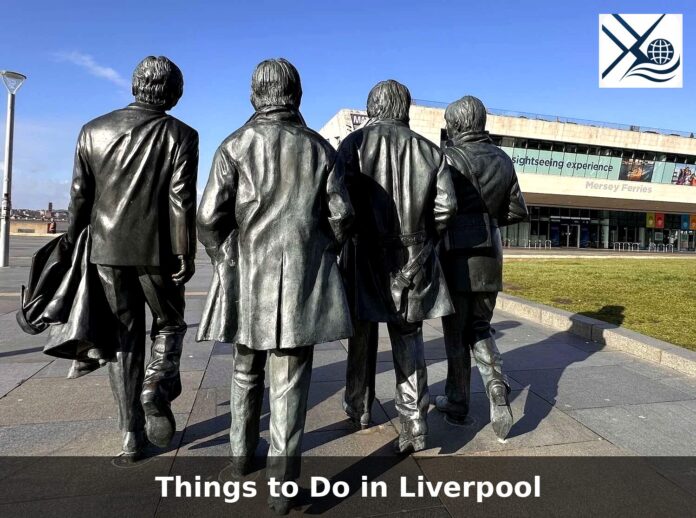
Liverpool doesn’t ease you in. It hits you with stone docks, loud opinions, music lore, and a skyline that still feels tied to ships, trade, and people coming and going. Some British cities ask for patience before they make sense. This one usually grabs you in the first hour.
That’s what makes Things to Do in Liverpool more interesting than the usual city-break checklist. You’re not just filling time between meals or ticking off famous names. You’re walking through a place where the waterfront still shapes the mood, where museum collections carry local pride rather than dusty duty, and where Beatles history lives beside football talk, old warehouses, and ferry crossings that still matter. A good Travel Guide UK entry should tell you where to go. A better one tells you what kind of city you’re stepping into.
Liverpool works best when you stop trying to “cover” it and start reading it. Look at the dock bricks. Listen to the accent shifts. Notice how often locals speak about the city as if it were a person with a temper and a memory. That attitude is part of the visit, not background noise. The result is a break that feels fuller, sharper, and less polished in the best possible way.
Things to Do in Liverpool
The city’s appeal comes from contrast rather than one single attraction. You can start at the waterfront with historic dock buildings and modern museum spaces, cut inland toward civic architecture, then finish in a basement music venue or a pub where the conversation sounds half like theatre and half like an argument. The Royal Albert Dock remains a core stop, and the wider waterfront still anchors many of the city’s best-known cultural sites. UNESCO describes Liverpool as a major mercantile port city, while official visitor sources still place the dock, museums, ferry experiences, and Beatles attractions at the center of most visits.
Start with the water, not the shopping streets
Liverpool is easier to understand from the edge of the Mersey. The river gives the city its scale, its old wealth, and some of its stubbornness. Start there and the rest feels connected.
Royal Albert Dock is still the obvious first move, but obvious is not always bad. The warehouses, open quays, and museum cluster give you a fast lesson in how the city grew, what it traded, and why so much local identity still faces the water.
Once you’ve walked the dock, the city center stops feeling random. Streets, monuments, and museums begin to line up as parts of the same story rather than scattered tourist stops.
Let the city get less tidy as the day goes on
Liverpool improves when you stop chasing a perfect route. The best stretches often happen between landmarks, especially when you cut from the waterfront toward older commercial streets or quieter side roads.
That matters because Liverpool has never been just one thing. It is maritime, musical, civic, working-class, theatrical, and often a bit rough around the edges. Polishing that away would ruin it.
So leave room for detours. The city rewards people who notice side alleys, pub interiors, dock views, and small local details that never make the top of a brochure.
Royal Albert Dock and the pull of the waterfront
Royal Albert Dock is not just a pretty backdrop for photos. It is the place where Liverpool’s tourist face and its historic bones meet most clearly. Official visitor sources still present it as one of the city’s central attractions, and it remains packed with museums, galleries, restaurants, and waterside views that feel recognizably Liverpool rather than interchangeable with any other UK city.
Why the dock still sets the tone
The dock works because it is useful, not because it is frozen in the past. You can eat there, linger there, enter museums there, or simply pace the perimeter and watch the light shift across brick and water.
That mix matters. Too many redeveloped waterfronts feel scrubbed clean and emotionally empty. Liverpool’s still carries weight. The buildings look built for work first and leisure second, which gives the whole place more bite.
Go early if you want the quieter version. Go near sunset if you want the fuller, noisier one. Both feel right, and neither feels staged.
What to notice beyond the postcard view
Most first-time visitors stare out toward the river, which is fair enough. Look inward as well. The dockside brickwork, arches, and warehouse scale tell you a lot about the city’s old ambition.
Museums around the dock turn the area into more than a scenic loop. You are never far from a gallery, a local-history display, or a cultural site that adds context to the walk. That makes the waterfront unusually dense in practical terms, not just visually.
If you only have a short stay, this is still where you should spend a large share of it. Liverpool has strong neighborhoods elsewhere, but the waterfront gives you the fastest route into the city’s character.
Beatles history without the usual clichés
Liverpool would be unbearable if it traded only on Beatles nostalgia. It doesn’t. The city handles that legacy in a more lived-in way, helped by places that connect the story to actual streets and venues. The Beatles Story sits at the Royal Albert Dock, while the Cavern Club remains rooted at 10 Mathew Street, with its own long history reaching back to 16 January 1957.
The Beatles Story is the clean entry point
If you want the structured version first, go to The Beatles Story. It is on the dock, easy to reach, and designed for visitors who want a chronological grip on the band rather than a vague cloud of references.
That said, the museum works best when you treat it as a starting frame, not the whole experience. Liverpool’s music history is stronger when it spills into the streets afterwards.
You leave with more than songs in your head. You leave noticing the city’s scale, class history, and local confidence a bit differently.
The Cavern feels alive because it still is
Mathew Street can get crowded and a little self-aware, but the Cavern still has pull. Part of that comes from the venue’s real timeline, not a fake replica built for easy nostalgia. The club’s official history traces its opening to 1957 and its role in the city’s explosion of beat music in the early 1960s.
You do not need to be a Beatles obsessive to enjoy it. Live music and the cramped cellar atmosphere do a lot of the work for you.
The smart approach is simple: do the polished museum piece, then do the loud basement. Together, they feel far more honest than either one alone.
Museums that explain the city instead of decorating it
Liverpool is unusually good at museums that don’t feel detached from daily life. The Museum of Liverpool, World Museum, and Walker Art Gallery are all part of National Museums Liverpool, whose museums and galleries are free to visit and generally open Tuesday to Sunday from 10am to 5pm. The Museum of Liverpool is presented by official tourism sources as the world’s first national museum devoted to the history of a regional city.
The Museum of Liverpool should not be skipped
Some city museums are respectable but forgettable. This one is not. It connects politics, sport, migration, work, music, protest, and ordinary local life in a way that makes the city feel human rather than ceremonial.
That range is the point. Liverpool has always had a talent for turning civic history into personal history, and the museum understands that.
If you only visit one museum in town, this is the safest choice. It gives you the broadest return for the time you spend inside.
The World Museum and Walker add range
World Museum broadens the day out. It moves from natural history to space and global collections, which helps if you want a break from pure local narrative without leaving the city center. Official information lists the same Tuesday-to-Sunday, 10am-to-5pm pattern.
Walker Art Gallery shifts the mood again. The building feels grand, the collection has weight, and the visit suits anyone who wants quieter concentration after busier dock or music sites. It is also free and follows the same broad opening pattern.
Together, these places make Liverpool a stronger museum city than many people expect. That matters on rainy days, but it matters even more because they give depth to the whole trip.
St George’s Quarter and the city’s civic confidence
Liverpool’s waterfront gets the headlines, but St George’s Quarter gives you the city’s formal face. St George’s Hall is a Grade I listed building in the heart of Liverpool and is celebrated for its historical and cultural importance. Nearby museum and gallery sites make the area one of the easiest places to stack architecture and indoor culture in a single walk.
St George’s Hall earns the hype
Some landmark buildings are better from a distance. St George’s Hall holds up close. The scale is serious, the detailing is rich, and the whole place feels built to declare confidence.
You can sense what nineteenth-century Liverpool wanted to say about itself through this building: wealth, reach, order, permanence. Whether or not you admire that message, the architecture sells it hard.
Don’t rush the exterior. Walk around it. The changing angles matter, and the surrounding plateau gives it breathing space that many big civic buildings lose.
This part of town makes a strong museum route
One of the best practical reasons to spend time here is proximity. You can move from civic architecture to the Walker, the World Museum, and Central Library without wasting energy on transport.
That makes the quarter ideal for a weather-proof half day. It also suits visitors who prefer depth over frantic movement between far-flung stops.
If the dock shows Liverpool’s commercial past, this district shows how the city wanted that success to look in stone. The contrast is worth seeing on the same trip.
The Mersey is more than a backdrop
A lot of visitors photograph the river and never properly use it. That is a mistake. Mersey Ferries describe ferry travel on the river as part of a history stretching back over 800 years, with the first recorded service run by Benedictine monks in 1150. Their current River Explorer Cruise lasts 50 minutes, which makes it an easy fit even on a short stay.
A ferry ride changes your sense of scale
Cities look different from the water. Liverpool especially does. The skyline reads more clearly, the dock edges feel larger, and the relationship between city and river stops being abstract.
You also get a cleaner sense of why this place became powerful in the first place. The geography explains a lot once you are actually moving through it.
That is why the ferry is worth doing even if boat trips are not normally your thing. It is not about novelty. It is about perspective.
Use the crossing to reset the pace
Liverpool can be dense. Museums, music spots, dock walks, and civic buildings come at you quickly. The ferry gives the day a needed pause without turning into dead time.
It also helps if you are travelling with mixed interests. One person gets maritime history, another gets views, and nobody feels trapped in a niche attraction.
For many visitors, this ends up being the quiet surprise of the trip. It is simple, unfussy, and much more satisfying than it sounds on paper.
Neighbourhoods where Liverpool feels least edited
The city is strongest when it slips out of official-display mode. Streets beyond the main visitor spine often show Liverpool at its sharpest: less polished, more local, and far more memorable. That is where a real Travel Guide UK mindset helps, because you stop hunting only for famous names and start noticing atmosphere, pace, and character.
Ropewalks and the pull of everyday energy
Ropewalks has bars, independent spots, side streets, and a little unpredictability. It does not always try to charm you, which is part of the charm.
This is the Liverpool many people end up liking most. It is social without being pretty in a forced way, and it gives you that useful sense of the city still doing its normal business around you.
Come here after the big landmarks, not before. The area works better once you already know the city’s more formal side.
The Georgian Quarter rewards slower walking
The Georgian Quarter asks for a different speed. Streets settle down, terraces stretch out, and the mood turns quieter without becoming dead.
You start noticing doors, steps, church spires, pub corners, and the sort of urban detail that disappears when you rush. It is not loud tourism. It is better than that.
If your ideal city break includes time to wander without a plan, this part of Liverpool will probably stay with you longer than one more ticketed attraction.
Planning the visit so the city actually lands
Liverpool is not difficult, but timing matters. National Museums Liverpool sites generally open Tuesday to Sunday from 10am to 5pm, while The Beatles Story advises visitors to check current daily times and book ahead for a guaranteed slot. That gives you a clear framework: museums by day, music streets and dockside atmosphere later on.
Build each day around one anchor
Choose one anchor for the morning. That could be the dock, St George’s Quarter, or a Beatles-focused route. Once you have that fixed, the rest of the day becomes much easier to shape.
This matters because overplanning can flatten Liverpool. The city needs some free space around the booked parts.
A half-structured day usually works best. You get the core sights without turning the trip into a timed obstacle course.
Leave room for weather, mood, and appetite
Liverpool changes with weather more than people expect. A bright dock walk and a wet museum afternoon produce two completely different versions of the same city.
That is not a problem. It is part of the appeal. This place can handle quick pivots better than many destinations because strong indoor sites sit close to strong outdoor ones.
So be flexible. If the river looks good, stay out longer. If the rain arrives sideways, move indoors and carry on. The city still delivers.
Conclusion
Liverpool is not a city that needs hard selling. It already has the ingredients: a waterfront with real weight, Beatles history that still feels plugged into living streets, and museums that explain the place instead of flattering it. What matters is how you do it. Don’t race from badge to badge. Build your days around texture, not just checklists.
That’s where Things to Do in Liverpool becomes less like a search phrase and more like a solid trip idea. You can spend a morning on the dock, an afternoon with city history and art, then finish in a music venue that still hums with local memory. Few cities give you that mix without feeling overproduced. For anyone using a Travel Guide UK approach to plan a sharper, more rewarding break, Liverpool deserves to sit near the top of the list.
Go with comfortable shoes, loose plans, and enough time to follow a good detour. Start by the water, let the museums give you context, and save part of the evening for music and streets that are still a bit messy. That is the version worth having. Book the trip, then let the city do some of the work.
FAQs
What is the best area to stay in Liverpool for first-time visitors?
For first-time visitors, staying near the waterfront or city centre makes the most sense. You’ll be close to Royal Albert Dock, museums, rail links, restaurants, and evening spots. That saves time and lets you explore on foot without constant planning every day.
How many days do you need to see Liverpool properly?
Two full days is enough for a strong first visit, but three feels better. That gives you time for the waterfront, Beatles sites, major museums, and one slower neighborhood wander. Liverpool rewards unplanned hours, so rushing the city usually weakens the experience for most visitors.
Is Liverpool good for a weekend city break in the UK?
Liverpool is very good for a weekend break because the major sights sit fairly close together. You can combine history, music, museums, nightlife, and waterfront walking without spending half the trip commuting. That balance makes it easier than many larger UK cities to enjoy.
Are Liverpool museums free to enter?
Many of Liverpool’s main museums and galleries are free, especially those run by National Museums Liverpool. That includes strong options in the city centre. You may still pay for special exhibitions or separate attractions, but the city offers plenty without stretching your budget too hard.
What Beatles attractions are worth visiting in Liverpool?
The most useful Beatles pairing is The Beatles Story and the Cavern Club area. One gives you a structured narrative; the other gives you atmosphere. Add a wider Beatles-themed tour only if you have extra time and still want more context beyond central Liverpool itself.
Is Royal Albert Dock worth visiting if you are not into museums?
Royal Albert Dock is worth visiting even if museums are not your main interest. The setting, architecture, restaurants, waterside views, and easy walking route still make it one of the city’s strongest areas. It works as a social, scenic, and practical base for exploring Liverpool.
What can families do in Liverpool besides Beatles attractions?
Families can mix the World Museum, waterfront walking, ferry rides, public spaces, and interactive museum stops without much effort. Liverpool works well because the day can shift quickly between indoor and outdoor options, which helps when attention spans, weather, or energy levels change suddenly.
Is Liverpool a walkable city for tourists?
Central Liverpool is highly walkable for most visitors. The waterfront, civic quarter, shopping streets, and several music landmarks connect well on foot. Comfortable shoes still matter because dock walks and museum-heavy days add up, but you rarely need constant taxis for the main sights.
When is the best time of year to visit Liverpool?
Late spring and early autumn are usually the safest balance of decent weather, manageable crowds, and good city energy. Summer can feel busier and louder. Winter has atmosphere too, especially indoors, but shorter days make waterfront wandering less rewarding for many visitors overall.
Can you do Liverpool on a budget?
Liverpool can be done on a budget more easily than many major UK cities. Free museums, walkable central districts, and flexible food options help keep costs down. You can spend money on music, tours, or tickets, but you do not need a huge budget.
Is the Mersey Ferry actually worth the time?
Yes, the Mersey Ferry is worth the time because it gives you a better sense of Liverpool’s shape and history. It also breaks up a museum-heavy day nicely. You are not just taking a boat ride; you are seeing why the river matters to everything.
What is the best museum in Liverpool for first-time visitors?
For a first visit, the Museum of Liverpool is the strongest all-round choice. It gives you the broadest feel for the city’s identity, people, sport, work, and culture. Other museums add range, but this one gives the clearest foundation for understanding Liverpool itself.
Is St George’s Hall worth visiting inside or just outside?
St George’s Hall is worth admiring from outside, but going inside adds a lot when tours or events are available. The building has presence either way. If you enjoy architecture, civic history, or grand interiors, the interior visit usually justifies the extra effort.
Which Liverpool area is best for nightlife and live music?
For nightlife and live music, the wider city centre, including Mathew Street and nearby areas, is the easiest answer. You’ll find famous venues, casual bars, and late energy there. For something less touristy, explore beyond the obvious strips and follow local recommendations.
Is Liverpool suitable for solo travelers?
Liverpool suits solo travelers well because the centre is active, compact, and full of places where being alone does not feel awkward. Museums, dock walks, cafés, and live music all work well solo. The city’s strong personality also means wandering rarely feels dull here.
Are there good rainy-day things to do in Liverpool?
Rain is not a trip killer in Liverpool. The city handles bad weather well thanks to its museum density, gallery options, music venues, and indoor historic sites. You can shift plans quickly without losing the day, which makes the destination more dependable year-round for visitors.
What should you book in advance in Liverpool?
Book ahead for timed attractions that matter most to you, especially Beatles-related visits, special exhibitions, and any tours with limited capacity. Museums may be easy to enter, but popular experiences can fill up. Advance booking also helps you shape the rest of the day better.
Is Liverpool better for history lovers or music fans?
Liverpool is unusually strong for both, which is why the city works so well. Music fans get obvious rewards, but history lovers are not stuck with leftovers. Maritime heritage, civic architecture, museums, and neighborhood character give the place depth far beyond its band mythology.
What food or drink should visitors try in Liverpool?
You do not need a grand culinary mission in Liverpool, but you should try local pubs, modern independent restaurants, and classic casual spots near the centre. The point is variety rather than one signature dish. Eat where the room feels alive, not just photogenic online.
What is the smartest way to plan a first Liverpool itinerary?
The smartest first itinerary starts with one anchor each day: waterfront, museums, or Beatles history. Build around that and leave spare time for walking, weather changes, and spontaneous stops. Liverpool improves when your plan has structure, but still leaves room for drift.

